Learn more
Most teams are better at one project lifecycle phase than another. They either plan brilliantly and stumble at execution, or they execute flawlessly without any real plan guiding them. Neither is a winning position, and both quietly cost you more than you realize.
A leadership team mapping out workforce capacity for the next two quarters thinks it's doing the right thing. A project manager keeping three concurrent projects on track thinks the same. The problem surfaces when those two realities never actually meet.
This gap sits right between strategic resource management (the long-term, big-picture layer) and operational resource management (the day-to-day execution layer). When they don't talk to each other, plans lose touch with ground-level reality, and ground-level work drifts away from what actually matters.
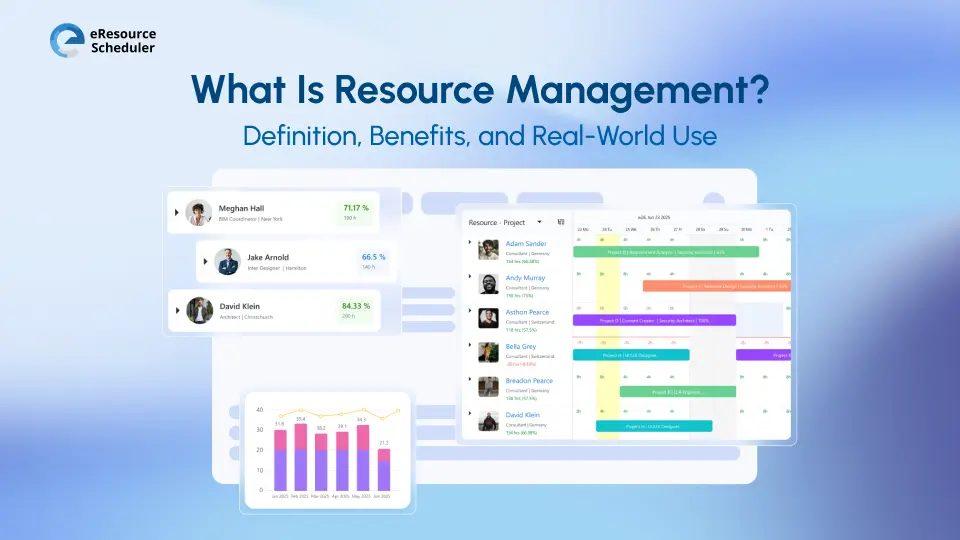
Resource management, done well, isn’t a single discipline. It runs on both layers, and they need to communicate with each other constantly (as advised to maintain a healthy relationship). To understand how they work and where most organizations go wrong, start with the basics of what resource management is and what it’s designed for. Once you have the foundation, the gap between strategy and operations becomes much clearer.
A pattern shows up in teams of every size. Leadership is busy thinking about the next quarter while the project team is firefighting this week. The two conversations rarely meet, and when they don’t, resources get pulled in directions that serve neither goal particularly well.
Did You Know?
According to Gallup’s 2026 State of the Global Workplace report, global employee engagement dropped to 20% in 2025, its lowest since 2020, costing the world economy an estimated $10 trillion in lost productivity. A significant part of this loss comes down to people being deployed without a clear purpose or aligned direction.
Call it a structural problem, not a motivation one. When your long-term workforce planning doesn’t connect to your day-to-day allocation decisions, you end up with resources that look busy but aren’t moving the needle.
The solution is not to prioritize one lens over another. It is to use both simultaneously and keep them in sync. What this actually means, and why the two layers are more distinct than most people assume, is what the next section unpacks.
The two layers are often talked about as if they sit on the same spectrum, just different degrees of the same thing. They are not. They operate on different timescales, serve different purposes, and are owned by different people. Side by side, the contrast becomes obvious.
| Parameter | Strategic Resource Management | Operational Resource Management |
| Scope | Organization-wide or portfolio-level | Project or team-level |
| Time Horizon | Long-term (quarters, years) | Short-term (days, weeks, sprints) |
| Primary Focus | Workforce planning, capacity forecasting, and aligning talent with business goals | Scheduling, utilization tracking, task-level allocation |
| Key Decisions Made | Hiring forecasts, skill gap planning, resource investment priorities | Who works on what, when, and at what capacity |
| Who Owns It | Senior leadership, resource managers, PMO heads | Team leads, project managers, department managers |
| Success Metrics | Capacity vs. demand balance, strategic alignment rate, and workforce readiness | Utilization rates, schedule adherence, and availability accuracy |
| Tools Involved | Workforce planning models, capacity planning, portfolio reviews | Resource scheduling software, timesheets, allocation boards |
At a glance, these look like two separate workflows. In practice, they’re supposed to be the same conversation happening at different altitudes. Strategic decisions set the direction; operational ones determine whether you can actually get there.
This is precisely where things break down.
A scenario that’s more common than most organizations want to admit. Leadership signs off on three new projects for the next quarter, all of them resource-intensive. Nobody checked with the operations side to see what the actual capacity looks like. Two weeks in, your most skilled people are stretched across five deliverables. Deadlines start slipping. You hire a contractor to plug a gap that a better planning conversation could have avoided.
Not a hypothetical. The default mode of organizations where strategic and operational resource management don’t talk looks exactly like this.
PMI’s 2025 Step Up report found that only 7% of project professionals consistently apply all four elements of the M.O.R.E framework, which includes expanding perspective beyond pure execution to consider broader organizational goals. The remaining 93% are, in large part, operating from within their lane. Either planning without operational context or executing without strategic direction.
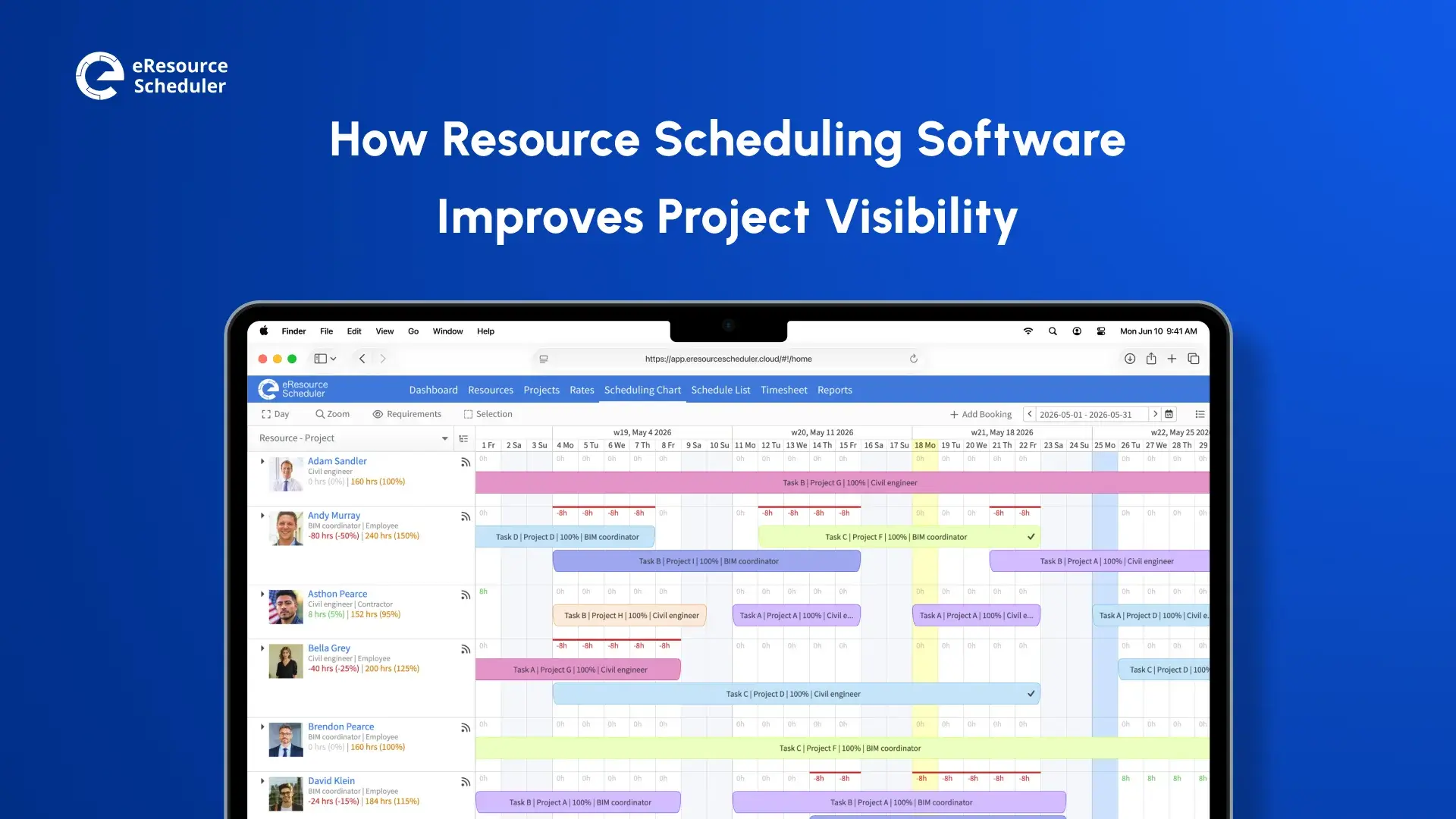
The costs compound fast. Overutilized specialists, underutilized capacity elsewhere, delayed project timelines, and workforce planning decisions made on incomplete data. Resource management software like eResource Scheduler surfaces this kind of visibility gap early. Connecting what’s planned at the portfolio level to what’s actually happening on the ground. So you are not discovering the mismatch when it’s already become a major problem.

Knowing where the disconnect lives is the first step. Building the system that prevents it follows naturally.
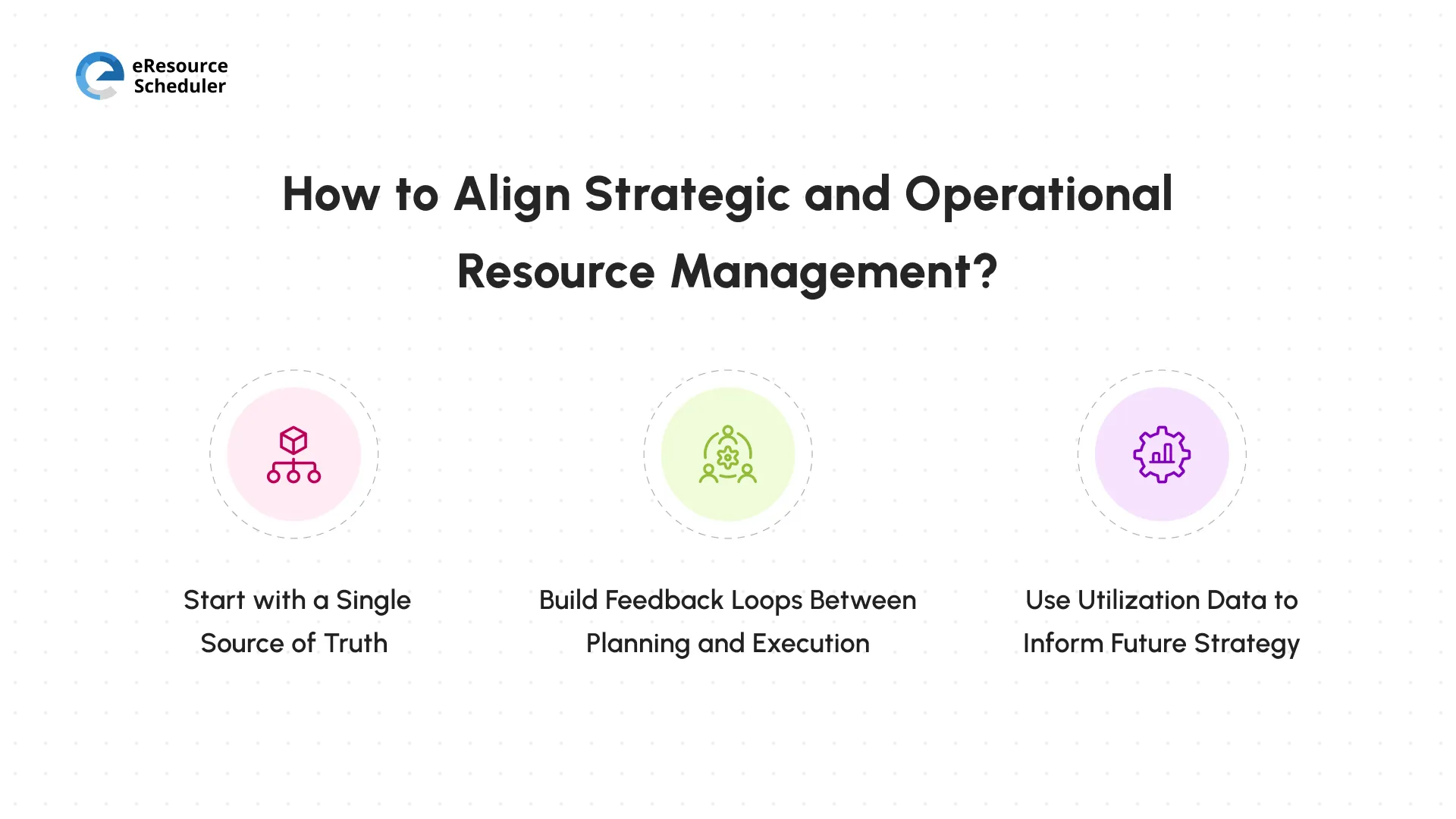
Alignment isn’t a project. It’s not something you fix in a planning offsite and then move on from. It is a set of practices that, once embedded, keeps both layers in sync over time. Three places to start.
If your strategic planning team is working from a workforce model in one spreadsheet and your project managers are tracking availability in another, you’re not aligned. You are running two parallel realities that only collide when something goes wrong.
A unified view of your resources across skills, availability, utilization, and project assignments means that decisions at both levels draw from the same picture. When leadership asks whether you have capacity for a new initiative, the answer comes from data, not approximation.
Strategic plans made in isolation go stale fast. What actually happens at the project level, who got overloaded, which timelines shifted, where skill gaps appear, is data your planning team needs. Without it, the next planning cycle is just educated guesswork.
Feedback loops close this gap. Operational teams surface utilization trends and blockers upwards. Strategic teams adjust forecasts and hiring plans accordingly. This is how the two layers stop operating in parallel and start operating as a system.
Utilization reports aren’t just a performance metric. They are a signal. If your most senior engineers are consistently running at 110% capacity, that’s not a scheduling problem. It’s a hiring signal, a skilling signal, or a project intake signal. Depending on what the data actually shows.
Expert Insight
PMI’s 2025, Global Project Management Talent Gap research found that projects with a clearly defined vision for success achieved a Net Project Success Score of 41 compared to -81 for those without one. This gap doesn’t close at the strategic level alone. It closes when operational teams understand the vision well enough to make day-to-day decisions that serve it.
A global engineering, architecture, and consultancy company, Ramboll, faced this problem. Their reliance on spreadsheets and siloed tools left managers unable to see capacity across regions. Specialists were overbooked without anyone catching it in advance, and projects ran into bottlenecks that better visibility could have prevented. After unifying their resource planning and scheduling into a resource management software, managers could spot utilization issues early, balance workloads before they escalated, and link daily scheduling decisions back to bigger delivery goals.
A shared data foundation, feedback that flows both ways, and utilization as a planning input. These three practices are what separate teams that talk about alignment from teams that actually have it.
No formal audit is needed to know whether two layers are working well together. There are practical signals worth paying attention to.
Your capacity forecasts and actuals are regularly close to each other. When they are, it means your planning assumptions are grounded in operational reality (not just wishful thinking). Resource decisions at the team level reflect business priorities rather than who happens to be available. That’s alignment showing up day-to-day.
Utilization is healthy, not maxed out, not underused. Teams consistently at or near 100% capacity are a warning sign. So are teams sitting at 50% without a clear reason. Balance here suggests your planning and scheduling are calibrated to each other. Planning cycles are also shorter and more accurate because they’re informed by what actually happened last time, not built from scratch.
Perhaps most telling, your games aren’t constantly in reactive mode. When both layers are aligned, firefighting drops because fewer fires start in the first place. If this describes your organization more often than not, you’re in better shape than most. If it doesn’t yet, the gap between where you are and where you want to be is almost always a systems problem, not a people problem.
Building these habits matters beyond your current projects. With the global project talent pool projected to fall short by up to 29.8 million professionals by 2035 (Global Project Management Talent Gap, 2025), organizations that already have strong alignment between planning and execution will be far better equipped to do more with the capacity they have.
For a more detailed look at how this plays out across project portfolios, the PPM resource management blog is worth a read. It builds on much of what is covered here.
Running out of the right people at the wrong time isn’t a headcount issue. It is about specific skills, at specific moments, for specific projects that matter. When this keeps happening, it is a sign that your strategic and operational layers have drifted apart.
Most organizations don’t fail at resource management because they lack tools or talent. They fail because they treat planning and execution as separate responsibilities with separate owners, and let the gap between them widen quietly.
The organizations that get this right aren’t necessarily doing anything dramatic. They’ve built a habit of letting operational reality inform the next strategic decision, and of letting strategic priorities shape the next allocation call. This continuous loop is what makes resource scheduling feel less like firefighting and more like steering.
If you are working through how to prioritize what your resources focus on first, this blog on project prioritization is a useful read.

Plan Smarter. Schedule Faster. For Free.
Join thousands already using eResource Scheduler to align teams, time, and tasks seamlessly.
 ALL FEATURES INCLUDED