Learn more
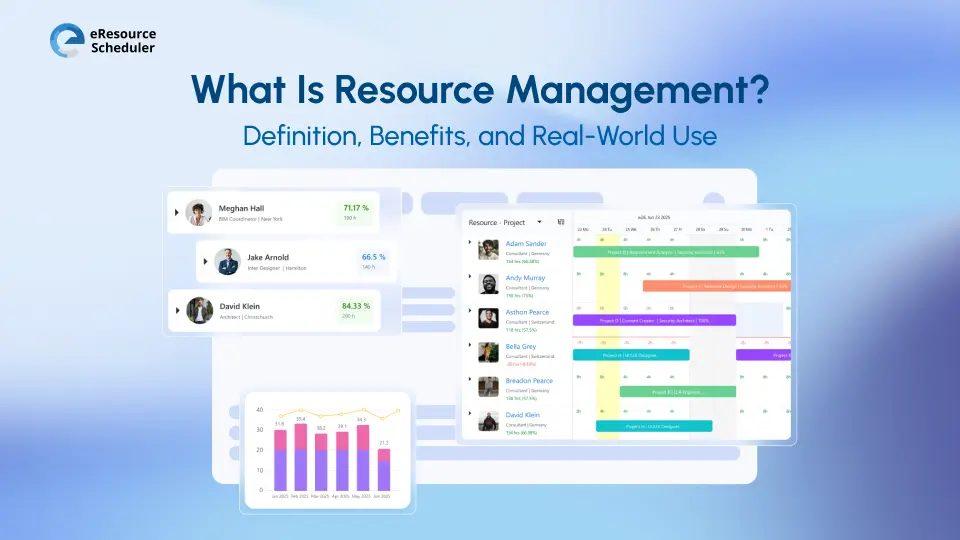
Resource management has shifted from being a serviceable concern to a priority for leadership in 2026. Managers are expected to make well-educated decisions with the available resources, as teams become scattered, project timelines close in, and the budgets seem to be tight.
This guide will walk you through what managing your resources means in today's time, why it matters, and how you, as an organization, can employ it without complicated processes.
Within a few weeks of switching to structured resource management, many leaders start exploring the platforms listed in the best resource management software to achieve clear visibility over teams and projects.
Resource management is planning, allocating, tracking, and optimizing the time and skills of people across the organization. In simpler terms, it answers these three core questions for managers and leaders:
In 2026, resource management surpasses spreadsheets or impromptu planning. It bridges the gap between demand and capacity, helping leaders make well-informed decisions before problems can escalate.
Tools like eResource Scheduler are designed to manage resources. They focus on clarity, not complexity, providing teams with a shared vision of workload and availability.
Responsibility for resource management often falls on the shoulders of the resourcing manager, the PMO leader, or the department head. Managers have to forecast requirements, the team head must verify capacities, and leadership should align priorities.
Organizations that manage cross-functional teams have a single source of truth, usually supported by capacity planning features. Reduce guesswork and reactive decision-making.
The importance of resource management has increased as teams encounter endless change. Hiring takes more time, budgets are analyzed, and burnout risks become absolute. Believe it or not, in the absence of thorough visibility, even high-performing teams feel swamped.
Effective resource management helps leaders:
Multiple organizations are addressing this by shifting away from manual planning and embracing structured approaches discussed in effective resource management strategies.
When capacity is unclear, teams usually appear occupied but not so productive. Over-allocated employees face burnout, meanwhile, the underutilized talent remains under the radar. Overlooked deadlines, hasty hiring, and low morale are a few recurring symptoms.
These issues are constantly highlighted in discussions surrounding delivery risk management and project portfolio visibility, portions where structured resource planning can make a considerable difference.
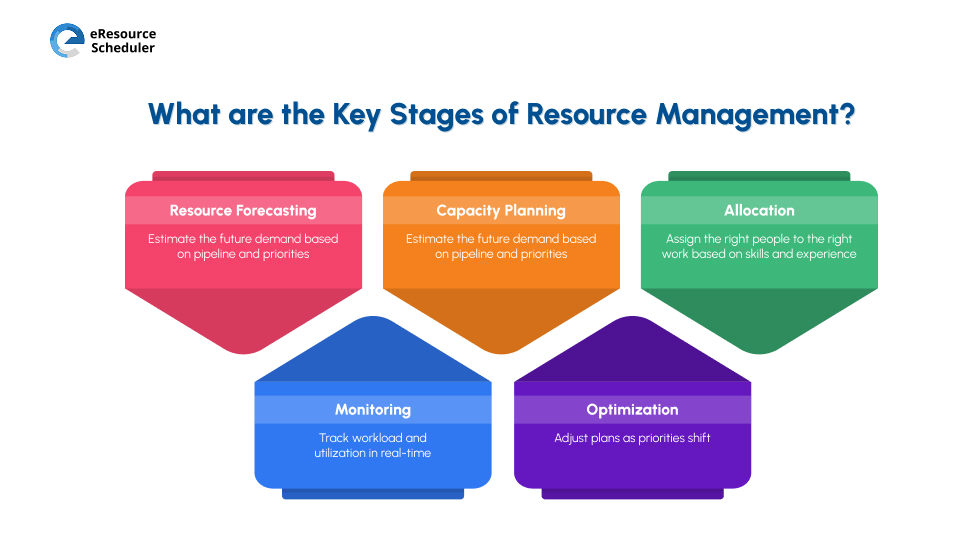
The stages of resource management provide an easy-to-follow framework that managers can follow regardless of the organization's size.
Many managers encounter these stages while scouting guides on resource forecasting or capacity planning blogs, mainly when the team scales rapidly.
These stages are not linear. In the modern work environment, priorities change quickly. A delayed project or a new client straight away impacts capacity. Constant supervision allows managers to attain work equilibrium without disrupting delivery targets.
Platforms develop around centralized views, such as utilization dashboards and availability views, that support the adaptive approach without adding to the administrative work.
In spite of good intentions, many organizations grapple with the same challenges in resource management:
These disputes often surface when the teams rely on isolated tools or informal techniques.
The endgame is not perfection; it is visibility. Incorporating steps such as standardization of capacity tracking systems or centralizing scheduling views can reduce friction swiftly.
The key is selecting an approach that aligns with the maturity of teams and the goals of the businesses, and not enforcing rigid systems.
Resource management techniques facilitate managers to move from reactive planning to proactive planning. Some commonly discussed strategies include:
While techniques answer the how, tools provide the what.
Resource management software like eResource Scheduler supports these methods by offering real-time visibility of availability, allocations, and utilization, foregoing complex configurations.

Resource management is used across various industries, but the impact is most noticeable in:
Consider a mid-sized firm managing and dealing with multiple client engagements. Devoid of centralized planning, senior consultants are overbooked, while junior staff await assignments. By implementing structured resource management and scheduling, leadership gains visibility into available skills and workload rebalancing, and improves timelines and team morale in months.
Getting started doesn’t need a full transformation. Leaders can begin by:
As the teams grow and projects start overlapping, manual methods become difficult to sustain. It occurs when leaders assess platforms listed as resource management software, focused on the ease of use, adaptation and reporting as opposed to feature overload.
Resource management focuses more on clarity than control. Leaders who have a deep understanding of capacity, demand and skills can make confident decisions, even in uncertain situations. By applying practical techniques and leveraging supportive tools, organizations can enhance delivery outcomes while protecting team interests.
If you want to explore a more structured approach, start a FREE TRIAL of eResource Scheduler to
witness how clearer visibility can support better planning decisions.
1. What is resource management in simplified terms?
Resource management ensures that the right people are working on the right projects at the right time without compromising employee well-being.
2. Why is resource management important for managers?
Resource management helps managers balance bookings, achieve deadlines, and minimize burnout, increasing productivity in the meantime.
3. What does a resourcing manager do?
A resource manager oversees the capacity planning, allocates work based on availability and skills. The manager can then adjust plans as priorities shift.
4. How does resource management software help?
Resource management software like eResource Scheduler centralizes availability, allocations, and data utilization, making strategizing consistent and transparent.
5. Is resource management only for large organizations?
Teams of all scales can benefit from resource management. The level of incorporation depends on the complexity and growth stage.


Plan Smarter. Schedule Faster. For Free.
Join thousands already using eResource Scheduler to align teams, time, and tasks seamlessly.
 ALL FEATURES INCLUDED