Learn more
Resources are an expensive component of a business, but without them, you cannot operate. Many organizations give in to the temptation of saving each penny and reducing resource investments till they earn significant returns, but that is not a good strategy for the company's growth.
The fact is that resource planning and management are crucial for any business for its success. It's impossible for your project plan to succeed if you don't have a realistic view of your employees. You should also know the time spent on various tasks and what is needed to get those projects completed.
A thorough resource plan is the first step toward successful project management. The right resource management software can help you create a resource plan and optimize the resources at hand.
Resources are those assets that are required to run a project. Therefore, a resource plan is a document that identifies, manages, and lists the resources needed to complete a specific project successfully is called a resource plan. However, a resource could also include equipment, supplies, tools, materials, time, and people. A detailed resource plan maps out the precise quantities of human resources and other resources like machinery, tools, finance, etc.
It's also important that you align your resources with the budget and schedule of the project. Therefore, it's best to choose a resource management software that can get everything sorted for you in just one tool.
eResource Scheduler is a leading resource management software that allows you to plan and manage your resources, keep a tab on the timelines, and manage the budget, all in one platform.

A resource plan is not just a schedule. It is a strategic document with several interconnected elements that, together, give an organization control over how its resources are deployed.
Resources should be allocated based on their contribution to the organization's larger objectives, not just immediate project needs. Before building a resource plan, understand the company's mission, current strategic priorities, and long-term goals. Allocate accordingly.
People are the most valuable and most complex resource in any project. Effective resource planning accounts for current skill levels, development needs, workload limits, and succession. Burnout is a resource risk. A good resource plan treats it as one.
Training programs, predictive workload analysis, and succession planning are all part of this element, not add-ons.
Pro Tip
Availability is not the same as fit. Gartner research found that roughly one in four employees is at least 20% less productive than average, not because they are disengaged, but because they are in the wrong role for their skills. When you plan resources by who is free rather than who is right, you are scheduling bodies, not building teams.
Every resource has a cost. A resource plan must integrate financial management directly, not treat it as a separate concern.
This includes budgeting for resource costs, forecasting against project timelines, tracking actual spend against plan in real time, managing invoicing and work hours, and maintaining financial transparency across projects.
Resource planning is not just about what you have. It is about what happens when plans change. Build contingency into your resource plan for supply chain disruptions, market changes, capacity shortfalls, or unexpected attrition. Every decision in resource planning should carry a backup scenario.
Resource planning is iterative. It requires continuous monitoring against defined KPIs: utilization rates, budget variance, capacity versus demand, and milestone achievement. Without tracked metrics, a resource plan is a document, not a management tool.
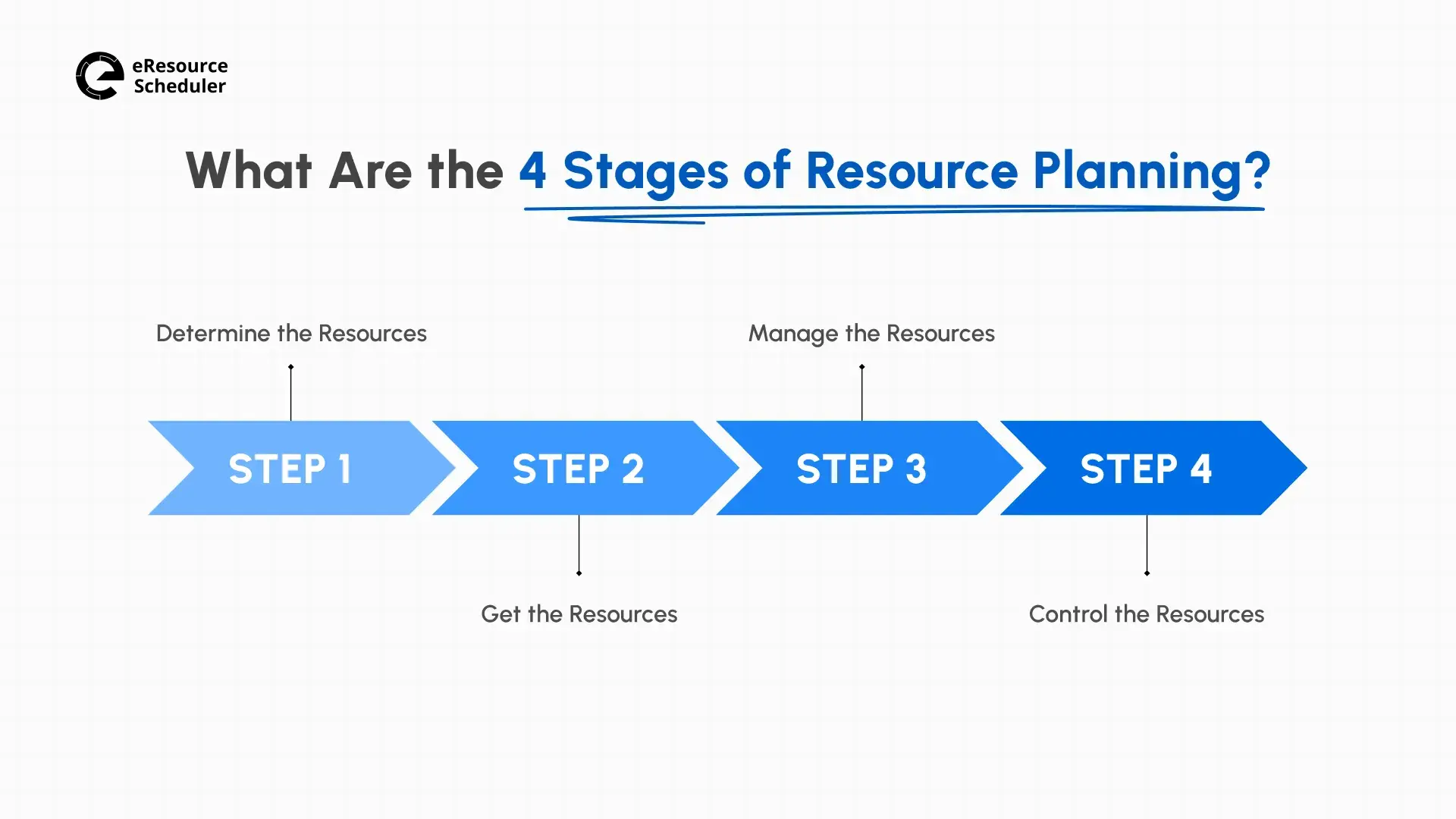
There are four key stages to resource planning. You must follow these steps to ensure that your bottom line stays secure and that you get the resources when you require them.
To ensure that you have all the data before the project is kick-started, you should identify the resources you'll require to execute it. Then, get the required finances for resources and get a sign-off from the stakeholders. To set the ball rolling, you first need to decide on the project requirements. The next step is to determine how many people you need and what skill set is required.
After defining the objectives of your project, you should choose the right strategy and decide the resources you'll need. This decision should be as efficient and cost-effective as possible. Here, resources mean people, equipment, facilities, materials, etc.
Now, start building a team with the right people who have the required skills and experience for your project. Source the equipment and hire people. This stage of resource planning also includes developing team roles, contracts, budgets, procurement needs, performance measurement criteria, and any other policies and procedures.
At this stage, you start defining the roles and responsibilities of your resources, including those of contractors. If you're renting tools and machinery for the project, ensure that you return them in good condition. This includes maintaining the facilities, too.
You also need to monitor your resources during the project execution stage. This is important to check if all the milestones are being achieved as expected and without any glitches.
At this point, it's important to track the resource utilization rate to check if you are using your resources efficiently. In case the utilization rate is quite low, you must do a cost-benefit analysis. So, it's wise to evaluate all the outcomes to ensure that you stay on track.
Pro Tip
If your utilization reviews happen monthly, you are already reacting, not managing. Wellingtone's State of Project Management 2026 found that poor resource management has ranked as a top organizational challenge every single year since their first survey in 2016. Weekly utilization check-ins catch overallocation before it becomes a missed deadline.
Are you still using spreadsheets to organize your budgets and timelines? How about a dedicated resource planning tool that is convenient and also sets your projects and team for success? A project management software like eResource Scheduler lets you schedule your resources and time on various projects with accuracy.
Use the tool to filter resources by skill, availability, and project fit. A good resource planning tool surfaces skill gaps before a project starts, not after it is already running behind.
Anticipate project needs by day, week, or month. Proactive forecasting reduces emergency reallocation and prevents the two resource planning failure modes: shortage and excess.
Map allocations, timelines, and task assignments systematically. A resource schedule is the bridge between a project plan and the people who execute it. It creates accountability and gives team members clarity on what they are expected to deliver and when.
Monitor the cost of each resource's involvement in real time. Track budgets per project, per team, and per resource. Flag overspending early. Resource management software that integrates financial tracking removes the lag between what happens on a project and what shows up in a finance report.
Assess your current capacity against projected workload before committing to timelines. Over-committing is a resource planning problem, not a people problem. The tool should make capacity constraints visible to everyone making scheduling decisions.
With a resource management tool, you can plan and allocate resources based on your resource availability. You can deploy the resource management tool to assess current capacity against projected requirements to prevent bottlenecks or underutilization.
Resource management is a vital part of the project management process. It is a fundamental activity of human resource management, be it in large organizations or small startups. Managing projects always involves managing resources, whether the project is to design a new software feature or to design and develop a web-based training.
Resource planning has a direct contribution to the project's end result. If your project is over-resourced, you will waste money, but if it's under-resourced, you can miss your timelines. Now, imagine if you've aligned the wrong resources to your project. The client's expectations would never be met. Therefore, project managers should understand the type of resources that would suit a specific project and whether the available people fit the bill.
Resource planning in project management can help to:
Meeting project schedules and sticking to budgets are the two main obstacles in project management. Resource planning is a segment of project cost management, and that is why project management and resource planning go hand in hand. If your deadlines aren't achievable or your budget is off track, then your project could be disastrous.
A project's profitability is closely related to how many people you need to deliver it. Hence, the most important component of resource planning is scheduling your resources accurately.
Pro Tip
Budget overruns rarely happen in the middle of a project. They are decided at the beginning. PMI's 2025 Pulse of the Profession found that projects with strong upfront planning adhere to budget 73% of the time versus 68% for those without. Lock in your resource plan before the first task is assigned, not after the first deadline slips.
Resource management software is a centralized platform that helps organizations plan, allocate, schedule, and track their resources across projects. It replaces the combination of spreadsheets, emails, and calendar tools that teams often use to manage resource data and consolidates that information into a single source of truth.
A resource management system enables project managers to:
The shift from spreadsheets to dedicated software is not just a convenience upgrade. It is a visibility upgrade. Spreadsheets tell you what happened. Resource management software tells you what is happening and what is likely to happen next.

eResource Scheduler (eRS) is a multi-user resource planning and project management software built for organizations that run multiple projects with shared resources across teams or locations.
eRS brings together resource scheduling, time tracking, financial management, and capacity planning in a single environment. Project managers get a clear view of who is available, what skills they have, what projects they are assigned to, and what those assignments cost against the budget.
Key capabilities include:
eRS is used by clients across 29 countries, with deployment options across Cloud, Self-Hosted, and Mobile (iOS and Android). To see eResource Scheduler live in action, book a personalized demo today!

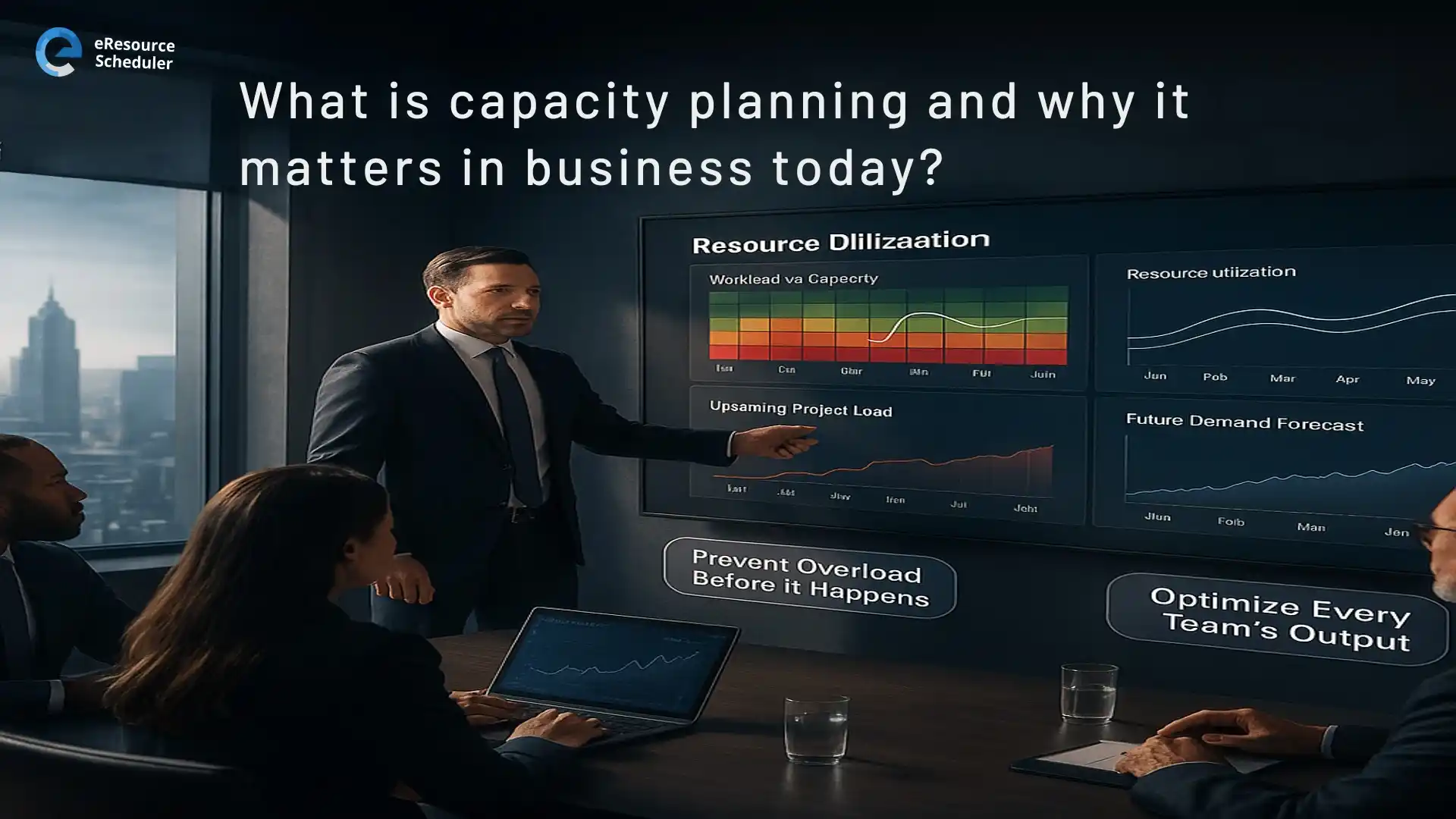
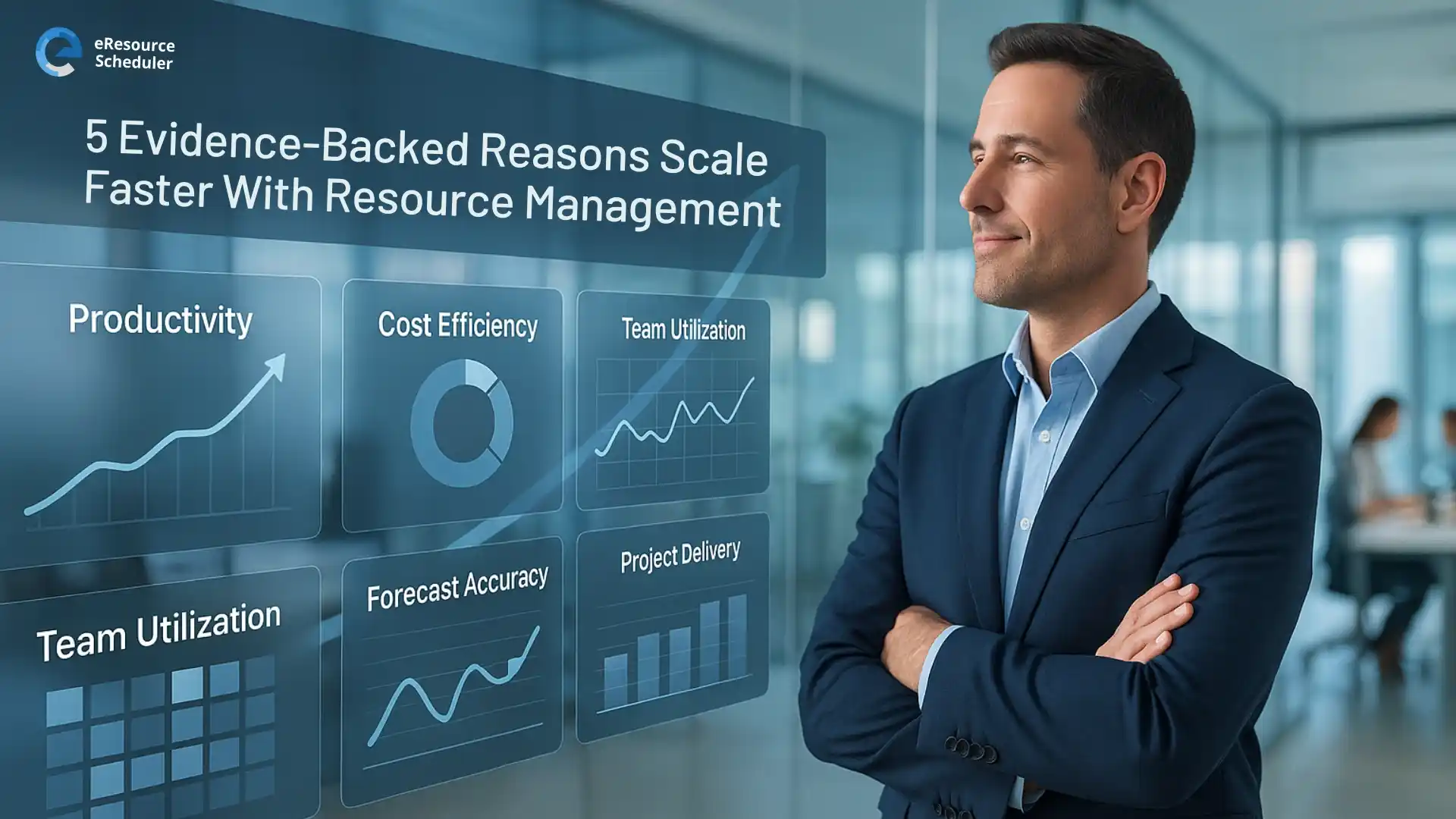
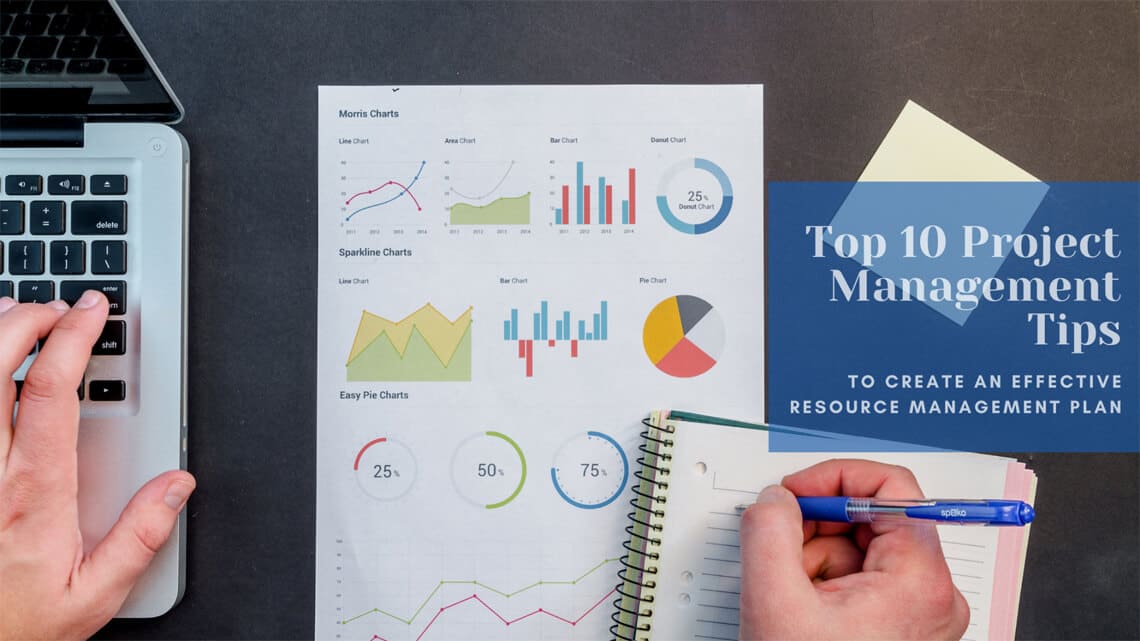
CAPACITY PLANNING
As a business owner, team manager or team leader, you cannot predict everything that this New Year will bring your way. However, what you can do is Be Prepared for anything that comes your way.
Plan Smarter. Schedule Faster. For Free.
Join thousands already using eResource Scheduler to align teams, time, and tasks seamlessly.
 ALL FEATURES INCLUDED