Learn more
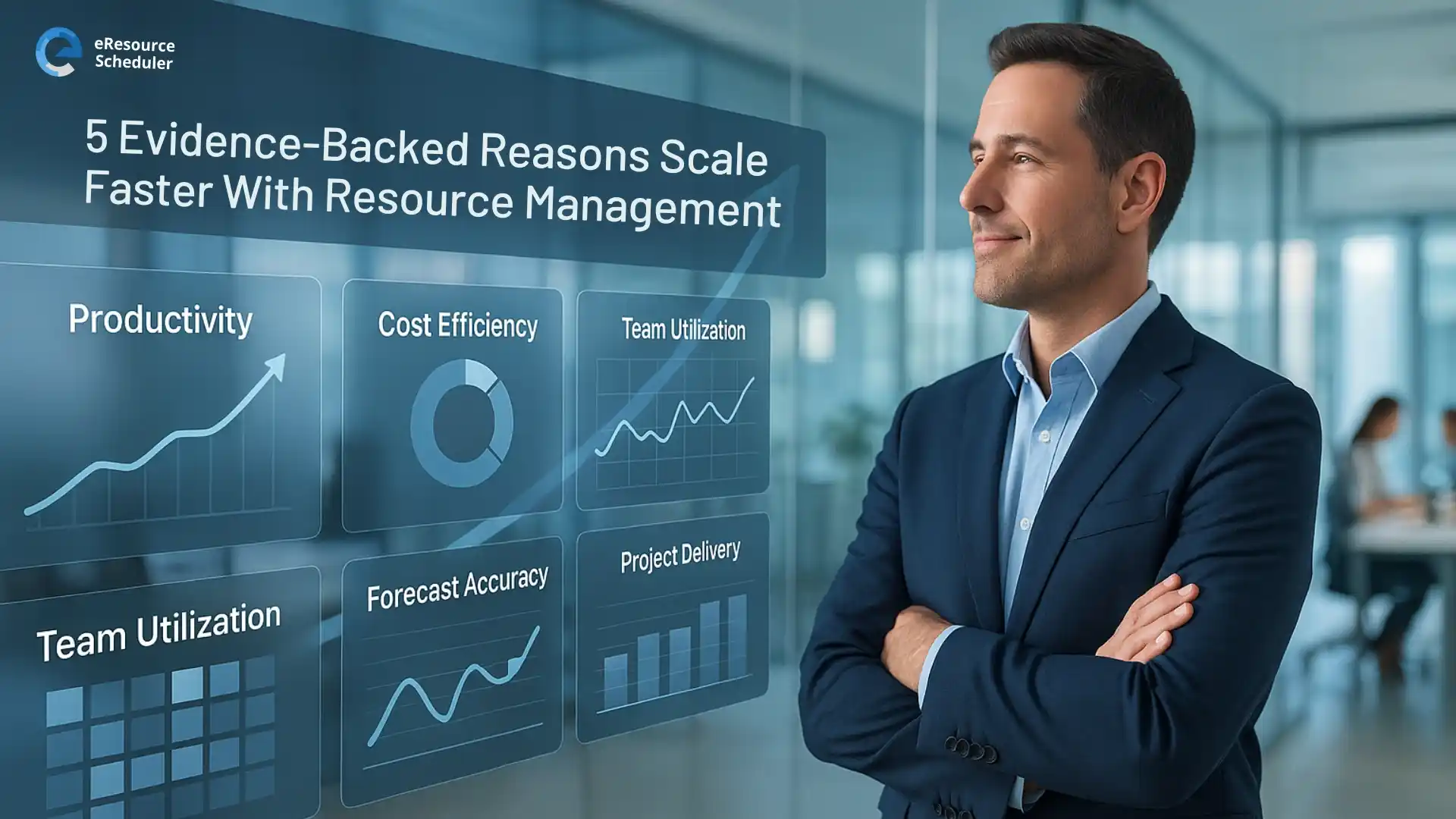
Small businesses don’t scale because they work harder. They scale because they plan smarter. In 2025 and the years ahead, the leaders who grow the fastest are the ones who treat their people, time and skills as assets to be intentionally managed. This is where resource management software becomes a competitive advantage.
Leaders now need full clarity on what is planned, what is actually happening and where scale gets blocked. Resource management software like eResource Scheduler bring those insights into one place so small teams can operate with enterprise level discipline.
Let’s dig into five evidence backed reasons small businesses scale faster when they invest in resource management.
At its simplest, resource management aligns your team’s skills, availability and workload with the work that matters most. Small businesses often run into the same problem. Too many priorities and too little visibility into who can actually take them on.
This leads to three predictable issues:
When leaders bring structure to resource allocation, everything shifts. Priorities become clear. Workflows smoothen. People get assigned thoughtfully. The right resource management software acts like a control tower. It gives the leadership team real time awareness of demand, capacity and constraints.
That clarity is exactly what fast scaling businesses rely on.
In most small companies, scheduling is manual. Leaders rely on Slack threads, scattered spreadsheets, old emails or gut instinct. It works when the team is five people. It collapses when the team reaches fifteen.
With strong resource management in place, small businesses stop operating on guesswork. Automated allocation, team calendars, conflict alerts and drag and drop scheduling cut down hours of admin work. Leaders spend more time on strategic work. Team members get clarity on what they are doing next. Execution speeds up. .
Tools like eResource Scheduler were built for this. They wipe out the chaos that slows growing businesses down.
Without visibility, leaders often assume the team is maxed out. In reality, the distribution of work is rarely even. Some people are overwhelmed. Some have hidden availability. Whole skill sets sit underused because no one has a full view of workload patterns.
Resource management software fixes this. It gives a real time, visual understanding of who is busy, who can take work and who may need support. Small businesses often reclaim 10% to 20% of capacity simply by spotting imbalances and redistributing work. That reclaimed capacity unlocks new revenue without expanding the team.
This is why companies that place resource visibility at the center scale faster with fewer growing pains.
The biggest blocker to scale is reactive decision making. Hiring too late. Overbooking teams. Burning out people. Relying on last minute contractors. Missing revenue opportunities due to shortages.
Resource forecasting eliminates these blindspots. Leaders can see demand weeks and months ahead. They can anticipate capacity gaps, identify upcoming peaks, and prepare the team for client commitments.
When forecasting is paired with timesheet management software, leaders not only know what should happen but what actually happened. This closes the loop and makes future planning even sharper.
Companies that forecast consistently outperform those that operate week to week.
Scaling is expensive when hiring is reactive. Small businesses often hire quickly because they think they have no choice. In reality, they may already have unused capacity hiding in the system.
When resource allocation becomes structured, leaders understand where work is getting delayed, where skills are duplicated and where new hires are actually needed. This level of discipline prevents waste. It reduces unnecessary hiring. It cuts down bench time. It minimizes expensive contractor dependency.
Resource management also reduces project rework because the right people handle the right tasks at the right time. Better planning leads to better output. Better output leads to smoother growth.
Most small businesses make resource decisions emotionally. Someone looks stressed so you hire. Someone appears free so you assign three tasks. Someone resigns so you scramble. This works until the business hits complexity.
Resource management creates a data backed model for decision making. Leaders get insight into skills, availability, allocation, utilization, costs and financial impact. They can evaluate whether to hire full time, contract or redistribute. They can see which clients or projects create bottlenecks. They can understand how many hours the team really contributes to billable work.
This insight gives growing companies a strategic advantage. It takes the guesswork out of scaling.
In 2025, resource management has shifted from enterprise only to small business essential. Real time dashboards and mobile accessibility make it easy for lean teams to adopt.
Small businesses now use resource management as the center of their operations. When paired with timesheet management software , it becomes the complete system of planning and accountability. Scheduling shows the intention. Timesheets show the reality. Leaders get the full truth.
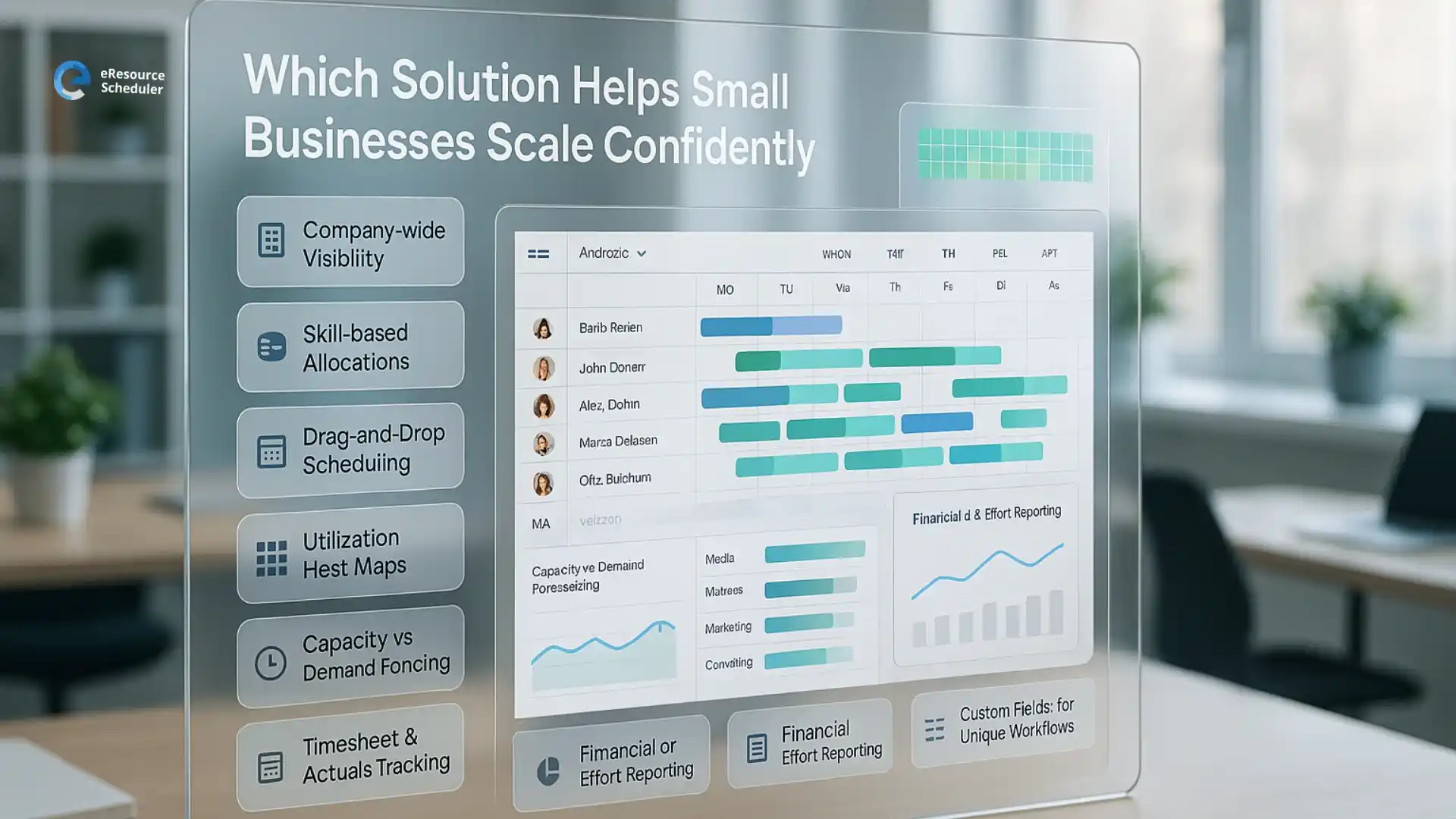
Every small business needs a tool that adapts to its structure. eResource Scheduler stands out because it brings clarity, flexibility and reporting into one platform. Leaders use it for:
It is a resource management system that does not force small companies into rigid processes. Instead it molds itself around the way the team works.
Signs you are ready for a dedicated resource management system:
If two or more of these show up, it is the right time, because waiting only increases inefficiency and cost.
Here is a simple onboarding path that works well for small teams.
Within a few weeks, patterns emerge. Leaders start making decisions with clarity instead of instinct simply by investing in resource management.
Want to scale smarter, not just bigger? Book a demo of eResource Scheduler today to see how integrated timesheet management and resource planning can unlock your growth potential.
1. What kind of small business benefits from resource management software?
Any business juggling multiple projects, clients, or team members. If you are manually allocating work or doing capacity planning on spreadsheets, you will see value fast.
2. How does timesheet management software tie into resource planning?
When timesheet data plugs into your planning tool, you can compare what you scheduled vs what actually happened and adjust forecasts and allocations more precisely.
3. Can resource management reduce hiring costs?
Yes. By spotting underutilized capacity, forecasting demand, and allocating people efficiently, you can avoid unnecessary hires and make smarter decisions.
4. Does resource management really improve team performance?
Definitely. With better visibility, you avoid overloaded employees, balance work more fairly, and ensure the right people are on the right tasks, all of which improve productivity and morale.
5. How soon will I see ROI from a tool like eResource Scheduler?
Many small businesses start seeing improvements within a few weeks. Once your team is set up and utilization reports roll out, you can immediately begin optimizing assignments.

CAPACITY PLANNING
As a business owner, team manager or team leader, you cannot predict everything that this New Year will bring your way. However, what you can do is Be Prepared for anything that comes your way.

Plan Smarter. Schedule Faster. For Free.
Join thousands already using eResource Scheduler to align teams, time, and tasks seamlessly.
 ALL FEATURES INCLUDED