Learn more
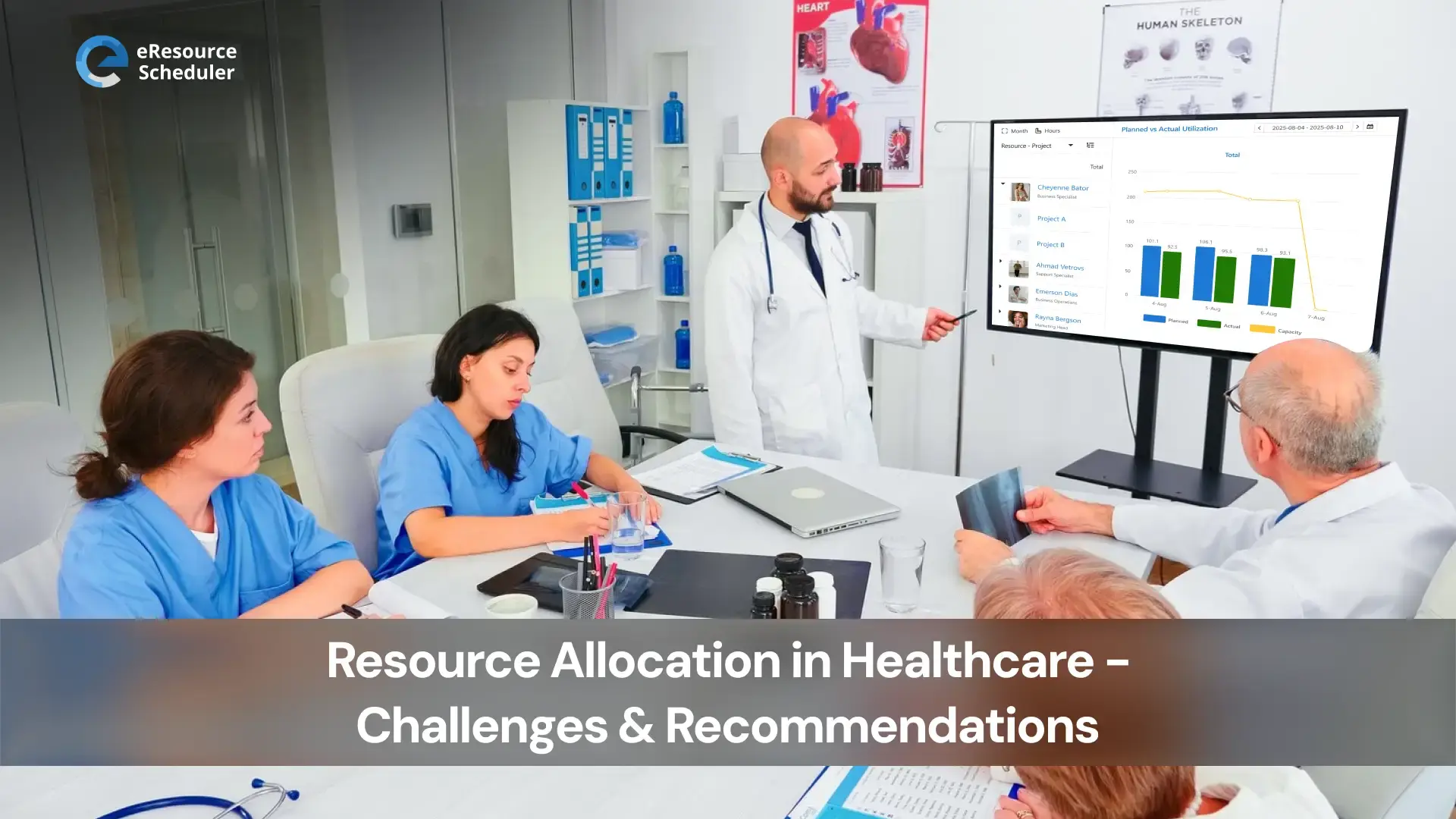
Resource allocation in healthcare is the most critical and complex aspect of resource management for any healthcare center. The dynamics of resource management in healthcare are, however, unique.
Healthcare is a limited resource, and its demand is extensive as everyone needs it. When demand exceeds supply, the resources are fairly limited, and resource allocation in healthcare becomes even more challenging.
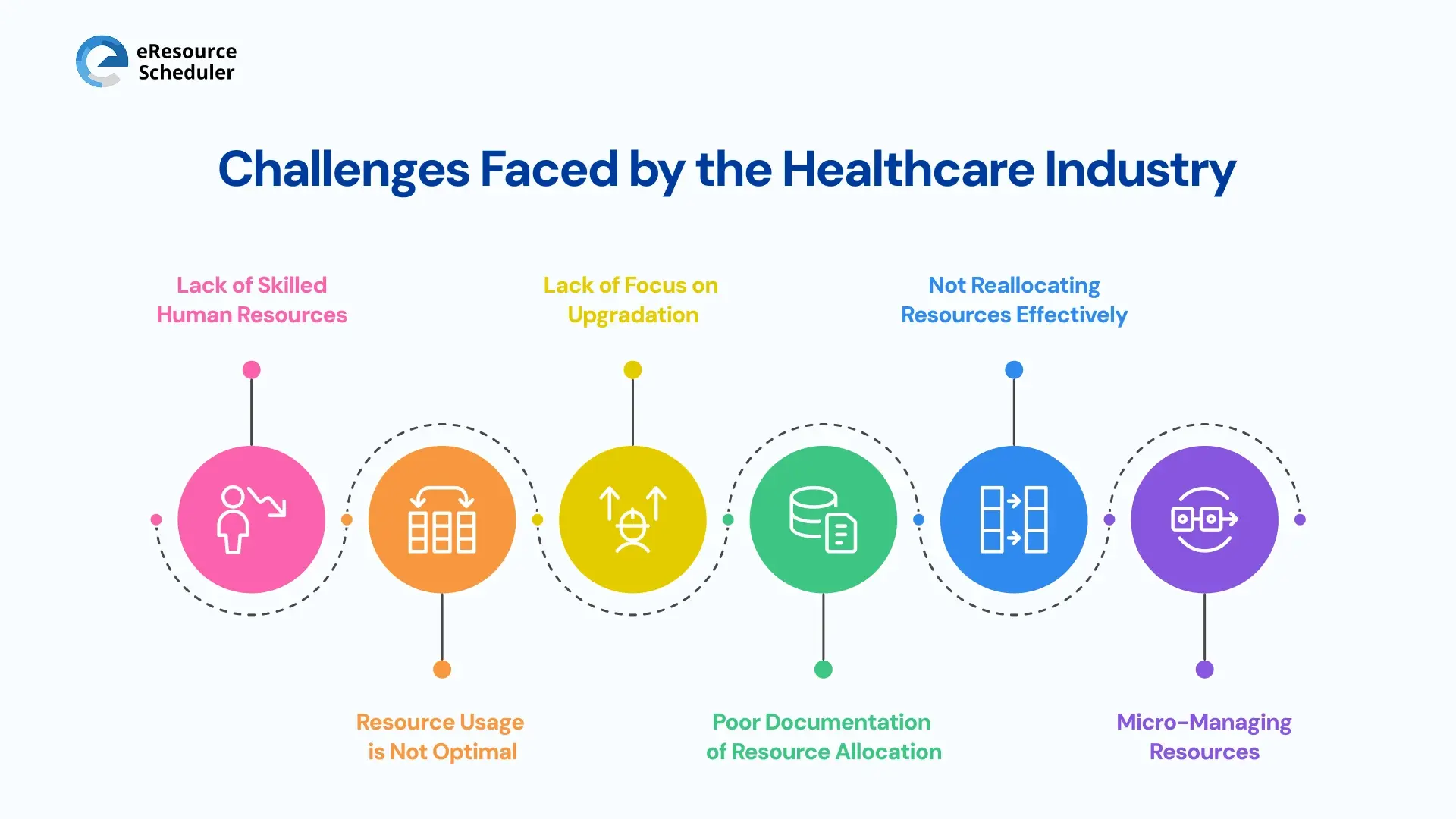
Governments across the world are now focusing on public health and taking measures to improve it. The healthcare industry continues to be engulfed by some serious challenges.
Some of the biggest of them are as follows:
Be it the USA, UK, Australia, or India, there is an alarming shortage of skilled medical professionals. High turnover, inequitable workforce distribution, and lack of quality education providers are some of the most prominent reasons for this shortage. Even the high fees for medical courses are a significant roadblock for several individuals wanting to build a medical career.
Lack of medical staff also means that there is a limited number of professionals to manage the healthcare needs of patients. Overtime and burnouts are very common in the medical industry, and this significantly impacts the quality of healthcare received by the patients.
When the resources are available and allocated, the allocation is often not optimized. Medical professionals with higher skill sets are usually required to work on low-priority cases, and those with lower skills and experience are made to work on more critical projects.
As long as the hiring and allocations meet the minimum requirements of a healthcare facility, this non-optimal resource allocation in healthcare resources is very common. An important reason for this problem is the unsteady nature of the healthcare industry. Unlike other industries, you cannot estimate resource allocation in a medical facility.
If the resources are efficiently handled after considering red flags and unexpected emergencies, their usage can be optimized. A healthcare resources management tool like eResource Scheduler can help make the resource allocation process more transparent and efficient.
Pro Tip:
Treat resource allocation as a capacity strategy, not a staffing exercise.
Medical technologies are advancing rapidly. As a result, medical professionals are regularly required to upgrade themselves with newer skills through short courses and workshops. However, many healthcare facilities do not encourage their medical staff enough for such upgrades.
Also, some facilities do not sponsor such upgrades, due to which the medical professionals are required to manage the entire expenses themselves. This apathetic attitude discourages them and impacts the overall growth of the healthcare industry.
When allocating healthcare resources or resources in any industry, for that matter, it is essential to document the allocation and utilization properly. A large number of medical facilities rely on traditional manual systems where records are updated in lengthy spreadsheets, which are highly prone to errors.
Poor documentation can not just impact the effectiveness of the resource allocation strategy but also make it very difficult for a facility to respond to an emergency. In case of emergencies, the resources are allocated here and there without proper planning or documentation.
This again brings us back to the importance of using reliable resource allocation software. Such solutions can add more transparency to healthcare resource allocation, which helps in maintaining detailed and accurate documentation.

As a staff manager working at a healthcare facility, one of your most important responsibilities is to try to avoid employee burnout as much as possible. This cannot be eliminated; do your best in keeping it to a minimum. Burnout not only affects the work quality of employees but also makes them unhappy with the job.
So, when you see someone from your team who is overworked, make adjustments to manage the workload. Resource leveling is a popular technique of resource allocation in healthcare. In this technique, activities are merged or divided as per the availability of resources for splitting the work.
Healthcare is a field where everything should be double-checked for the safety of the patients. The employees don’t like to be micromanaged. No one would appreciate a staffing or a project manager who wants to manage every small aspect of their job.
Delegate tasks and allow medical professionals to handle things on their own. This way, the staff will not only feel more responsible, but it can also help in improving their confidence. If a particular employee doesn't seem fit for a specific task, allow him/her to take additional training workshops.
There is no denying the fact that there are several significant challenges concerning resource allocation in the healthcare industry. The demand keeps increasing with every passing day, while the supply remains inadequate and unsteady. While healthcare resource allocation can never really be perfected, you sure can take several measures to improve its efficiency.
The majority of the biggest healthcare allocation challenges can be handled more effectively with resource scheduling software. It will work as a quick window to your allocations while also enabling you to reallocate the resources as and when required with complete transparency and ease. The solutions generate utilization reports to help you make sure that all the resources are being used effectively without being overused or overburdened.

Resource allocation will never be static in the healthcare industry. When staffing decisions rely on spreadsheets, instinct, or simply hoping for last-minute reshuffling to work, inefficiencies compound fast. Burnout rises. Care quality slips. Costs quietly leak. The facilities that stay ahead are the ones treating resource allocation as a strategic function, not an administrative chore.
With the right resource scheduling system in place, healthcare leaders gain real-time clarity into availability, utilization, and workload balance. Teams are deployed where they create the most impact. Skill sets are matched with clinical priority. Capacity decisions become proactive instead of rushed.
Ready to bring structure and transparency to healthcare resource allocation? Book a demo and experience resource scheduling built for real-world healthcare complexity with eResource Scheduler.
1. What is resource allocation in healthcare?
Resource allocation in healthcare is the process of assigning staff, equipment, and time to patient care activities. The goal is to ensure optimal use of limited resources without compromising care quality.
2. Why is resource allocation important in healthcare?
Healthcare resources are limited while demand continues to rise. Effective resource allocation helps reduce staff burnout, control costs, and improve patient outcomes.
3. What are the biggest challenges in healthcare resource allocation?
The biggest challenges include staff shortages, unpredictable demand, poor documentation, and inefficient scheduling. These issues often lead to overworked teams and underutilized resources.
4. How does poor resource allocation affect healthcare organizations?
Poor resource allocation increases operational costs and contributes to employee burnout. It can also delay care delivery and impact patient safety.
5. How can software improve resource allocation in healthcare?
Resource scheduling software provides real-time visibility into availability and utilization. It helps healthcare leaders plan proactively, rebalance workloads, and respond faster to changing demand.



Plan Smarter. Schedule Faster. For Free.
Join thousands already using eResource Scheduler to align teams, time, and tasks seamlessly.
 ALL FEATURES INCLUDED