Learn more
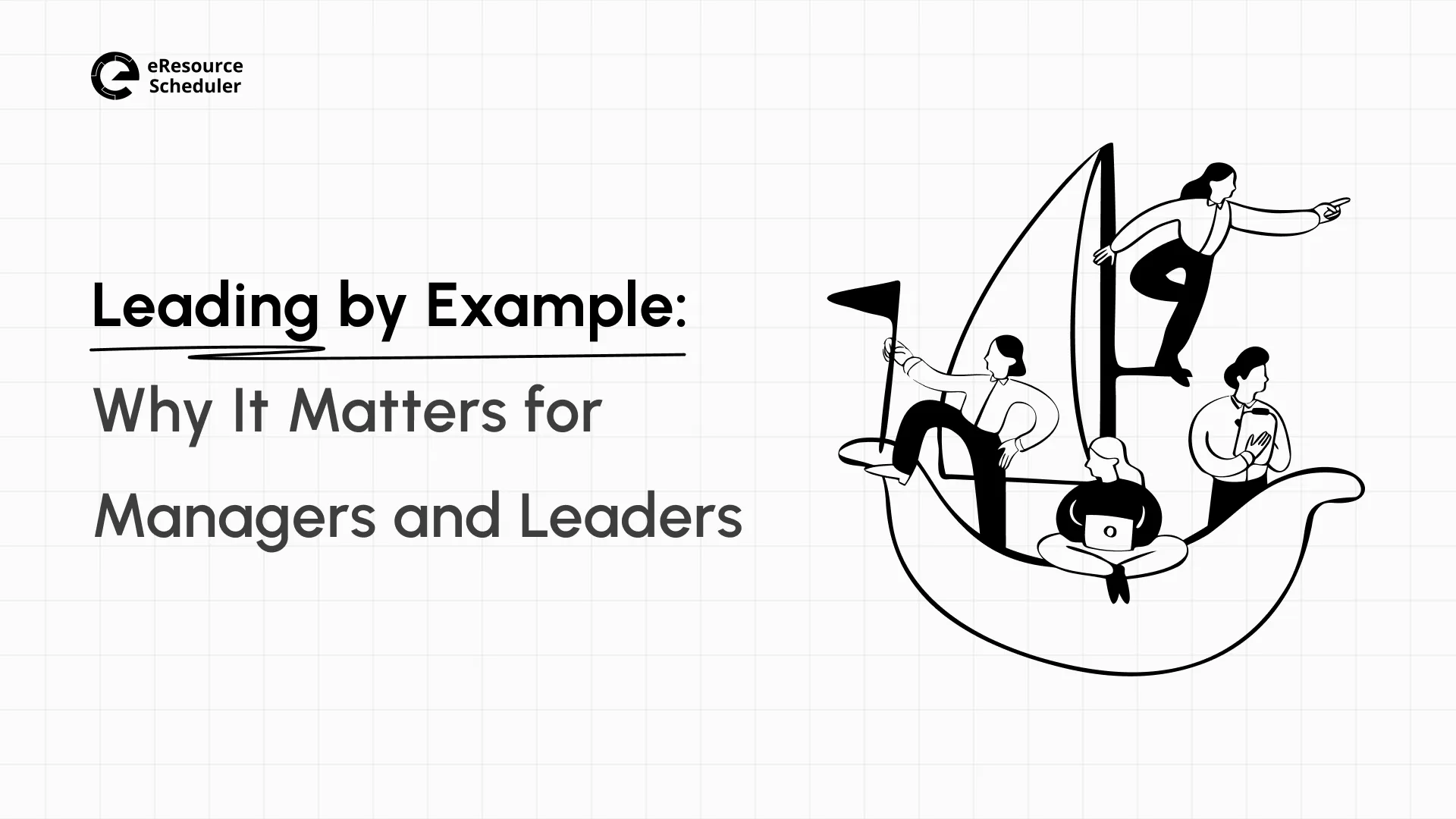
Your team is watching you right now, even when you don’t realize it. They notice when you show up late to your own meetings. They notice when you promise feedback and never send it. Most of all, they notice when your actions match your words, because it's rare enough to matter. Leading by example is not a leadership buzzword you nod along to in a training session. It is the one habit that decides whether people actually follow you or just report to you.
Want a team that works with you and employs the resource management software you want to introduce? This is where it starts.
Picture a Friday afternoon. Your team is racing to close out a project, and you have two options:
1. Leave early (since you technically can) and let your team deal with it.
2. Stay back and help push the team across the line and leave with the team.
A manager checks the calendar and clocks out because the calendar says they can. A leader checks on the team first. The difference is not about effort or intelligence. It is about what you choose to model when nobody’s forcing you to. This is really what leading by example means: Doing the thing before you ask anyone else to do it. If you want your team to hit deadlines, you hit yours first. If you want honest communication, you are the one who starts the hard conversation.
This is also where leadership diverges from management, even though the two are often used interchangeably. Management runs the process, timeline, and output while leadership runs on influence. Understanding leadership and management changes how you show up for your team on days nobody is watching the organizational chart.
The split shows up in small, everyday moments more than in big speeches.
| The Situation | A Manager's Instinct | A Leader's Instinct |
| A Deadline gets Tight | Reminds the team of the due date | Asks what's blocking progress and helps clear it |
| A Mistake Happens | Points to who missed it | Asks what process let it slip through |
| The Day Technically Ends | Clocks out on time | Checks if the team needs anything first |
A manager can enforce a deadline. A leader makes people want to hit it. This instinct, carrying your share of the load instead of just assigning it, is where trust actually starts. So it is worth asking what trust is really worth to you.
This trust does not show up as one big moment. It shows up in four specific ways. Starting with what happens to your team the second they see you pitch in instead of just delegating tasks.
Stay late on Friday and something shifts. Your team stops thinking in terms of ‘my part’ and starts thinking in terms of ‘our deadline’. This shift never comes from a memo about collaboration. It comes from watching someone senior get their hands dirty instead of standing at the door with their coat on. Teams that manage to build real cohesion can almost always trace it back to a leader who modeled it.
Here is the thing about the Friday in question. Your team won’t mention it Monday morning. They do not need to. Respect is not something you can ask for. It is something they hand you quietly, after they have watched how you behave when the stakes are low, and nobody is grading you for it.
Every team eventually adopts the standard their leader tolerates. Let sloppy work slide once, and sloppy becomes the new normal. Staying late when it counts becomes the standard too. All without a single conversation about ‘raising the bar’.
People rarely quit a job they respect. They quit leaders they have stopped trusting. This kind of trust is not built in a single Friday. It is built by a hundred Fridays where you showed up the same way. Independent of whether anyone was keeping score.
What You Gain When You Lead by Example?
• Trust that's built through consistency, not promises.
• A workplace people want to stay in, not just tolerate.
• A visible standard for what good work actually looks like.
• Stronger retention, without needing a counteroffer to keep people around.
• Higher motivation because your team sees effort rather than just hearing about it.
This raises a fair question: Is leadership something you can actually build, or something you either have or don't?
Zoom out from any single manager, and you will see the same pattern at the level of an entire company. Good leadership is not about one person looking competent in a meeting. It is what makes transparency possible across a whole team. The kind where information moves freely, and nobody is guessing what is really going on.
This shows up hardest in industries where there is no room to recover from a dropped ball. Teams in professional services live or die by whether their leadership keeps everyone genuinely aligned. A missed handoff there doesn’t just slow things down; it shows up directly in front of a client. Leadership quality and how well a workplace actually functions are not two separate conversations. They are the same conversation from two different rooms.

So where does this leadership instinct, the one that makes someone stay on a Friday, actually come from? You have probably wondered whether some people are just wired for it. The honest answer is that leaders are made far more often than they are born. Some people walk into a room with more natural confidence, sure, but confidence is not leadership. It is just easier to notice.
Decision-making, communication, the instinct to check on your team before you check the clock. These are built through repetition, not handed to you at birth. If you are self-aware enough to notice your own habits, you can reshape them. This is genuinely useful news, because it means your growth as a leader is not capped by whatever personality you happened to start with.
The same logic holds for the people you lead, not just you. Managers who focus on keeping employees engaged tend to see this play out over and over. Skill and drive are not fixed traits. They grow in the right environment. You are the one who sets the environment.
Knowing leadership can be built is one thing. Actually building it every day is another. This is where the specifics matter.
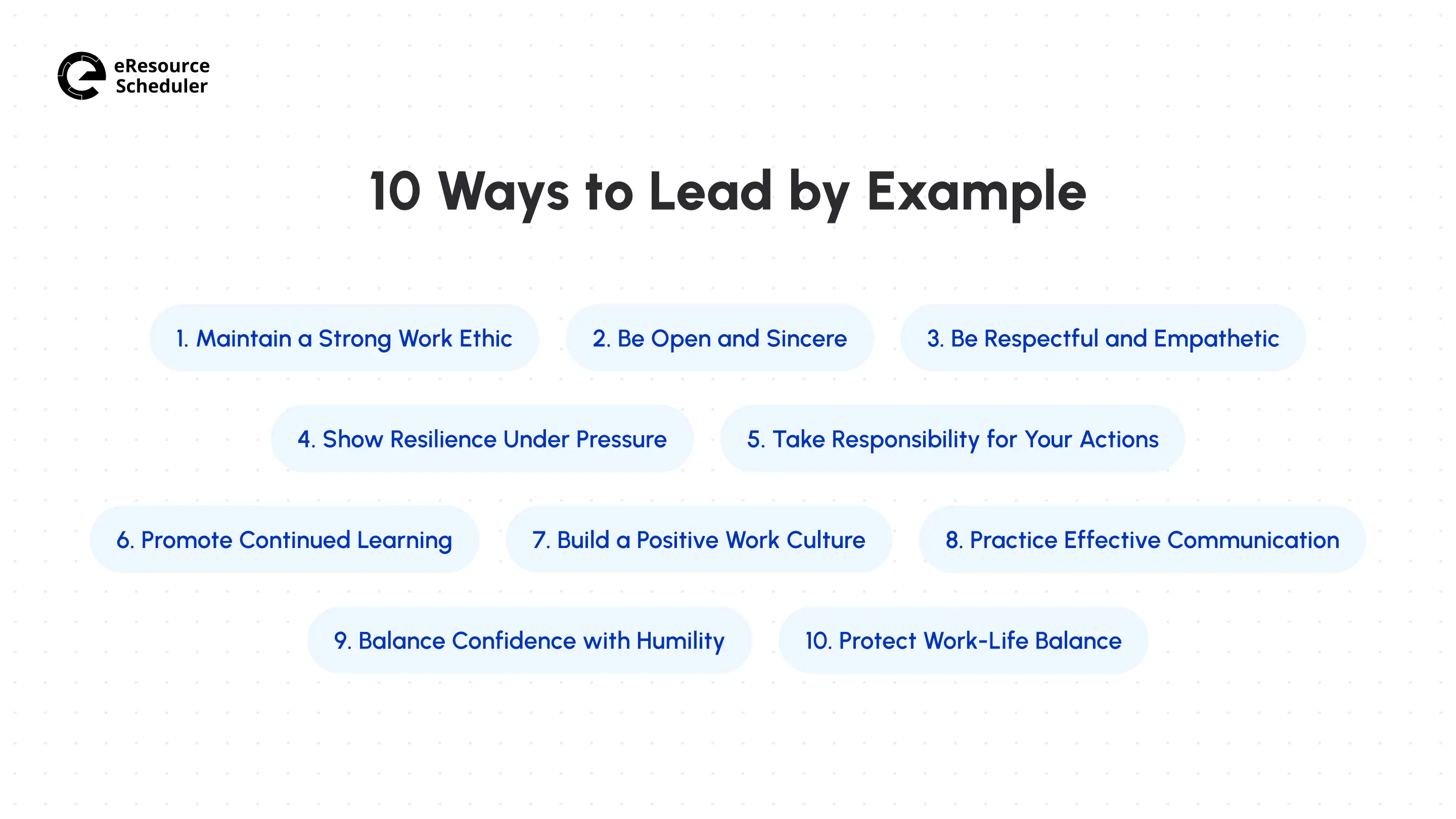
None of these habits work in isolation. They all start from the same place: what your team sees you do before you ever ask them to do it.
Everything else on this list sits on top of this one. When you show up on time, meet your own deadlines, and take responsibilities seriously, your team stops treating effort as optional. This kind of consistency only means something as a pattern, not a one-off. It is easy to work hard when a deadline is looming, and everyone is watching. The real test is whether you hold the same standard on the slow weeks, when nobody would notice if you coasted.
Trust is built on honesty, not polish. Your team values a leader who tells them what’s actually happening, even when it is uncomfortable. When you own your mistakes instead of burying them, your team feels safe enough to own theirs too. Sincerity also means not dressing up bad news to make it easier to deliver. A team that hears the truth from you the first time will keep coming to you early with problems. Before the problems become bigger ones.
Respect has to travel in both directions. If you want it back, treat people like people first and employees second. Listen when someone raises a concern, rather than waiting for your turn to talk. This is what makes people want to work alongside you, not just for you. Empathy also means noticing when someone’s having an off week and adjusting, rather than treating every dip in output as a performance issue. Small moments of consideration add up to a team that feels genuinely seen.
Every business eventually hits turbulence. How you respond sets the tone for everyone watching. Stay level-headed when things go sideways, and your team learns to do the same. Panic spreads fast. So does composure, if you let it. Resilience is not about pretending everything is fine when it is not. It is about staying steady enough, so your team can focus on solving the problem.
Accountability starts at the top, not the bottom. A good leader does not hunt for someone to blame when a project slips. They look at what actually happened and fix it. Sometimes the timeline is never realistic to begin with. If you have watched a project stall because your best people were stretched across too much at once, you already know what overutilization does to your team. Taking responsibility occasionally means admitting you set the pace too fast, not that your team didn’t try hard enough.
The best leaders never stop being students themselves. When you actively build new skills and encourage your team to do the same, growth starts to feel normal instead of threatening. This matters even more with a younger workforce. Genuinely engaging the Gen Z workforce often means rethinking what development looks like. When you visibly invest in your own growth, whether it is a course, a mentor, or admitting you do not know something yet, you allow your team to do the same without feeling like it is a weakness.
A toxic environment erodes motivation faster than almost anything else. When you handle conflict constructively and actually celebrate wins as a team, people feel like their work means something. This feeling outperforms most incentive programs you could design. Culture is not built through a single event or a values poster on the wall. The way you handle disagreements builds trust, long before anyone writes it down as a policy.
Listen carefully. Set clear expectations. Give feedback people can actually use. This is how you cut down on the misunderstandings that quietly drain a team’s energy over time. Vague instructions force your team to guess what you actually meant. Guessing it wrong wastes everyone’s time. Clear communication also means telling people where they stand before a review catches them off guard, not saving every piece of feedback for one formal conversation a year.
Confidence gets you taken seriously. Humility gets you trusted. The best leaders hold both at once, making decisions firmly while staying open to being wrong. Admitting a mistake or taking advice from your team doesn’t weaken your authority. It reinforces it because your team sees someone who values getting it right over being right.
If you are constantly overworked, you are modeling burnout, not leadership. Supporting flexible schedules and respecting people’s time is not a perk; it is maintenance. Managing workload without overloading your team (including yourself) is what keeps leading by example sustainable instead of exhausting. A leader who never takes a break teaches their team that rest is something to feel guilty about. This lesson tends to stick around long after you have moved on to a different role.
This gap between drifting and performing usually comes down to a short list of visible habits, including the ten habits above. The fastest way to know where you stand isn't a personality test. It is asking yourself a few pointed questions.
| Habit | Ask Yourself | If the Answer Is No |
| Work Ethic | Did your team see you hit a deadline this month, not just talk about one? | Pick your next deadline and make it visible |
| Accountability | Last time something slipped, did you name the cause or the person? | Revisit that incident and reframe it out loud |
| Communication | Would your team say they heard bad news from you first, or last? | Share one piece of context you've been sitting on |
| Workload | Have you adjusted anyone's load before they hit burnout, or after? | Check in with whoever's stretched thinnest right now |
A ‘no’ on any of these is not a verdict on your leadership. It's just a starting point: the one habit from the list above worth practicing this week before moving to the next.
Ten habits are a lot to hold in your head at once. What actually matters is what happens once they stop being habits you practice consciously and become a part of who you are.
Here is what nobody tells you about Friday afternoon. It does not stay contained to you. Your team doesn’t just remember you stayed. They start staying too, for their own teams, on their own Fridays. This is the part of leadership most people underestimate. It doesn’t move in a straight line from you to your team. It moves around, through whoever gets promoted next. Whoever gets asked to mentor someone new. Whoever quietly becomes the person their own team watches.
This is also where the practical and the human side of leadership stop being separate conversations. A leader who is consistent enough to be trusted also tends to be organized enough to make trust easy. They know where their team stands, what is overloaded, and what is about to slip. Tools like eResource Scheduler help you lead by example with better information behind every decision.

The ripple effect above does not happen because of one Friday you stayed late or one mistake you owned instead of buried. It happens because these moments repeat until your team stops being surprised by them, and starts repeating the pattern themselves.
If you want to stay honest about this, tell someone on your team it's fine to call it out when you're not living up to something you claim matters. It won't be comfortable the first time. It also won't need to happen often, because someone who can say it tends to watch you course-correct before they ever have to.
Think about the best leader you've ever worked for. You probably can not name the one moment that earned your trust. What you remember is never having to wonder where you stood with them, built the same way this piece has described: one small, repeated choice at a time. That's the standard you keep choosing, starting with whoever's on your team today.


Plan Smarter. Schedule Faster. For Free.
Join thousands already using eResource Scheduler to align teams, time, and tasks seamlessly.
 ALL FEATURES INCLUDED