Learn more
Enterprise teams in 2026 are leaning hard into mobile apps to improve resource utilization and for good reason. Work is no longer desk-bound. Decisions happen on the move, schedules shift in real time, and leaders expect instant visibility into capacity and performance.
That’s where the modern employee scheduling app steps in alongside mobile-first platforms like the eRS Mobile App from eResource Scheduler. Together, they are helping enterprises tighten utilization, cut idle time, and turn workforce data into action. Not someday. Today.
This shift isn’t just about convenience. It’s about competitive advantage.
Let’s unpack how the ability to schedule on mobile phones is reshaping workforce efficiency and what smart organizations are doing differently.
Traditional desktop systems simply can’t keep up with how work actually happens anymore. One of the main reasons for this is that teams now work in hybrid settings, projects are distributed across various verticals, and require cross-team collaboration. Another reason why traditional desktop systems no longer cut it is that delivery pressure has also increased.
Mobile apps now sit at the center of operational strategy because they enable leaders to:
The best resource management software that also have a mobile app don’t just display data. They drive behavior.
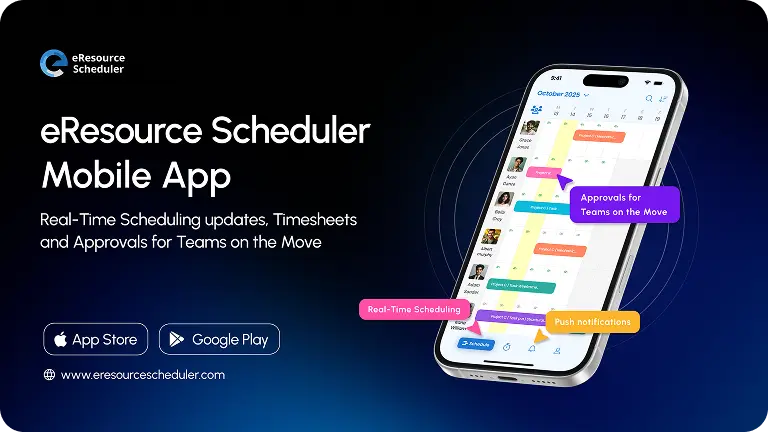
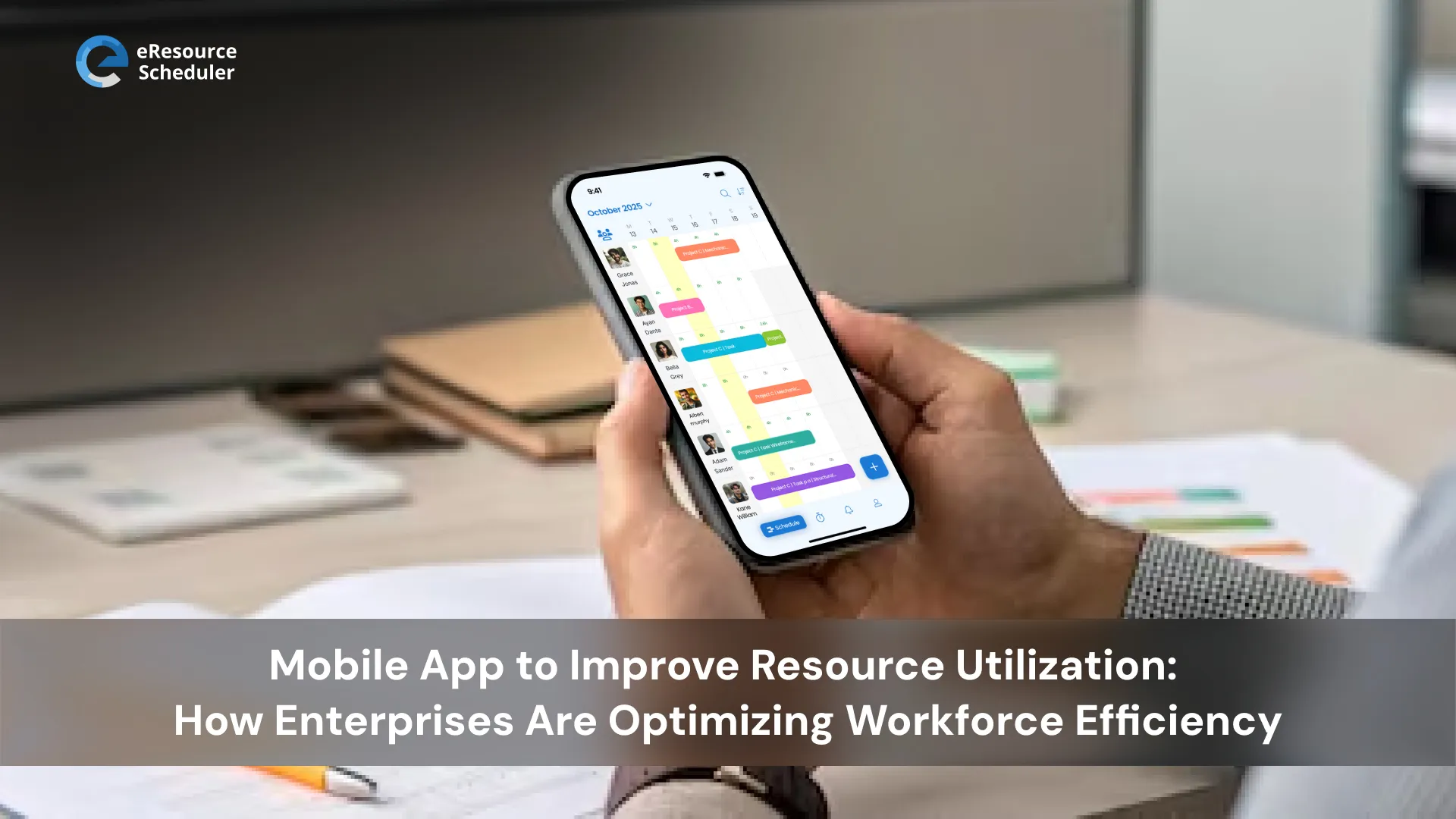
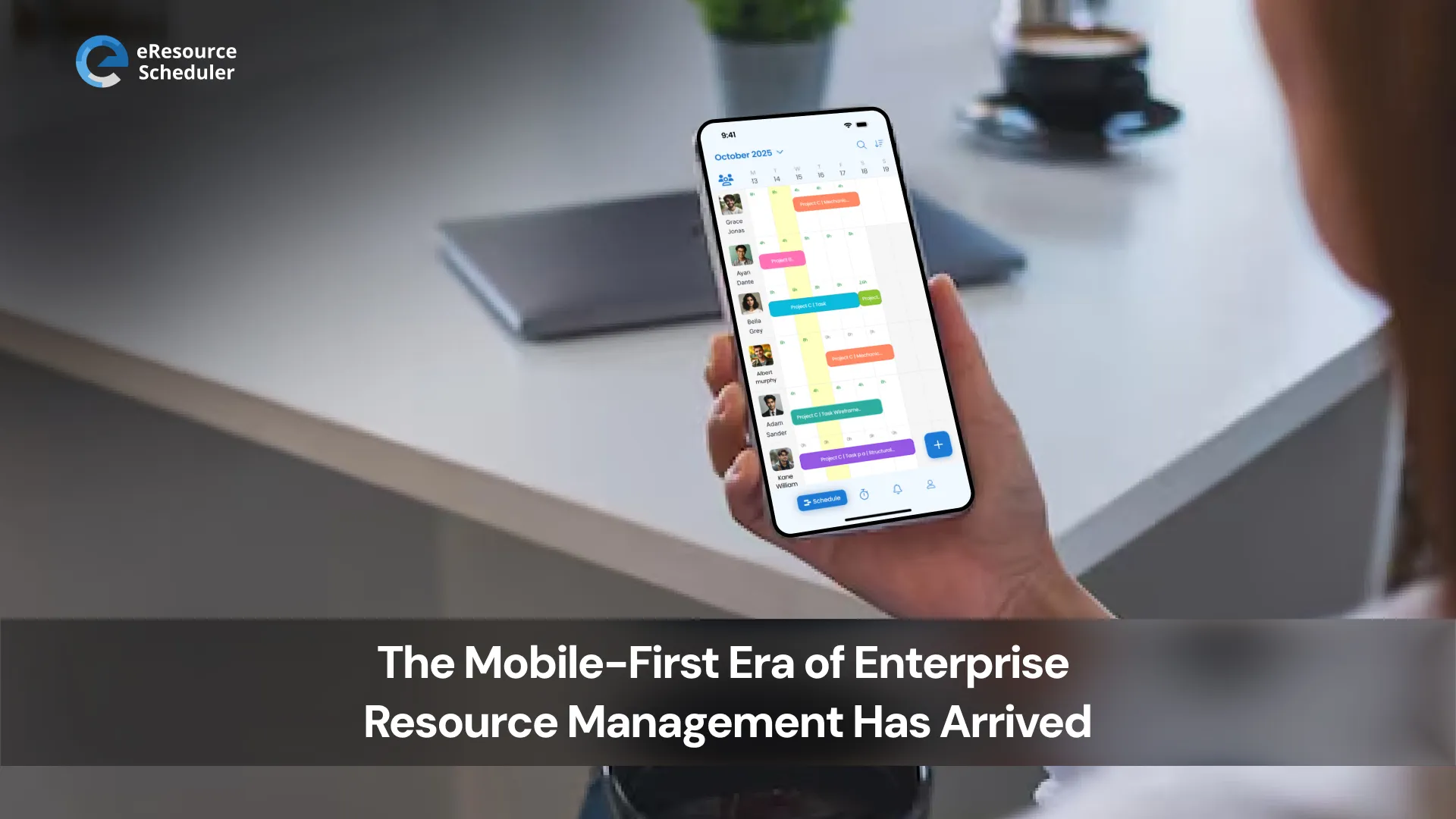
With the eRS Mobile App, enterprises gain live access to schedules, timesheets, and resource updates while pairing seamlessly with mobile apps to improve resource utilization already powering modern operations.
That’s workforce intelligence in your pocket.
Not all tools are created equal. True workforce resource optimization tools go beyond surface-level dashboards. They bring together scheduling, capacity planning, utilization tracking, and financial visibility in one connected ecosystem, so you don’t have to switch between tools.
Here’s what high-performing enterprises look for:
eResource Scheduler delivers all of this through a complete sync between the desktop version and the eRS mobile app, helping leadership teams turn workforce data into revenue-aligned decisions.
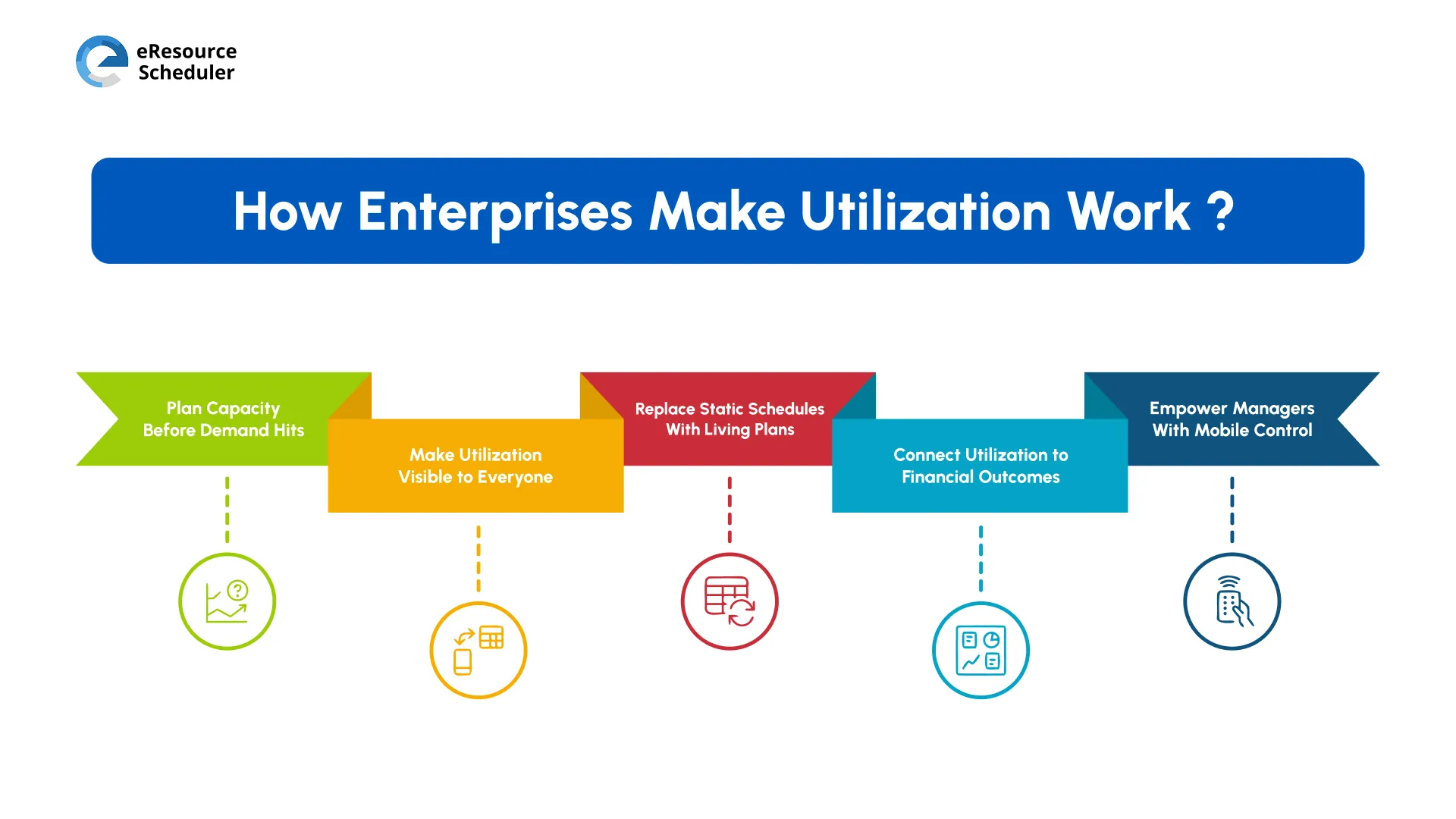
Strong utilization does not happen by accident. It’s engineered. The most effective enterprise resource utilization strategies follow a clear playbook.
Forward-looking teams model workloads and schedules weeks in advance. They forecast bottlenecks and build buffers. They keep a Plan B ready, but their Plan A is strong to begin with, because they have a single dashboard that gives them all the information they need about their resources.
When utilization is transparent, teams self-correct faster because gaps and overloads are visible in real time, not discovered later in reports. Shared resource visibility aligns managers, finance, and delivery teams around the same data, reducing back-and-forth decisions. Mobile access extends this clarity beyond desks, keeping distributed teams connected to live schedules. The result is faster adjustments, fewer surprises, and utilization that improves continuously instead of reactively.
Modern schedules evolve daily. A new project may require you to adjust the schedules of resources that are already working on different assignments. Or Resource A might be a better fit for a project than Resource B, but has no idle time. In such cases, managers often need to update schedules and make changes on the go. Mobile access ensures updates reach everyone instantly.
Smart leaders tie hours to dollars. Every staffing choice carries a cost and an opportunity. eResource Scheduler lets organizations tie cost, profit, and margin to resource schedules so every business decision is backed by data, not mere assumptions.
Decisions can’t wait for Mondays. Team leaders need control in real time. Whether approving logged hours or making last-minute changes to schedules, having access to your resource scheduling software on your mobile phone becomes a true game-changer.
This is exactly where eResource Scheduler stands out, by combining a mobile app to improve resource utilization with enterprise-grade planning, management reports, and forecasting.
In a day and age where work moves fast, speed matters. But so does clarity. The new generation of mobile workforce efficiency solutions focuses on reducing friction across every stage of work.
From assigning projects to submitting timesheets, everything happens faster when teams are able operate from their phones.
Top-performing mobile solutions typically offer:
With the eRS Mobile App, enterprises extend the power of eResource Scheduler into daily workflows, creating a seamless bridge between strategy, execution, and the convenience of mobility.
Mobile transformation shows up most clearly in five operational areas.
| FIVE OPERATIONAL AREAS WHERE MOBILE APP TRANSFORMATION SHOWS UP | |
| Scheduling Agility | Resource managers adjust assignments in seconds, not days. |
| Timesheet Compliance | Submission rates improve when logging time takes seconds. |
| Faster Decision Cycles | Managers respond immediately to changes in demand. |
| Reduced Bench Time | Idle resources become visible and redeployed quickly. |
| Higher Team Accountability | Everyone sees expectations in real time. |
In many organizations, mobile adoption alone increases utilization by double digits within the first quarter. This is not just basic tech hype, but an operational reality.
Pro tip:
Treat the implementation of the mobile app like a change management initiative, not a
feature launch. Train managers first, define KPIs upfront, and use weekly reviews to reinforce adoption. Tools only
work when behaviors change.
True optimization happens when scheduling connects directly to capacity planning, utilization reporting, and financial forecasting. This integrated approach turns schedules into strategic assets. eResource Scheduler was built for enterprises that care about utilization, margins, and delivery confidence.
A dedicated employee scheduling app plays a critical role, especially for shift-based teams. Its mobile app extends that power into everyday operations, supporting:
By combining mobile apps to improve resource utilization, robust forecasting, and leadership-grade analytics, eResource Scheduler gives decision-makers a single source of truth.

Future-proofing isn’t about chasing trends. It’s about building systems that adapt as fast as your business does. Enterprise teams are growing more distributed. Projects are moving more quickly. Clients expect updates in real time. That means workforce visibility can’t live inside quarterly reports or desktop dashboards anymore.
Mobile access is becoming the operational baseline.
Organizations that win in the long term are the ones giving managers and teams instant clarity on schedules, availability, and utilization. Not next week. Right now. With mobile apps to improve resource utilization, leaders stay connected to workforce performance whether they are in meetings, on-site, or traveling.
This is where eResource Scheduler’s eRS Mobile App quietly creates an edge. Resource data stays live. Decisions happen faster. Teams stay aligned without extra layers of communication.
Future-ready enterprises don’t wait for problems to surface. They build mobile-first processes that keep capacity balanced, workloads visible, and delivery on track every day.
Mobile is no longer a nice-to-have. It’s the operational backbone of modern workforce management.
The combination of mobile apps to improve resource utilization, strong planning processes, and enterprise resource management and scheduling software like eResource Scheduler creates a powerful advantage.
If your teams are already mobile, your resource strategy should be too.
Ready to experience it firsthand? Book a demo of eResource Scheduler and see how the eRS Mobile App transforms workforce efficiency.
1. How do mobile apps improve resource utilization?
Mobile apps help enterprises manage schedules, track availability, submit timesheets, and monitor utilization in real time, enabling faster decisions and better workforce efficiency.
2. How do mobile tools increase workforce productivity?
They remove delays. Managers approve work instantly, teams update availability on the go, and leaders spot capacity gaps before they impact delivery.
3. Can mobile apps replace traditional resource management software?
Not entirely. The strongest setups combine mobile access with enterprise software like eResource Scheduler that handles forecasting, reporting, and strategic planning.
4. Is an employee scheduling app enough for enterprise teams?
A standalone employee scheduling app helps with shifts, but true optimization requires integration with utilization analytics, capacity planning, and financial visibility.
5. How quickly can enterprises see results from mobile workforce tools?
Most organizations notice improvements in timesheet compliance and utilization within weeks of adopting mobile apps to improve resource utilization, especially when paired with structured rollout plans.

Plan Smarter. Schedule Faster. For Free.
Join thousands already using eResource Scheduler to align teams, time, and tasks seamlessly.
 ALL FEATURES INCLUDED