Learn more
Your team is scrambling. A client needs someone on-site in two hours, but your project manager is stuck in traffic with no laptop access. The resource calendar? Locked behind a desktop login. The approval? Waiting on someone who's "away from their desk." Sound familiar?
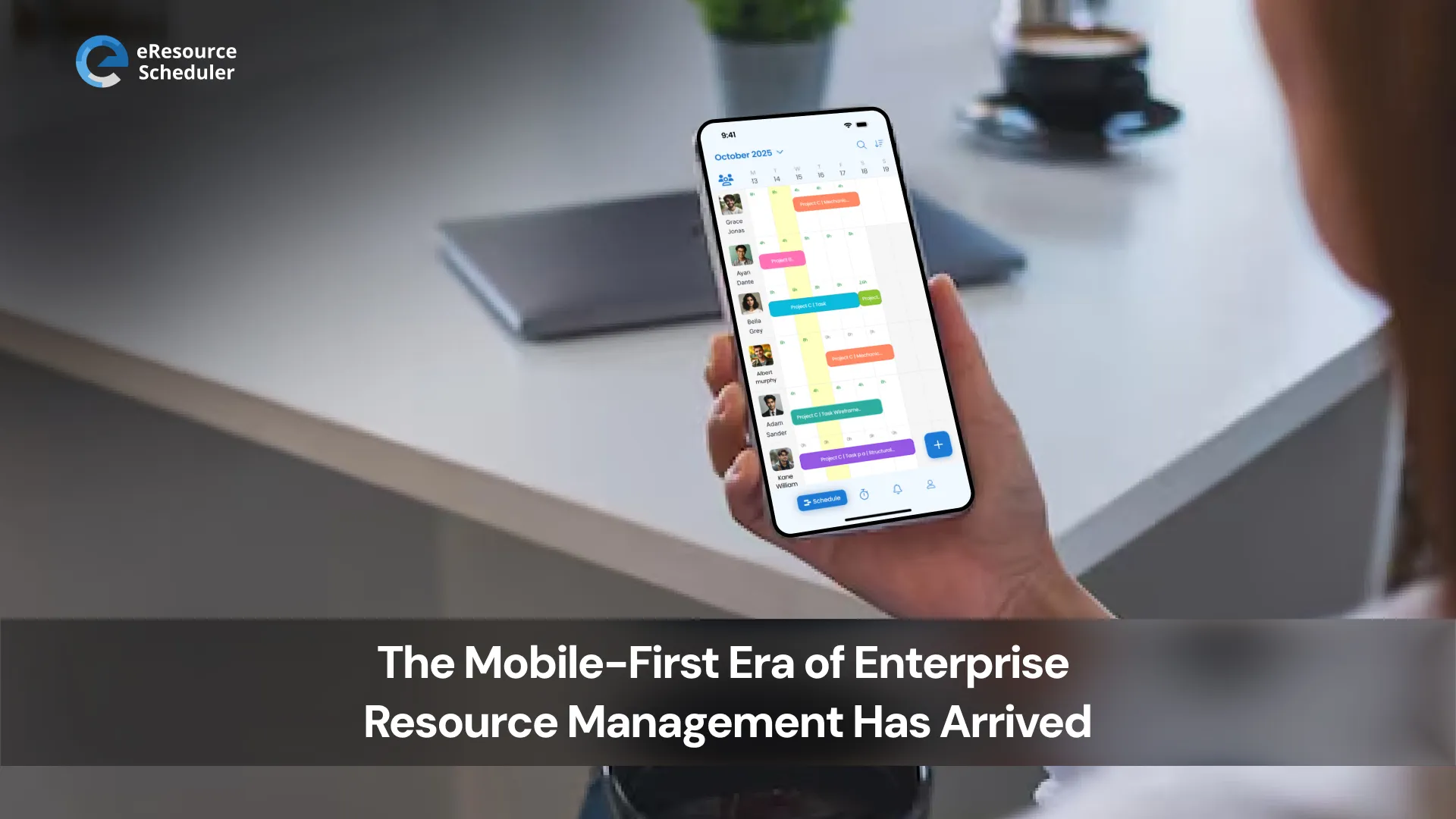
Welcome to 2026, where forward-thinking software like eResource Scheduler have figured out what legacy systems haven't: work doesn't happen at desks anymore. Enterprise Resource Management in 2026 isn't about clunky dashboards that chain managers to their computers. It's about having your entire operation in your pocket, accessible through a resource scheduling app that actually works the way modern teams do.
The shift to mobile-first platforms isn't just a tech upgrade. It's a survival move. Companies still relying on desktop-only resource management systems are watching their competitors make decisions faster, deploy teams smarter, and keep everyone in the loop without the "I'll check when I'm back at my desk" delays that kill momentum.
Let's talk about why mobile-first is eating the resource management world, and why your business can't afford to ignore it.
Enterprise Resource Management in 2026 isn't your 2015 playbook with a fresh coat of paint. The entire game has changed.
A decade ago, resource management meant spreadsheets, weekly planning meetings, and hoping your carefully crafted schedule didn't blow up the moment someone called in sick. Managers sat at desks, toggled between browser tabs, and played resource Tetris on dual monitors. It worked... until everyone stopped sitting at desks.
Now? Your sales team works from coffee shops. Your consultants bounce between client sites. Your field technicians are literally everywhere except the office. And that desktop-only resource management system you've been nursing along? It's actively costing you money.
Modern Enterprise Resource Management in 2026 is built around three realities legacy systems ignore:
Reality #1: Decisions happen in real time, not during office hours. A client calls at 4 PM Friday asking if you can staff a project Monday morning. Your team lead is at their kid's soccer game. With mobile-first platforms, they check capacity, assign resources, and confirm, all from the bleachers. Desktop-only? That decision waits until Monday. Guess who lost the project.
Reality #2: Your team expects the same tech experience at work that they get everywhere else. They can order dinner, book flights, and manage their entire lives from their phones. But resource management still requires a VPN login and three browser windows? That's not just outdated, it's insulting.
Reality #3: Visibility can't wait. When a project goes sideways, waiting for someone to "get back to their desk" to see who's available isn't management, it's negligence. Mobile-first means everyone sees what's happening, when it's happening, from wherever they're happening to be.
The difference between 2026 and five years ago isn't just better technology. It's the death of "I'll handle that when I'm back at my computer."
Here's the thing about mobile-first platforms: they're not just convenient. They're competitive weapons.
Think about the last time a resource conflict almost derailed your project. Desktop-only systems let these problems hide until they explode. Mobile-first platforms catch them in real time.
Speed wins projects. Approvals that used to take hours happen in minutes. A project manager spots an opening, assigns the resource, and moves on, all before their coffee gets cold.
Real-time visibility stops fires before they start. Resource conflicts get flagged instantly. Capacity warnings pop up before you overcommit. Problems get caught early, when they're still easy to fix.
Your team works everywhere except the office. Construction managers update schedules from job sites. Consultants check assignments between client meetings. When workforce management best practices meet mobile technology, teams move faster.
Your competitors already figured this out. While you're waiting for someone to get back to their desk, they're three moves ahead.

Not all mobile apps are created equal. Some are just desktop software shoved into a phone screen. Spoiler: that's not it.
Here's what actually matters in 2026:
Smart scheduling that thinks ahead. It spots double bookings before you do, flags capacity issues, and suggests better allocations. No more playing Tetris at midnight.
Real-time everything. Who's free? Who's drowning? Who's about to ghost because they're at 150% capacity? You see it all, live, no refresh needed.
Works offline (because cell service isn't). Your field team hits a dead zone and the app doesn't throw a tantrum. It syncs when you're back online like nothing happened.
Timesheet software that doesn't make people want to cry. Log hours on the spot, not Friday at 5 PM when you're trying to remember what you did on Tuesday. Approvals happen fast, billing stays clean, everyone wins.
Cloud-native so it just works. No "please restart your computer" nonsense. Updates happen automatically. Integrations don't require a PhD.
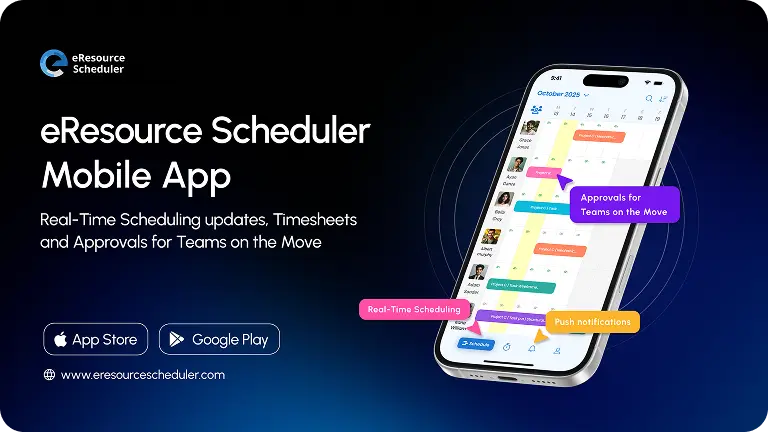
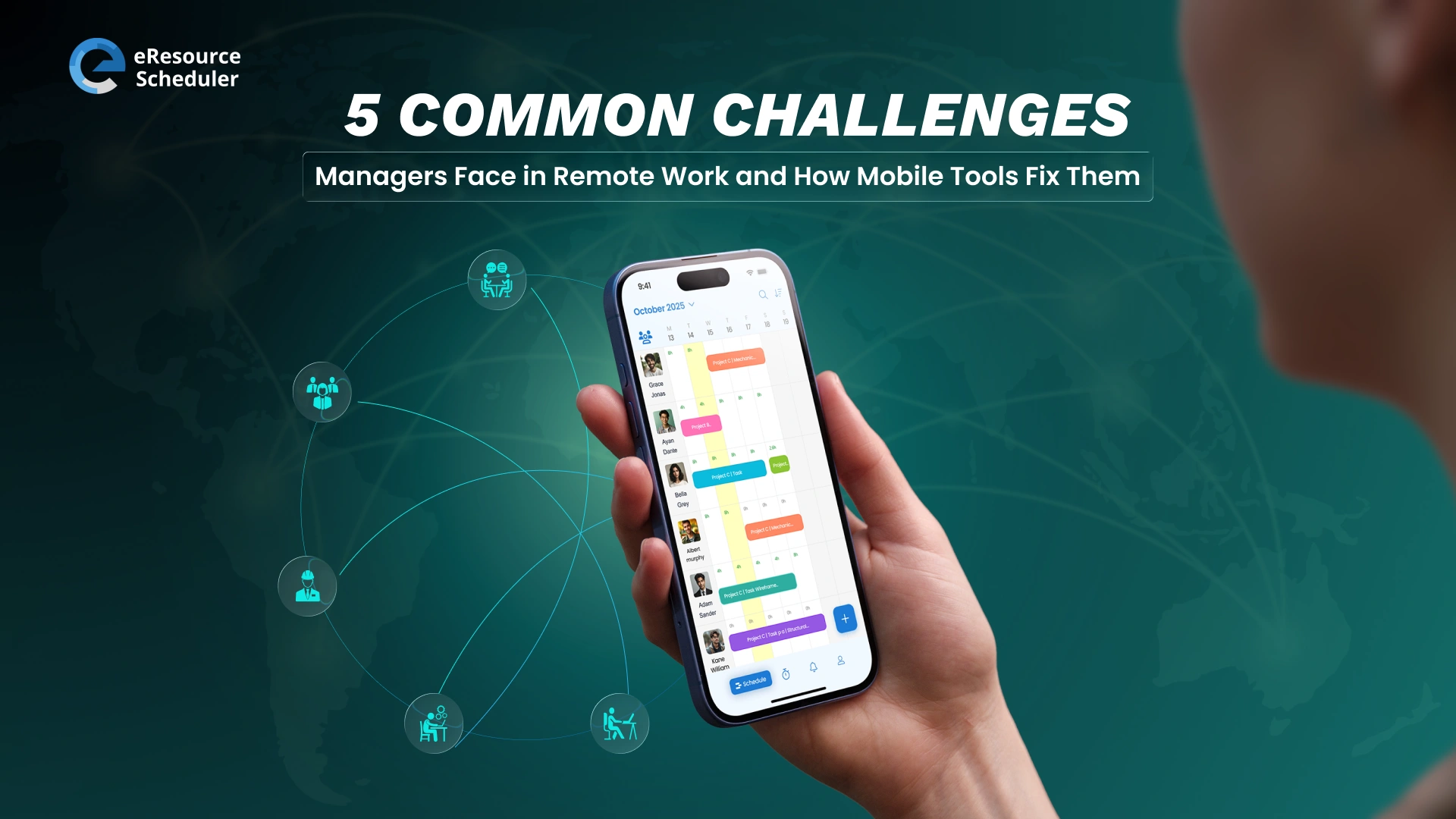
eResource Scheduler's mobile app does all of this without making you open your laptop once. Because honestly, if your resource management can't keep up with how fast your team moves, what's even the point?
Approvals that take three days? That's a you problem, not a workload problem. Mobile platforms let managers sign off in seconds from their couch, their car, wherever. Projects don't stall waiting for someone to "check email later."
Schedule changes used to mean chaos. Client moves a deadline, now you're frantically texting everyone hoping they see it. Mobile pushes updates to everyone instantly. No hoping, no guessing, no "wait nobody told me."
Billable hours vanish when people log time on Friday trying to remember what happened Monday. Mobile time tracking catches hours the second they happen. Your consultants log right after meetings. Field techs clock in from job sites. Money stops disappearing.
Resource conflicts tank morale faster than anything. Overbook someone or leave them sitting idle, and trust evaporates. Resource capacity planning tools show exactly who can handle what before you commit.
eResource Scheduler's mobile app handles this without adding extra steps. Faster decisions, fewer conflicts, better utilization. That's how teams win in 2026.
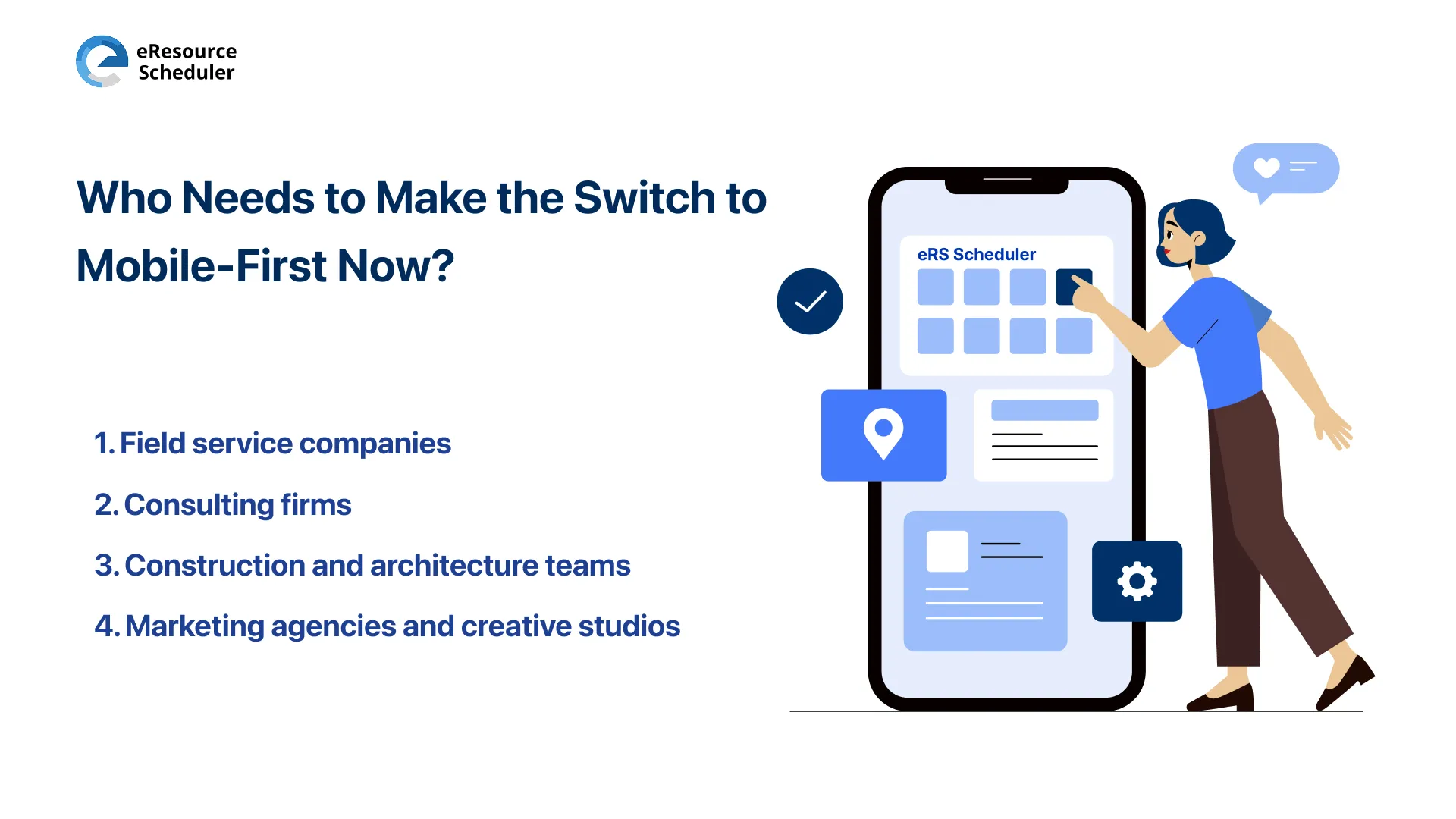
If your team isn't chained to desks, you need mobile-first yesterday.
Field service companies: Crews across multiple sites can't wait for someone to "get back to the office" to update schedules.
Consulting firms: Clients expect fast responses. Desktop-only means you're losing deals while competitors move faster.
Construction and architecture teams: Site changes, weather delays, last-minute shuffles. Mobile keeps everyone synced without the lag.
Marketing agencies and creative studios: Hybrid teams scattered everywhere need tools that match how they actually work.
Resource management mobile applications like eResource Scheduler already powers teams across these industries because waiting for desktop access isn't a workflow. It's a bottleneck dressed up as business as usual.
If your competitors can make decisions faster than you can open your laptop, you're already behind.
Enterprise Resource Management in 2026 isn't about having the fanciest software. It's about having software that moves as fast as your business does.
Desktop-only systems had their moment. That moment ended when your team stopped working from desks. Mobile-first platforms like eResource Scheduler aren't the future anymore. They're the present. And the companies still treating mobile as an afterthought? They're watching opportunities walk straight to competitors who can say yes faster.
Your team deserves tools that don't slow them down. Your clients deserve response times that don't depend on office hours. Your business deserves resource management that actually keeps up.
The switch to mobile-first isn't a question of if. It's a question of how much longer you can afford to wait.
Ready to see what mobile-first resource management actually looks like? Download eResource Scheduler's mobile app today and stop letting your desk define your decisions.
1. What is the difference between traditional ERM and mobile-first ERM in 2026?
Traditional ERM locks you to a desktop. Mobile-first ERM works wherever your team works. The difference is speed, accessibility, and actually matching how business happens in 2026. Desktop systems wait for office hours. Mobile-first systems move in real time.
2. How does mobile-first resource management improve field team productivity?
Field teams get instant access to schedules, updates, and assignments without waiting for someone back at the office. They log time on-site, get notifications about changes immediately, and can flag issues the second they happen. Less waiting, more doing.
3. What industries benefit most from mobile-first workforce management platforms?
Field services, consulting firms, construction, architecture, marketing agencies, and any business with distributed or hybrid teams. Basically, if your team isn't sitting at desks all day, mobile-first platforms are built for you.
4. Can mobile-first platforms integrate with existing systems?
Yes. Cloud-native mobile-first platforms like eResource Scheduler integrate smoothly with your existing tools without requiring massive IT overhauls. Your data flows where it needs to go, automatically.
5. How quickly can teams adopt mobile-first resource management software?
Most teams are up and running within days, not weeks. Mobile apps are intuitive because people already know how to use phones. The learning curve is minimal, and the productivity gains start immediately.

Plan Smarter. Schedule Faster. For Free.
Join thousands already using eResource Scheduler to align teams, time, and tasks seamlessly.
 ALL FEATURES INCLUDED