Learn more
A resource management solution is software that helps organizations plan, assign, and track how their people, time, and skills are used across projects. It is built for project-driven teams that need real answers before work begins: who is available, who is overloaded, and whether the right skills are in place. Unlike a general project management tool that focuses on tasks and deadlines, a resource management software solution sits specifically at the intersection of your people and your project pipeline.
Most organizations do not realize they need one until the damage is already showing up. Missed deadlines, burned-out employees, a manager spending half their week just figuring out who is free. According to Wellingtone's State of Project Management report, poor resource management ranks among the top challenges organizations face globally, with fewer than half reporting consistent on-time project delivery. The gap between teams that struggle and teams that consistently deliver is rarely about effort. It is almost always about visibility.
This guide walks you through what to look for in a resource management solution, how different types of organizations should evaluate their options, and what mistakes to avoid before you commit to anything.
Project management software helps you plan and track the work. Resource management software helps you plan and track the people doing the work. Both matter, but they answer different questions.
| Project Management Software | Resource Management Software | |
| What it manages | Work | People / Resources |
| Answers the question | What needs to be done and by when? | Who should do it and do they have the bandwidth? |
| Visibility into | Task progress and deadlines | Team availability, skills, and workload |
| Prevents | Missed milestones | Overallocation and burnout |
| Helps you plan | Project timelines | Resource capacity and future demand |
| Used by | Project managers and team members | Project managers, resource managers, team leads, and resources themselves |
| Without it you risk | Disorganized delivery | The wrong people on the wrong work at the wrong time |
| Best for | Teams that need structure around delivery | Teams that need visibility into their people |
| Works best when | Scope and tasks are clearly defined | Multiple projects share the same pool of people |
| Limitation | Does not show if your team can actually handle the work | Does not replace task-level project tracking |
The reason this distinction matters is that most project failures are not caused by bad planning at the task level. They are caused by resource problems that never surfaced in time. Someone got double-booked. A key person was already at capacity when they got assigned. A skill gap only showed up mid-project. A project management tool will not catch any of that. A resource management solution will.
Many organizations use both, and that is the right approach. But if you are only running a project management tool and wondering why projects keep slipping, the missing piece is almost always resource visibility.
Most organizations do not go looking for a resource management solution on a good day. They go looking after something has already gone wrong. Here are the most reliable signs your current approach is no longer working:
If most of these sound familiar, your organization is likely stuck in a pattern of reactive resourcing rather than planning ahead. It is a good sign you are ready to move to a dedicated resource management solution.
This is where most buying decisions go wrong. Teams either get drawn in by a long feature list that does not match their actual problems, or they overlook the one capability that would have solved everything. Start with your specific pain points and work backwards from there.
That said, these capabilities matter regardless of your size or industry:

There is no one-size-fits-all answer here. The right tool depends on the nature of your work, the size of your team, and the specific problems costing you the most time right now.
The biggest pain point is almost always visibility. Who is working on what, how much capacity they have left, and whether taking on new work is even realistic right now.
What to prioritize:
For consultancies, resource management is directly tied to revenue. Bench time is expensive. Overallocation leads to quality problems and attrition. The evaluation criteria here goes well beyond basic scheduling.
What to prioritize:
At enterprise scale you are not managing one team or one department. You need a solution that handles complexity without becoming a burden to manage itself.
What to prioritize:
One thing enterprise buyers consistently underestimate is adoption. A solution with a steep learning curve will get ignored no matter how capable it is. Prioritize tools with strong onboarding support and an interface that does not require extensive training to use day to day.
Choosing the right tool is only half the job. How you roll it out determines whether it actually gets used. Here is a simple path that works:
1. Map how things work today. Where does resource information live right now? Who makes allocation decisions? Where do conflicts happen most? Know this before you touch any new software.
2. Define what good looks like in 90 days. Fewer scheduling conflicts? Better capacity visibility? Less time spent figuring out who is free? Be specific so you know when the tool is actually working.
3. Start with one team. Do not roll out across the entire organization at once. Start small, learn what works, then expand.
4. Clean up your data before you go live. A resource management solution like eResource Scheduler is only as useful as the data inside it. Make sure team profiles, skills, and availability are accurate before you launch.
5. Train the people who will use it daily. The managers and team leads who live inside this tool every day need hands-on time before it goes live. Their buy-in determines everything.
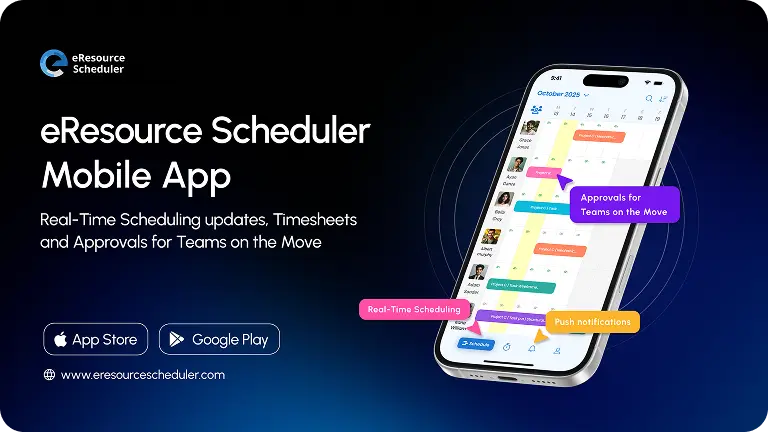
For a deeper look at what a successful rollout involves, this guide to resource planning covers the full process from start to finish. It is also worth considering whether the solution has a dedicated resource management application so your team can stay on top of schedules and updates even when they are away from their desks. For distributed or hybrid teams, this is increasingly non-negotiable.
Even well-intentioned buying decisions go wrong. Here are the mistakes that come up most often:
Most of these mistakes come down to not having a clear picture of what the organization actually needs before starting the search. Teams that get it right almost always start with their problems, not the product.
Ericsson, a global technology company with over 100,000 employees, faced exactly this kind of challenge. Scheduling overlaps were causing project delays across teams, and the lack of a centralized resource view was making it impossible to act before problems escalated. After switching to eResource Scheduler, they moved from reactive firefighting to on-time delivery.
Read More: https://www.eresourcescheduler.com/case-studies/ericsson
Getting resource management right is one of the most impactful things an organization can do for its project delivery, its people, and its bottom line. When you have real visibility into capacity, availability, and workload, decisions that used to take days back-and-forth take minutes. Projects run smoother, teams stay healthier, and you stop losing time and money to problems that should never have happened in the first place.
The right solution depends on the size of your organization, the nature of your work, and the specific problems costing you the most time right now. Use this guide as your starting point, not a checklist. Understand your pain points first, then find the tool that speaks directly to them.
All of the resource management and business benefits covered in this guide are available to users of eResourceScheduler, a resource management and scheduling software built to give organizations complete visibility into their teams, capacity, and project pipeline.
And when decisions are made with confidence, everything else follows. Better project outcomes, healthier teams, and an organization that is always one step ahead instead of one step behind.
1. What should I prioritize when evaluating resource management solutions?
Start with your pain points, not the feature list. Resource management software like eResource Scheduler gives you real time visibility into availability, capacity, and workload across all active projects.
2. How is resource management different from workforce management?
Resource management focuses on allocating people across projects based on skills and capacity. Workforce management covers attendance, payroll, and compliance. If project delivery is your challenge, resource management software is what you need.
3. What are the key steps to getting resource management right?
Identify resources, forecast demand, allocate based on real capacity, track utilization, and adjust when priorities shift. Most teams fail at step two because they lack accurate visibility. This resource management guide covers each step in detail.
4. How do I get leadership buy-in for a resource management solution?
Quantify the cost of your current problems. Missed deadlines, reactive hiring, and manager time wasted figuring out who is free all have a real dollar value. Lead with that.
5. Can resource management software integrate with tools we already use?
Most modern solutions integrate with project management, HR, timesheet, and finance tools. Always verify specific integrations before committing and ask about API access for custom tools.

Plan Smarter. Schedule Faster. For Free.
Join thousands already using eResource Scheduler to align teams, time, and tasks seamlessly.
 ALL FEATURES INCLUDED