Learn more

Professional services teams live in a world where mayhem arrives before the morning coffee does. One client wants everything delivered yesterday, another keeps changing the brief, and someone on the team is somehow booked for two meetings at the exact same time. It all feels normal in 2026, but only because everyone is quietly powered by adrenaline and group chats. Without the right resource scheduling software, most weeks turn into creative problem solving mixed with mild panic.
The truth is simple. When your teams are juggling shifting deadlines, hybrid schedules, surprise client escalations, and the constant pressure to hit utilization targets, even the most experienced managers can feel overwhelmed. Resource management is no longer nice to have. It is the difference between smooth delivery and a full blown firefighting marathon.
So here are the principles that actually help professional services teams stay sane, stay organized, and stay profitable without drowning in endless spreadsheets or surprise workload shocks.
Professional services teams are under constant pressure to deliver faster, balance workloads fairly, and keep clients happy even when project requirements shift without warning. In a world where deadlines move, people get pulled into multiple priorities, and every hour matters, effective resource management becomes the backbone of smooth delivery.
A resource management software like eResource Scheduler gives professional services teams a clearer and more realistic view of their people and work. Leaders can see who is available, who is stretched, and where upcoming commitments might create pressure. With everything visible in one place, planning becomes smoother, decisions happen faster, and teams stay prepared for whatever the next project brings.
When resources are handled well, projects run smoother, people feel less stressed, clients stay happier, and your margins stay healthy. When they are not, everything feels a little too reactive and a little too unpredictable. That is why understanding what truly works in resource management is more important than ever.
These are not theories or fancy frameworks. These are the everyday principles that actually make work smoother for professional services teams when the pressure is high and the deadlines are moving.
Work becomes easier when you match people to tasks they are actually good at. It sounds simple but mismatches happen all the time in professional services. When skills and project needs line up, delivery speeds up, rework drops, and everyone ends up doing better work with far less stress.
Teams work better when everyone sees the same thing at the same time. Real time visibility stops the classic problems like accidental double booking, last minute surprises, and the familiar confusion of outdated spreadsheets. Clear visibility keeps work predictable and teams more confident.
Workload issues almost always show up silently. One person takes on too much while another still has space, but no one notices until stress levels start climbing. Teams that rely on smart resource allocation software tend to spot these imbalances early, distribute tasks fairly, and keep performance consistent without pushing people to burnout.
Professional services teams move quickly. Guessing capacity only leads to trouble. When you plan based on confirmed projects, incoming requests, and the skills you actually have, work becomes far more predictable. Smart capacity planning prevents those stressful last minute scrambles.
Not all work has the same impact. Some tasks keep the business alive while others are simply nice to have. When teams focus on the work that makes a real difference in delivery or revenue, progress becomes easier to measure and far more meaningful.
Estimates are famous for looking perfect until work begins. Tracking actual effort turns planning into something grounded and honest. Once you know how long tasks truly take, you can create timelines that feel real instead of hopeful.
Utilization is the pulse of every service based business. A clear view of who is billable, who has space, and who is underused helps you manage both people and margins with more confidence. Healthy utilization leads naturally to healthier delivery outcomes.
Every professional services team knows client priorities shift fast. Sometimes overnight. Flexibility does not mean working more hours. It means shifting plans quickly and confidently when the situation changes so projects stay on track even when the brief does not.
Forecasting is not fancy. It is simply smart. Seeing demand rise ahead of time helps you organise workloads, prepare for upcoming projects, plan hiring, or adjust allocations early. Teams that forecast avoid the panic that comes from unexpected demand spikes.
Scattered information slows everything down. When schedules, availability, workloads, skills, and timesheets sit in one system, teams stop chasing updates and asking for clarifications. A single source of truth brings calm and order to even the busiest workweek.
Professional services teams run on tight timelines, shifting priorities, and clients who expect quick answers. These principles matter because they take the guesswork out of everyday decision making. When work is planned with clarity and teams understand what is coming next, everything becomes smoother.
Good resource management reduces unnecessary stress by showing who can take on more work and who needs a breather. It prevents double booking, fixes workload imbalances before they grow, and gives leaders a realistic view of capacity. It also protects project timelines because teams stop reacting at the last minute and start planning with confidence.
Most importantly, it keeps both people and profitability healthy. When team members are scheduled properly, they do better work. When utilization stays balanced, margins stay strong. This is why these principles are not simply best practices. They are the foundation of how successful professional services teams operate today.
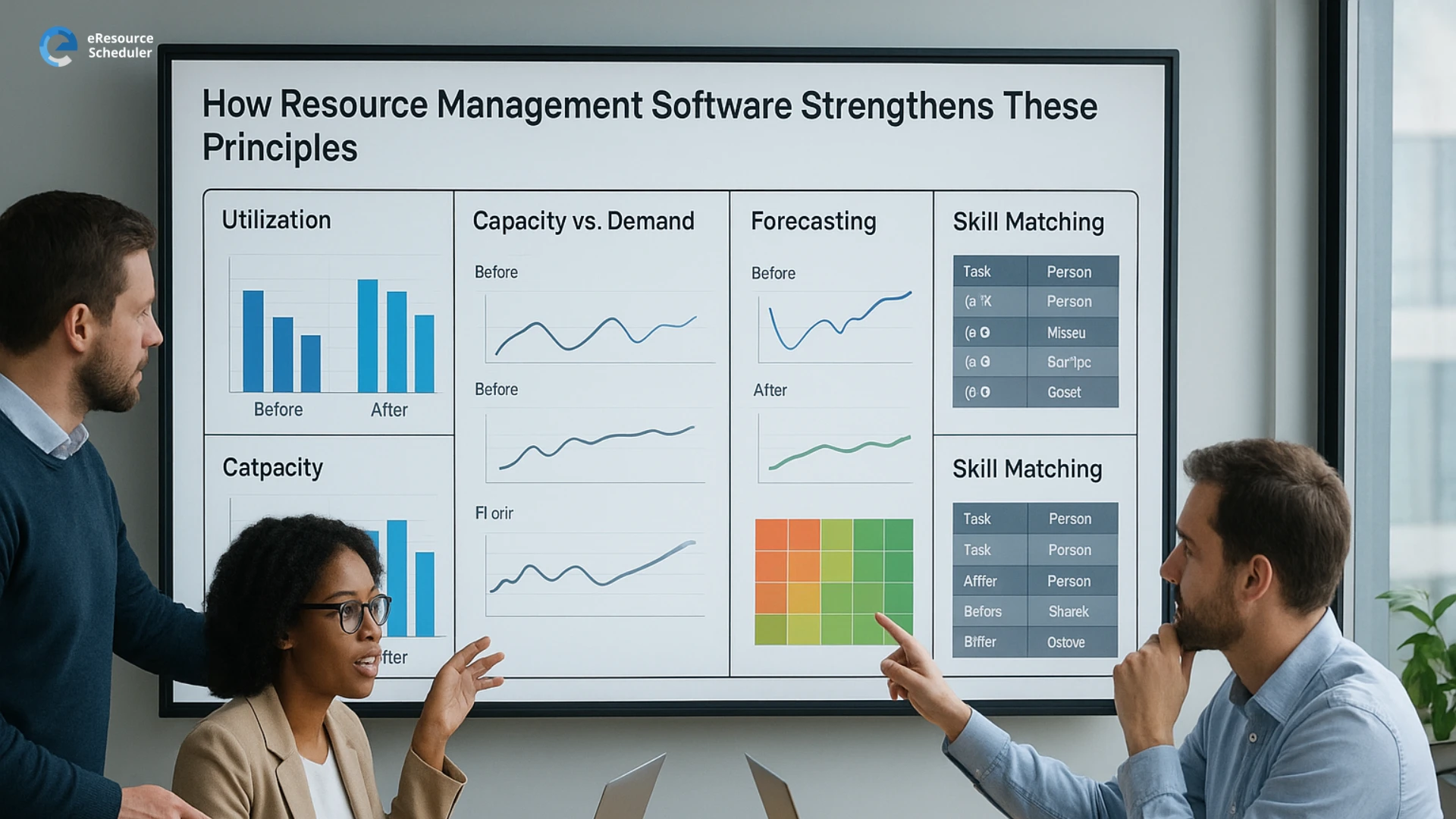
Modern work moves quickly and teams cannot rely on scattered sheets or hopeful guessing. This is where the right tools turn good principles into everyday practice.
A strong resource management software helps professional services teams:
These features give teams a clearer way to work, reduce last minute surprises, and help projects stay on track even when client expectations keep changing.
Resource management becomes powerful when it feels practical instead of complicated. These principles work because they help professional services teams stay clear about what matters most. Visibility improves. Workloads stay balanced. Decisions feel grounded instead of rushed. And teams operate with more confidence because they always know what is happening and what comes next.
When these habits are supported by the right systems, the workflow becomes calmer and far more predictable. That is the kind of clarity leaders rely on when they use tools like eResource Scheduler. It keeps plans realistic, protects team capacity, and brings a steady flow of insight into every project.
If you want to see how this level of clarity looks in your day to day work, you can book a personalized demo and explore it for yourself.
1. What does resource management mean in simple terms?
Resource management is the process of understanding who is available, what work needs to be done, and how tasks can be assigned without overwhelming the team. It helps service based teams stay organised and keep projects moving with fewer surprises.
2. How can teams tell when workloads are unbalanced?
Teams usually notice workload issues when deadlines start slipping or certain people consistently feel overloaded. Tracking availability, assigned hours, and upcoming tasks helps managers spot imbalances early so they can redistribute work before stress builds.
3. Why is capacity planning important for service based work?
Capacity planning helps teams understand how much work they can handle with their current skills and time. It prevents overbooking, protects deadlines, and ensures teams stay productive without taking on more than they can realistically deliver.
4. What makes forecasting useful in daily operations?
Forecasting gives leaders a view of future demand so they can prepare for upcoming projects, hire when needed, or adjust schedules early. It reduces last minute pressure and helps the team stay ready for what is coming next instead of reacting after problems appear.
5. How do teams stay flexible when client priorities shift?
Teams stay flexible by keeping schedules updated, knowing who has room to adjust, and understanding how new requests affect their current workload. This clarity allows managers to reorganise tasks quickly and keep client work on track even when plans change.


Plan Smarter. Schedule Faster. For Free.
Join thousands already using eResource Scheduler to align teams, time, and tasks seamlessly.
 ALL FEATURES INCLUDED