Understaffing is a more common occurrence than most managers want to admit. Most managers have been there. A project lands, you quietly count heads, and the numbers don't add up. That's understaffing. It usually starts with the same blind spot: not knowing your resource availability until it's too late to do anything about it.
In this blog, we will cover what understaffing is, the reasons for understaffing, why it is a slow-burn crisis for your team, and most importantly, how you can stop reacting to it and start planning around it. Whether you manage a 10-person team or a 200-person operation, this blog is for you.
So keep reading… Because by the end, you will have a clear template for spotting understaffing early and fixing it before it can break your team.
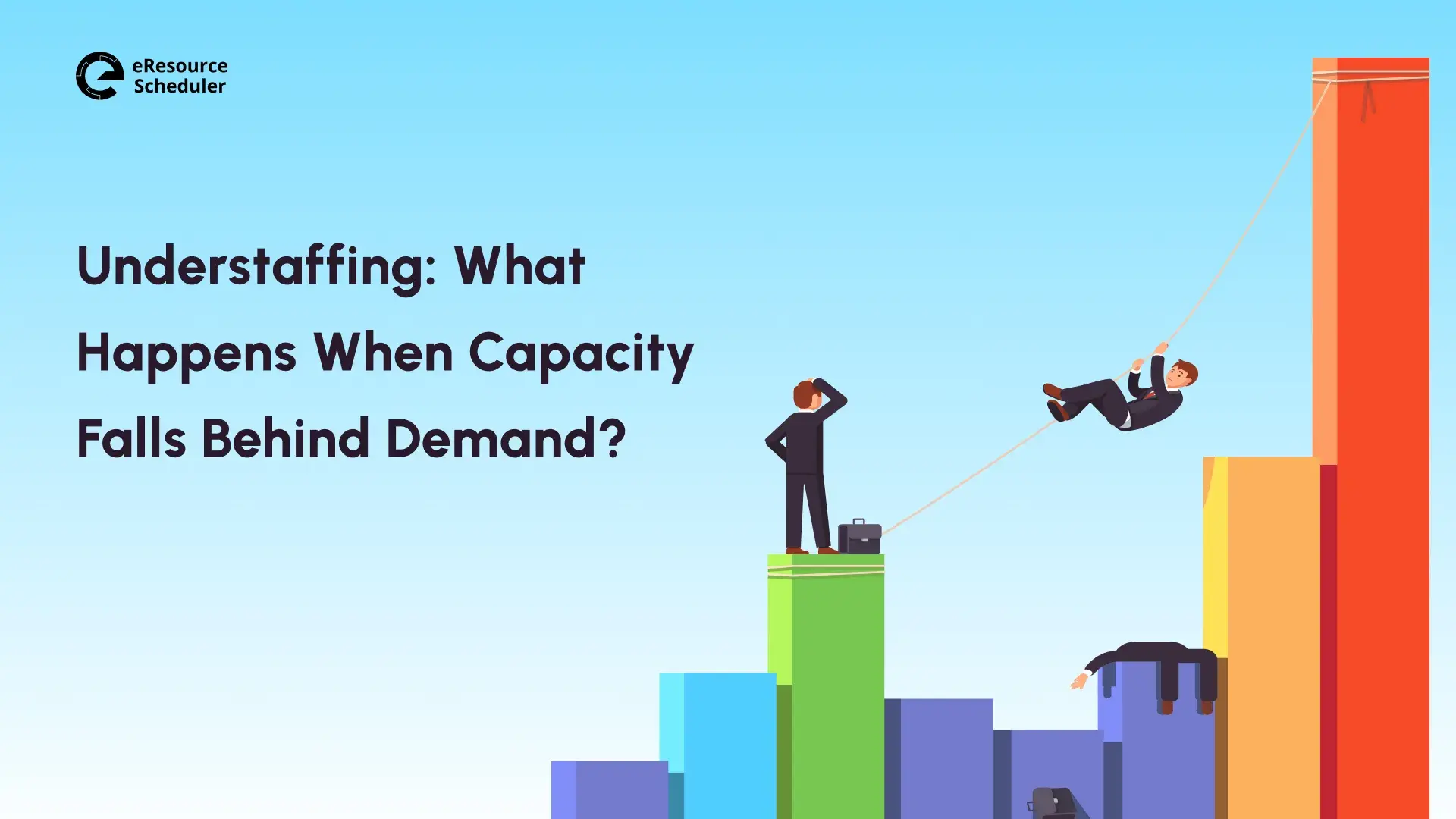
Understaffing occurs when the number of people available on your team is constantly less than the demand of people required for work. It is not only the headcount. It is about the people who have the right skills to do that work being available at that time.
Did You Know?
According to the SHRM Talent
Trends Report, 2025, nearly 70% of organizations still face challenges recruiting for
full-time positions. Meaning most teams are already stretched before a single new project lands.
You might be dealing with understaffing if:
Before we get into the signs, it helps to clear up one thing most managers get wrong. Understaffing and underutilization are not the same problem. Even though they end the same way: your best people leave. The difference is how you got there.
| Understaffing | Underutilization | |
|---|---|---|
| What is it? | Too much work, too few people | Too many people, too little work |
| What does the team feel? | Overwhelmed and burned out | Bored and disengaged |
| What suffers? | Quality and deadlines | Productivity and morale |
| What does it look like? | Everyone is always busy, but nothing gets done on time | People have free time but no meaningful work to do |
| What is the risk? | Your best people burn out and leave | Your best people get bored and leave |
| How do you fix it? | Hire more, reduce workload, or plan better | Assign better, plan projects ahead, and use skills wisely |
Now that you know what understaffing is, let us look at how it affects employees in the long run.
Here is something many leaders and managers underestimate. Being understaffed is not only slowing down the project pipeline. It is also destroying the team culture. Brick by brick.
When people are always in a state of overload, they stop putting in the effort of going above and beyond to deliver. Things become monotonous, and people get trapped in survival mode. Idea sharing stops. Mentorship comes to a full stop. Teams feel more like a cage than colleagues.
This is no longer a people’s problem. It is now an operational planning problem.
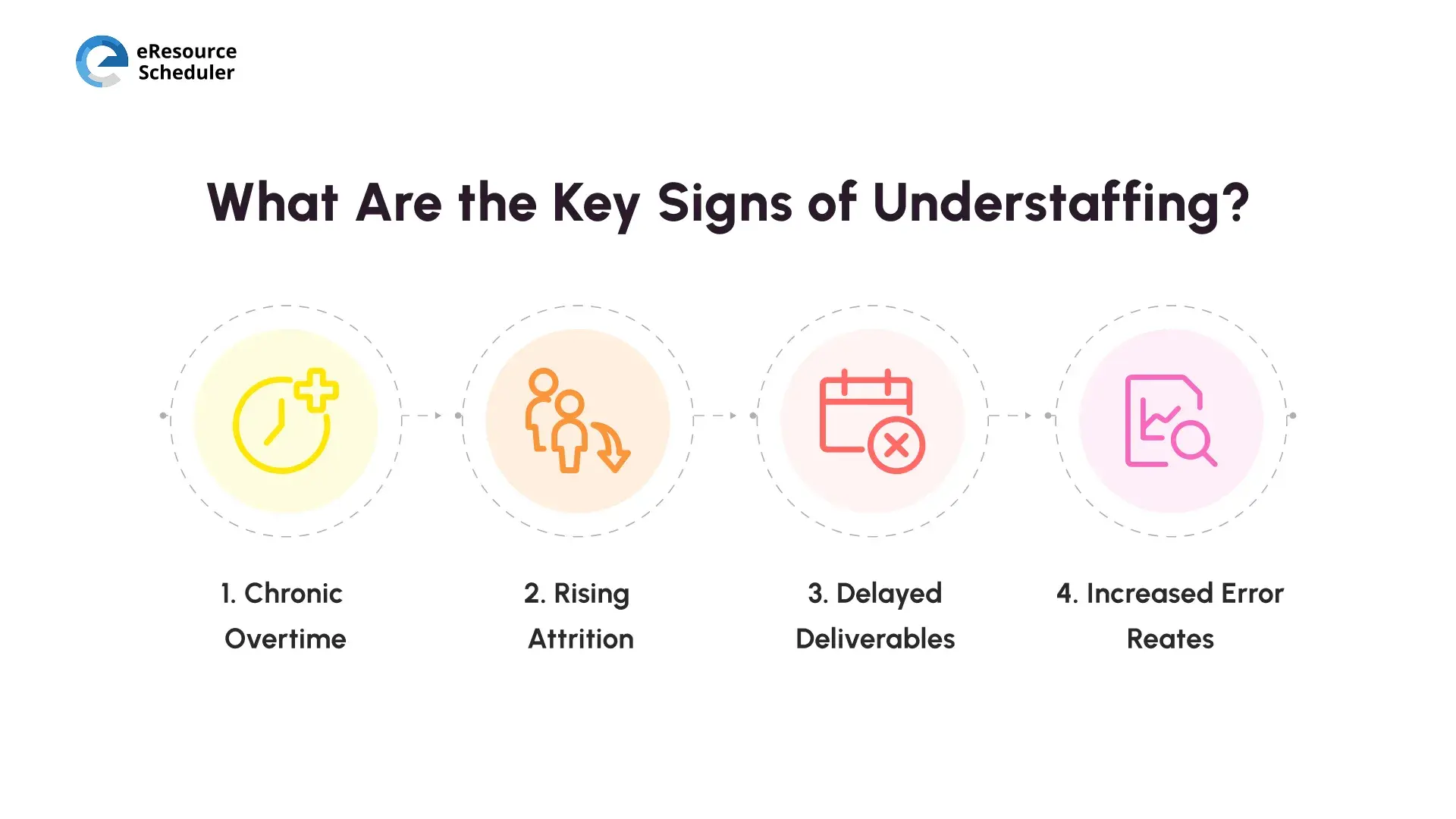
Understaffing rarely shows up all at once. It builds quietly, and by the time most managers notice it, the damage is already done. But here are some signs to identify it.
1. Chronic Overtime: If your team is regularly operating past their working hours, that’s a red flag to watch out for. According to a new global report by the International Labour Organization (ILO), more than 840,000 people die each year from health conditions linked to psychosocial risks, such as long working hours.
2. Rising Attrition: Burnout is considered among the top reasons for employees leaving their jobs. People usually quit when they are being overloaded with work with no buffers or breaks.
Latest Update:
A Gallup report on
State of the Global Workplace 2026
found that global employee engagement fell to 20% in 2025, its lowest level since 2020, costing the world economy an estimated $10 trillion in lost productivity.
3. Delayed Deliverables: If the same 20% of your team is giving 80% of the output, every single time, your resource allocation is way off, and not in a good way.
4. Increased Error Rates: Tired people are prone to making mistakes. When you see quality dropping and more rework being issued, your team is stretched paper-thin.
When your team's capacity, i.e., the total amount of work they can realistically do, drops below what demand requires, you enter a capacity gap. This gap has a compounding effect.
Think of it like a coffee shop with three baristas who can handle 60 orders an hour. On a regular Tuesday, that's fine. Now it's a long weekend, and 90 orders are coming in. On paper, it looks manageable. Nobody got fired. Nobody quit. The demand just outgrew the capacity.
In reality, it is not. Now every cup takes longer, mistakes go up, and your baristas are running on fumes. That's exactly what happens to your team when demand outpaces capacity.
And still, not one order table is fully served because every interruption costs them. It takes at least 23 minutes to get back into the flow of work once you lose it.
This is a point where resource capacity planning becomes a non-negotiable factor. It measures what your team can handle before demand can outpace supply. eResource Scheduler gives you a real-time view of your capacity. So you can act before things start to break.

Being understaffed for short periods of time is manageable. But when it compounds in the long term, it starts decaying your teams from the inside out. What typically happens is:
Now recovery takes months (maybe years), not a couple of weeks.
Let’s be honest. Hiring is not always an immediate solution. Sometimes you have to make do with whatever resources you have at your disposal. All the while moving towards attaining a more sustainable structure.
1. Map out every team member’s current responsibilities. Not what is on the records, but their actual workload. Including meetings, administrative work, and ad-hoc requests.
2. Not everything is urgent and has to be delivered tomorrow. Protect your team’s focus by cutting out the low-priority tasks from their plate.
3. Check who has the bandwidth. Someone may be at 60% while another is at 130%. Fix this before both are suffering.
4. Overpromising things when you are low on staff creates problems. Set honest expectations with clients and leadership when negotiating terms.
5. Build a rolling 90-day resource forecast so you will have time to respond to a capacity gap before it becomes an unmanageable crisis.
Spreadsheets and status meetings have become old and outdated. They can only take you so far. When your team is managing multiple projects, shifting deadlines, and variable availability, you need something that updates live. Not at the end of the month when it's too late to course correct.
A good tool shows you who is assigned to what. But a great tool shows you who is overloaded, who has the capacity, and where your upcoming demand gaps are. A resource management software finds the sweet spot.
With resource management software, you can see whether someone is at 80% or 120% capacity in real time. You can also model future resource needs based on your pipeline and plan your capacity around it. It provides the option of skill-based allocation, so you know if the people with the right skills are working on the right projects or not.
Scheduling feels like a walk in the garden with the right software. You can do instant edits without thinking twice. It also simulates what-if scenarios, so you are ready for any possibilities with plans B, C, and even D.
eResource Scheduler is an enterprise resource management software designed specifically for teams that manage resources across multiple projects and departments simultaneously. It brings all of the above things together in one system. So your planning is based on facts, not gut feelings, and data that is as old as your grandfather.

There is no one-time fix for understaffing. Teams grow, projects multiply, scopes shift, priorities change, and people leave. The organizations that handle it best aren’t the fastest ones. They are the ones who are planning continuously.
It involves building a culture where resource visibility is an everyday conversation, not a response to a crisis. It also means giving yourself the right tools to see what is coming in the future. With a solid capacity planning process in place, you move from firefighting to forecasting.
This is the difference between a team that is surviving and a team that is thriving.
1. How does understaffing affect client satisfaction?
Directly and quickly. When your teams are stretched, communication drops, timelines slip, and quality of work suffers. Your customers and clients notice everything. They will stop visiting your company after just one bad experience, even if they had multiple good ones.
2. How do I know if our staffing shortage is temporary or structural?
A temporary shortage is linked to a specific event, like a project launch or seasonal spike. A structural shortage occurs when you are experiencing a capacity deficiency every quarter. The clearest sign is that you are struggling even after the peak season has ended. If this sounds familiar to you, maybe it’s time to upgrade your resource model and switch to software.
3. What are the top 3 consequences of demotivated staff?
The top three consequences of demotivated staff include lower productivity, more people resigning (high turnover), and a toxic team culture.
4. What is the fastest way to deal with understaffing?
The fastest way is to redistribute work. Before hiring anyone new, assess the workload of your employees and rebalance it. It might not be the perfect fix, but it will buy you time to plan without burning anyone out going ahead.
5. Can resource management software actually prevent understaffing?
A resource management software will not make hiring decisions for you, but it will give you enough clarity to catch capacity gaps. Think of it as a warning system. It will show you the current utilization, forecast future demand, and highlight if anyone is on the verge of collapsing. So you can plan proactively instead of reacting in panic mode.

Plan Smarter. Schedule Faster. For Free.
Join thousands already using eResource Scheduler to align teams, time, and tasks seamlessly.
 ALL FEATURES INCLUDED