Learn more
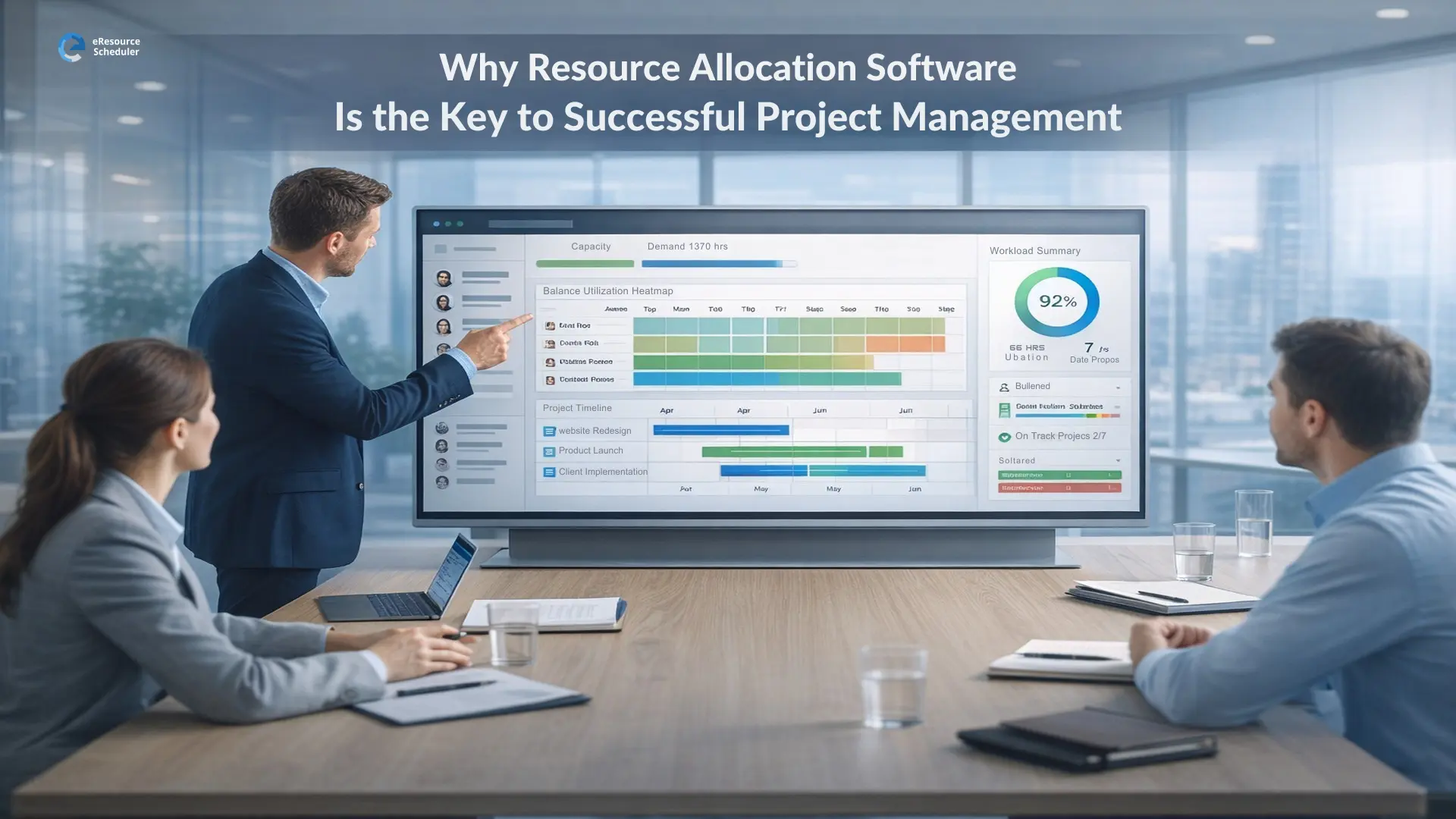
Resource allocation software is the key to successful project management because it gives teams real clarity on who is doing what, when, and at what cost.
Instead of guessing availability or juggling spreadsheets, leaders get a clear view of capacity, demand, and delivery risk in one place. Within the first few weeks, most teams notice fewer bottlenecks, better decisions, and more predictable outcomes. When paired with strong resource capacity planning, this kind of visibility turns project chaos into controlled execution.
Project management fails rarely because of bad ideas. It fails because people are overbooked, timelines clash, and priorities shift without warning.
Most projects do not collapse at kickoff. They unravel halfway through when resources quietly stretch too thin.
Common warning signs show up everywhere. Some of them look like:
Traditional project tools track tasks well. They struggle with people, capacity, and timing.
This gap is where resource capacity planning changes the game.
At its core, resource allocation software helps leaders match work to available capacity in real time. It removes guesswork and replaces it with data that teams can actually act on.
Instead of asking who might be free next month, managers can see it instantly. Instead of reacting to overload, teams can plan around it. This is why project resource scheduling software like eResource Scheduler is increasingly used alongside project plans to support smarter execution without adding management overhead.
Workload management is where many organizations quietly lose money. When top performers carry too much work, quality drops. Deadlines slip. Attrition rises.
Workload imbalances early. Managers can therefore spot:
That visibility allows redistribution before problems escalate.
Balanced workload management is not about equal hours. It is about sustainable effort.
Teams that manage workload well deliver more consistently over time and experience lower burnout. This is one reason leadership teams increasingly tie resource allocation data into operational reviews.
Resource utilization optimization often gets a bad reputation. Used poorly, it turns into micromanagement. Used well, it becomes a planning advantage. The goal is not to push everyone to 100% utilization. The goal is to understand where capacity is wasted and where it is constrained.
Capacity planning tools help leaders:
When utilization data feeds planning decisions, organizations protect margins without exhausting teams. This balance is where tools like eResource Scheduler quietly support both delivery and financial goals.
Project resource scheduling is not about creating perfect plans. It is about building schedules that reflect reality. People take leave. Priorities change. Projects overlap. Good scheduling accounts for all of this upfront.
When project resource scheduling is handled inside a resource allocation system, teams gain
The result is fewer last-minute reshuffles and calmer delivery cycles.
Static schedules assume conditions stay stable. They rarely do. Modern teams need schedules that adapt without breaking everything else. Resource scheduling enables that flexibility while keeping accountability intact.
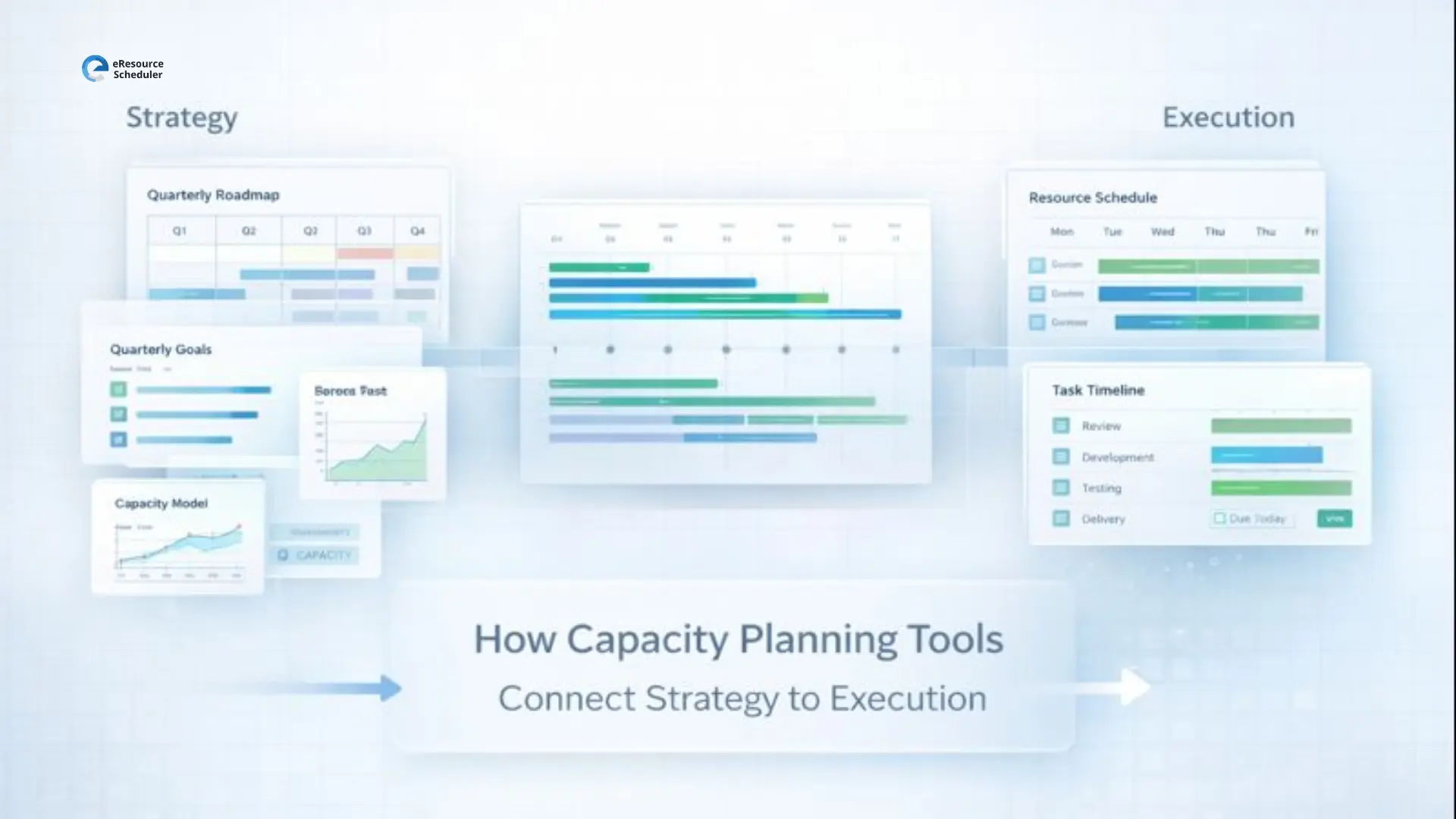
Capacity planning tools allow teams to ask a critical question early. Do we actually have the capacity to take this on?
Without this clarity, organizations overpromise and underdeliver. With capacity planning tools built into resource scheduling software, leaders can model scenarios before committing resources.
This supports:
Short-term firefighting disappears when teams can see months ahead. Capacity planning tools give leadership the confidence to say yes or no based on data, not optimism.
Spreadsheets work until they do not. At scale, they slow down decisions and hide risk.
| Area | Spreadsheets | Resource Allocation Software |
|---|---|---|
| Visibility | Fragmented and delayed | Real-time and centralized |
| Scheduling | Manual updates | Automated conflict detection |
| Workload tracking | Error prone | Accurate and visual |
| Capacity planning | Reactive | Proactive and scenario-based |
| Scalability | Limited | Built for growth |
Resource capacity planning does not replace project management tools. It complements them.
While project tools focus on tasks and milestones, allocation tools focus on people, capacity, and utilization. Together, they create a complete execution system. This is why many teams integrate with eResource Scheduler into their existing workflows rather than overhauling everything at once.
When organizations see the biggest impact with the resource scheduling software:
In these environments, resource allocation becomes a strategic asset rather than an operational add-on.
Not all software earn there place in a modern organization. Many tools look impressive on a feature list but fall apart in day-to-day use. What actually matters is whether teams can adopt it quickly and rely on it when plans change.
Strong platforms are built around clarity, speed, and real-world adoption. They make it easy to understand who is available, what is booked, and where risks are forming. No hunting through tabs. No decoding complex reports.
When evaluating options, look beyond surface level functionality and focus on how the tool supports real planning conversations.
The right solution should:
Adoption matters more than an overloaded feature set. A tool that sits unused adds no value, no matter how powerful it claims to be. The best resource allocation software, like eResource Scheduler, becomes part of everyday decision-making, not another system teams work around.
Successful project management today is less about control and more about visibility. Leaders who understand capacity can plan with confidence. Teams that see workload clearly can deliver without burnout.
Enterprise resource management and scheduling software like eResource Scheduler support this shift quietly, helping teams align projects, people, and planning without unnecessary complexity.
If improving delivery predictability, utilization, and capacity planning is a priority, it is worth seeing how the right platform fits into your workflow.
Start a 14-day free trial of eResource Scheduler and experience how it supports better project outcomes without disrupting how teams already work.
1. What is resource allocation software used for in project management?
Resource allocation software helps teams assign work based on real availability and capacity, improving planning accuracy and delivery consistency.
2. How does project resource scheduling improve project outcomes?
By aligning people to work realistically, it reduces overload, prevents delays, and supports informed decision-making throughout the project lifecycle.
3. Can small teams benefit from capacity planning tools?
Yes. Even small teams gain clarity on workload, utilization, and future capacity, with capacity planning tools that help them scale sustainably.
4. Is resource scheduling software different from project management tools?
Yes. Project tools track tasks and timelines, while resource scheduling software focuses on people, capacity, and utilization across projects.
5. How long does it take to see value from resource allocation software?
Most teams see improvements in visibility and planning within weeks, especially when using focused tools like eResource Scheduler.


Plan Smarter. Schedule Faster. For Free.
Join thousands already using eResource Scheduler to align teams, time, and tasks seamlessly.
 ALL FEATURES INCLUDED