Learn more

Effective project management time tracking is crucial for the success of any team. It’s not just about logging hours; it's about improving visibility, optimizing resource allocation, and tracking progress throughout the project cycle. When project managers leverage time tracking, they can streamline processes, improve communication, and ensure that teams remain on track to meet deadlines.
Integrating time tracking into project management processes enhances both individual and team productivity. By using tools such as resource scheduling software, project managers gain the insights they need to monitor progress, allocate resources efficiently, and keep projects aligned with goals. Whether you are overseeing a complex project cycle management process or fine-tuning individual tasks, time tracking makes all the difference in managing a successful project.
Project cycle management refers to the stages a project goes through, from initiation to completion. These stages typically include planning, execution, monitoring, and closing. Time tracking becomes especially beneficial during the execution and monitoring stages, as it provides clear insights into how much time is spent on each task and milestone.
When integrated into project cycle management, time tracking allows project managers to:
With accurate time tracking, project managers can ensure that all stages of the project are moving according to schedule and adjust timelines where needed.
Time tracking is not just a tool for logging hours. It helps project managers track the status of tasks, milestones, and deliverables throughout the project lifecycle. Having real-time insights into how long each part of the project is taking provides:
A project team’s roles and responsibilities include overseeing the entire project. With effective time tracking, they gain the ability to manage:
Incorporating time tracking within the project in-charge’s responsibilities is essential for ensuring that the project stays on course, within budget, and on time.

One of the biggest advantages of time tracking in project management is the ability to spot bottlenecks early. By analyzing time data, project managers can identify tasks or stages that take longer than expected. With this insight, they can:
Project efficiency tracking is not just about measuring time spent; it’s about understanding how effectively that time is used. A resource visibility tool helps project managers analyze how time is spent across various teams and departments. With these tools, you can:
Integrating resource scheduling software like eResource Scheduler into your time tracking strategy further enhances project team management. By providing a visual representation of team availability, task assignments, and timelines, these tools improve both resource allocation and resource visibility.
A robust resource scheduling software like eResource Scheduler allows project managers to:
Resource scheduling software helps align the time spent on tasks with the overall project goals. By improving resource visibility and task scheduling, these tools make project management more efficient and less prone to human error.
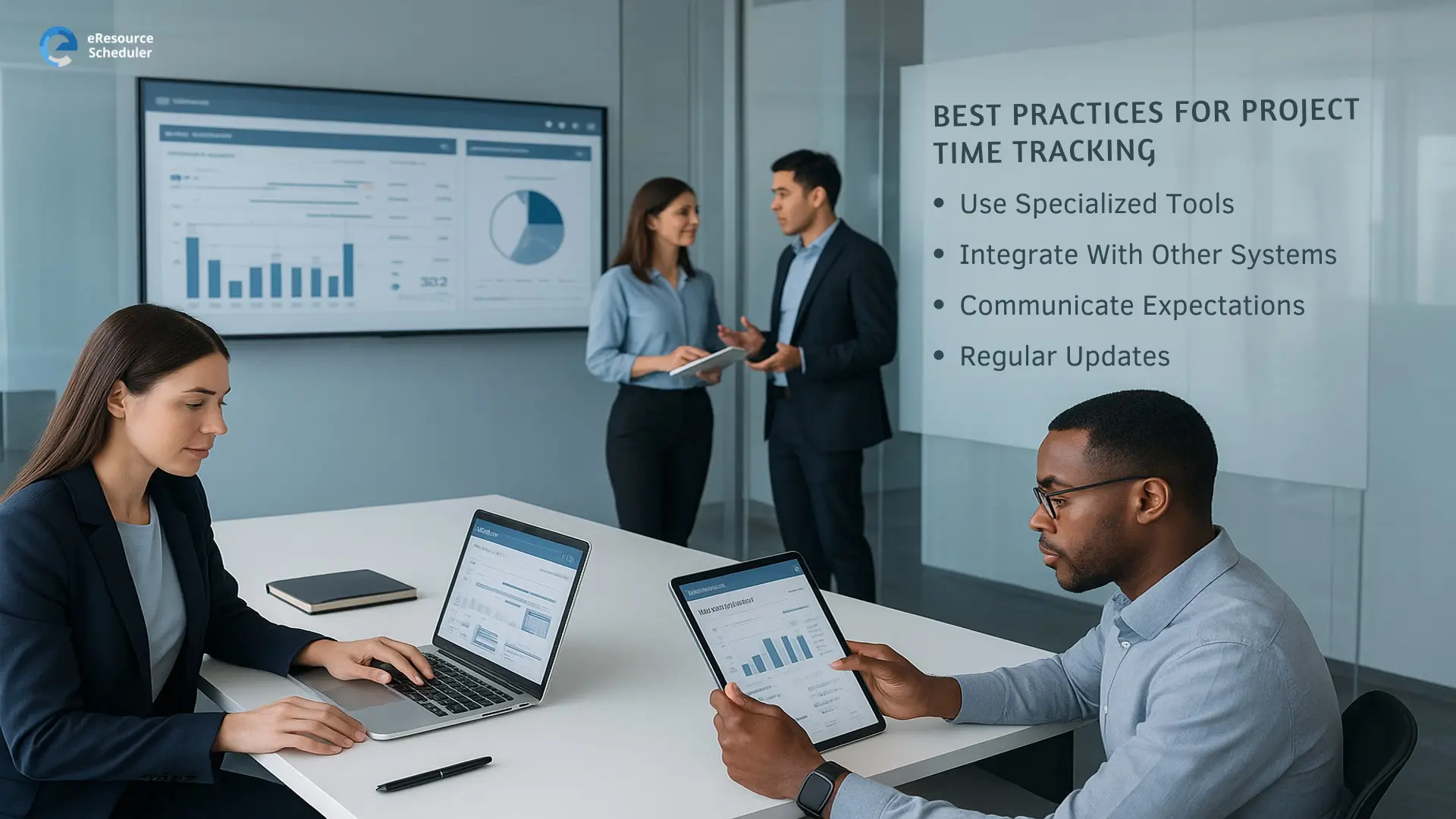
To get the most out of project management time tracking, consider these best practices:
By following these practices, and understanding different project roles, project managers can enhance visibility, optimize team performance, and ensure smoother project execution.
Effective project management requires more than just oversight; it requires detailed attention to how resources and time are allocated and used throughout the project cycle. By implementing time tracking strategies, project managers can ensure smoother workflows, improved team efficiency, and more accurate reporting.
The integration of resource scheduling software and project efficiency tracking tools into your project management practices can dramatically improve the outcome of your projects. Not only do these tools provide you with valuable data, but they also help in making proactive decisions that steer the project toward success.
Start a 14-day free trial of eResource Scheduler today and experience firsthand how time tracking can elevate your project management efforts.
1. Why is project management time tracking important?
Project management time tracking helps ensure that projects stay on schedule and within budget. It provides insights into how resources are used, allowing for better decision-making and more effective project cycle management.
2. How does time tracking improve project efficiency?
Time tracking enhances project efficiency by identifying bottlenecks, optimizing resource allocation, and ensuring tasks are completed on time. It also helps project managers monitor progress and make necessary adjustments in real time.
3. What are the key responsibilities of a project manager when it comes to time tracking?
A project manager is responsible for ensuring that time is tracked accurately, tasks are completed on time, and resources are allocated effectively. They also use time tracking data to optimize workloads and manage project budgets.
4. Can resource scheduling software help with time tracking?
Yes, resource scheduling software like eResource Scheduler can integrate time tracking to provide real-time data on resource utilization and task progress. It allows project managers to allocate resources efficiently and track time spent on various tasks.
5. How can project managers use time tracking data to make better decisions?
Time tracking data helps project managers identify inefficiencies, reallocate resources, and adjust timelines. By analyzing time logs, they can improve workflows, meet deadlines, and stay within budget.



Plan Smarter. Schedule Faster. For Free.
Join thousands already using eResource Scheduler to align teams, time, and tasks seamlessly.
 ALL FEATURES INCLUDED