Learn more
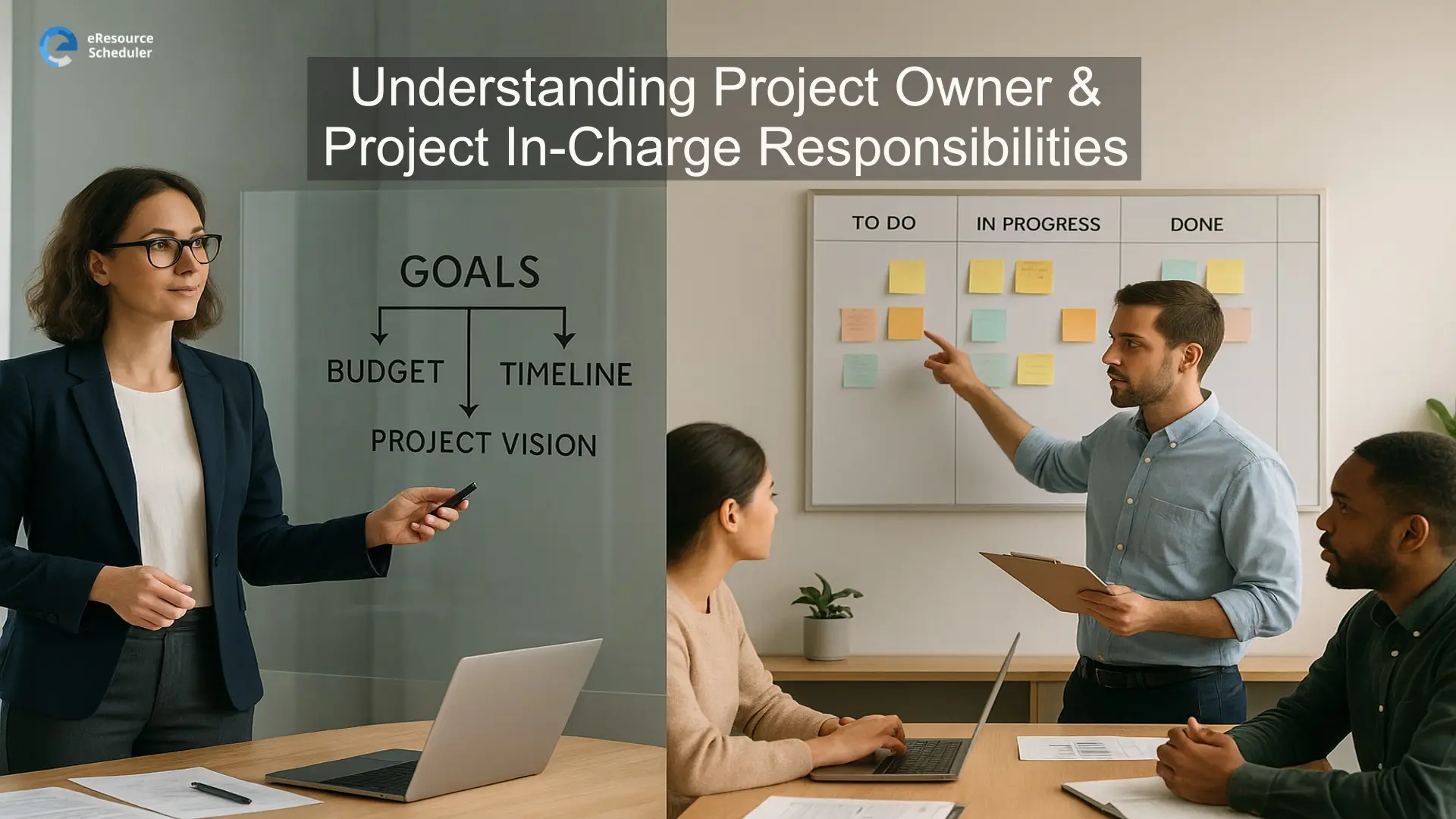
When teams talk about project in-charge responsibilities, the conversation often drifts into the territory of project owners, managers, or leads. But these roles aren’t interchangeable, and mixing them up leads to stalled decisions, unclear authority, and unnecessary tension.
It’s important to call out the distinction directly: the project owner sets direction, while the project in-charge ensures day-to-day execution happens smoothly using the right tools, including a resource visibility tool such as eResource Scheduler that keeps workloads transparent and balanced.
Below is a practical breakdown of how these two roles actually work in modern project environments.
The project in-charge acts as the “field captain” of the project. They don’t define the mission, well, because that’s the owner’s job, but they make sure the mission turns into measurable progress.
A strong project in-charge keeps execution tight and communication smooth. Their responsibilities typically include:
Balancing workloads using resource allocation software like eResource Scheduler helps with consolidating progress and utilization reports for clarity.
These responsibilities keep the project grounded in reality. While others focus on strategy or big-picture decisions, the project in-charge ensures everyday execution stays predictable and organized.
In a well-designed project leadership structure, the project in-charge sits between the project manager (if the role exists) and the on-ground team. They translate strategy into achievable plans and escalate only what truly requires top-level authority.
This prevents leadership bottlenecks and ensures the right decisions are made at the right level.
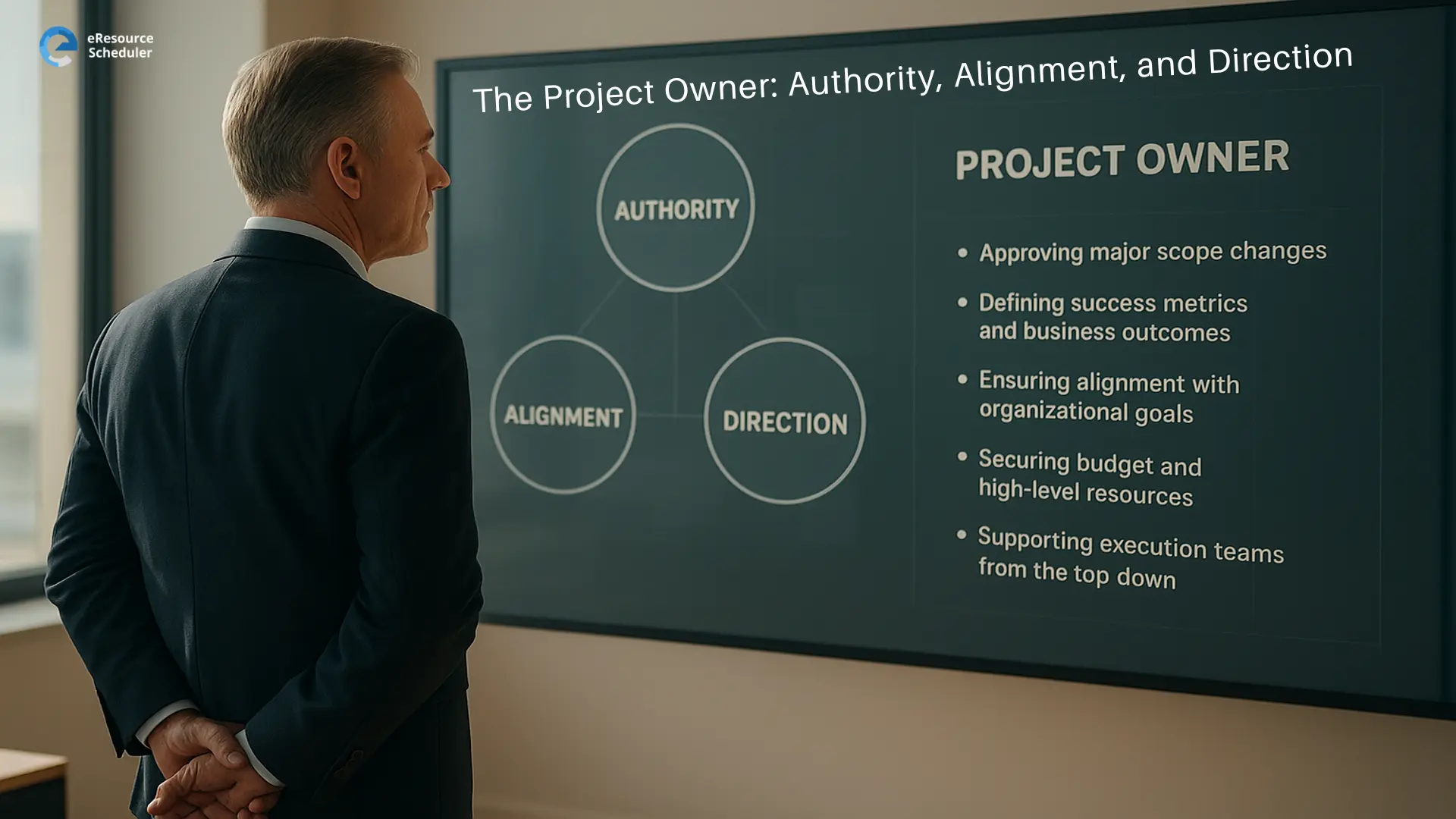
While the project in-charge handles execution, the project owner holds the project management authority for big decisions that shape the project’s purpose and business impact. They aren’t buried in weekly tasks—they’re responsible for alignment at a strategic level.
The project owner’s responsibilities include:
They act as the “north star” for the project, ensuring every decision and deliverable connects to the bigger purpose.
A common misconception is that the project owner needs to be involved in daily task tracking. In reality, this slows down execution. Instead, the owner sets direction, then passes operational control to the project manager and the project in-charge.
This handoff strengthens accountability and helps teams avoid decision paralysis.
When these two project roles overlap, teams struggle with mixed instructions, misaligned priorities, or stalled progress. By keeping responsibilities clear, organizations get:
Clear role boundaries reduce friction and allow each leader to focus on what they do best.
Think of a typical workflow:
This streamlined flow becomes even more efficient when supported by tools such as eResource Scheduler, which improves visibility and workload balance across the entire team.
Clear responsibilities help avoid overlap with other project team roles and responsibilities, like QA leads, technical leads, or business analysts, ensuring everyone knows their zone of ownership.

The project in-charge relies heavily on visibility. Without knowing who is overloaded, underutilized, or blocked, they can’t make effective day-to-day decisions. This is where tools matter.
Using eResource Scheduler as a resource visibility tool or scheduling software helps the project in-charge:
The blend of real-time visibility and simplified planning allows the project in-charge to focus on execution, not admin work.
Teams perform better when they know exactly who handles what. The project owner should steer the strategy, and the project in-charge should steer the execution. When both stick to their lanes, friction disappears.
Clear boundaries eliminate:
Ultimately, defining these responsibilities is not just a formality—it’s a performance multiplier.
If you're exploring how responsibilities fit together across a project, it's helpful to dive deeper into related frameworks. Reading more on project roles can help clarify how each position contributes to delivering on time and within scope.
And if you want to strengthen planning accuracy, integrating project management time tracking with your scheduling tools ensures both visibility and accountability stay consistent.
Understanding the difference between the project in-charge responsibilities and the project owner duties is essential for building a smooth-running project environment. When strategy and execution are clearly separated but still connected, teams enjoy faster decisions, less confusion, and more predictable delivery.
Tools like eResource Scheduler quietly support this workflow by improving transparency, resource balance, and day-to-day coordination without distracting from the work itself.
Start a 14-day free trial of eResource Scheduler and see how better visibility improves both execution and outcomes.
1. What are the core project in-charge responsibilities?
They focus on execution—assigning tasks, monitoring progress, removing blockers, and using tools like eResource Scheduler to manage workloads effectively.
2. How is the project owner’s responsible role different from the project in-charge?
The owner defines strategy and approves major decisions, while the in-charge manages daily execution and team coordination.
3. Does the project in-charge have project management authority?
Yes, but only at the tactical level. They make day-to-day decisions while major decisions remain with the project owner.
4. Where does the project in-charge fit in the project leadership structure?
They act as the link between strategic roles (like the project owner) and the delivery team, ensuring alignment and smooth execution.
5. Why is it important to separate owner and in-charge duties?
Clear separation prevents confusion, speeds up decision-making, and creates a more accountable, predictable project environment—all essential for a successful project.


Plan Smarter. Schedule Faster. For Free.
Join thousands already using eResource Scheduler to align teams, time, and tasks seamlessly.
 ALL FEATURES INCLUDED