Learn more
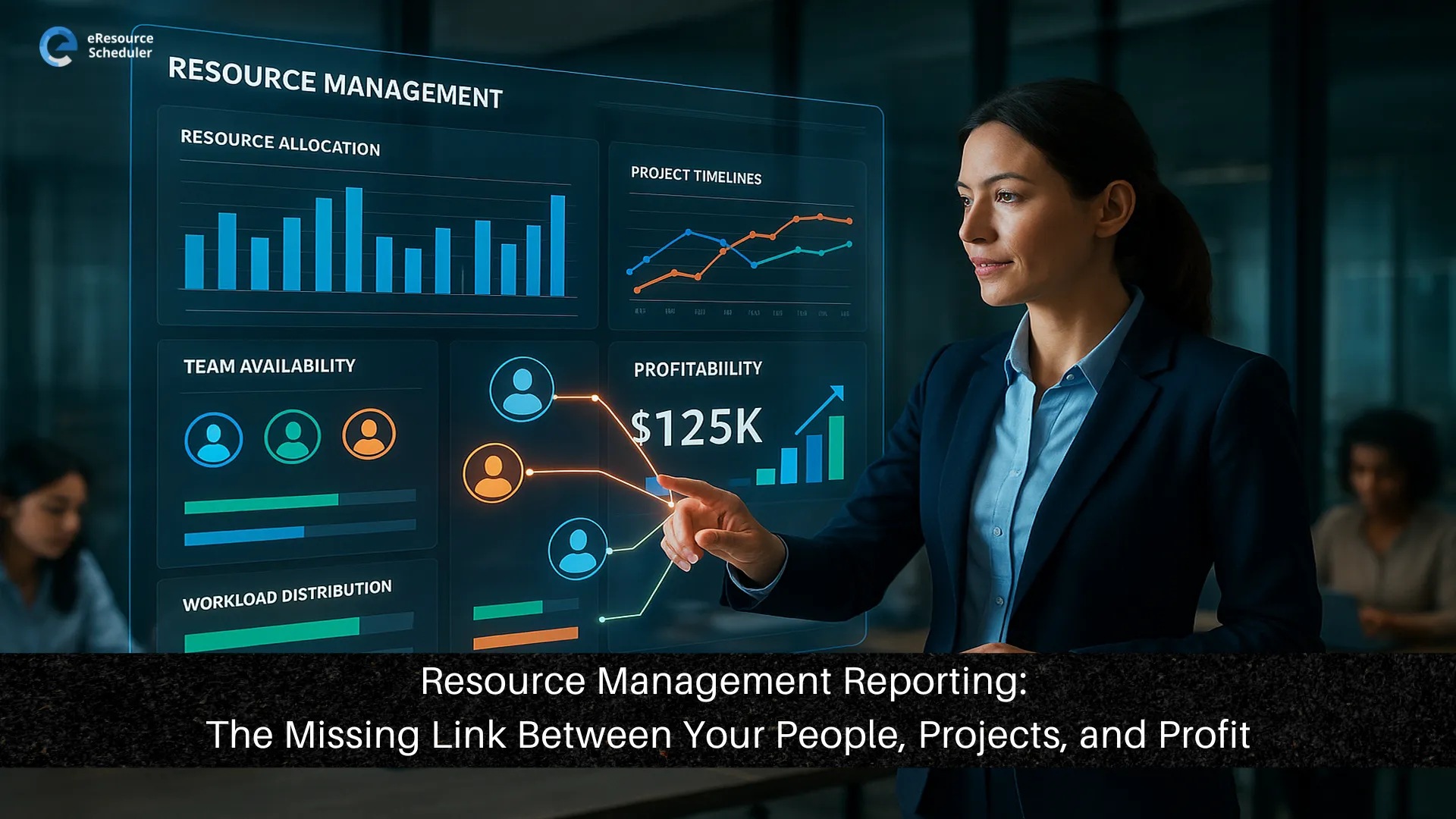
Most teams don’t struggle because the work is complicated. They struggle because the reporting behind the work is a hot mess. One person has a spreadsheet. Someone else has a status deck. Another has “the latest numbers” that were actually updated two Mondays ago. And then everyone wonders why projects feel off track even when nobody did anything wrong.
This is exactly why eResource Scheduler puts so much weight on its management reports. These reports are not just pretty charts. They’re the reality check every team secretly needs. Who’s overloaded. Who’s underutilised. Which projects are quietly eating hours. What’s profitable and what’s… not even close.
With utilisation reports, availability breakdowns, planned versus actuals, financial insights, timesheet data, and project progress all in one place, decisions suddenly stop feeling like guesswork. You stop squinting at numbers and start spotting patterns.
If you want your people, projects, and profit to stop pulling in different directions, reporting is the bridge that brings everything together.
Reporting doesn’t fail loudly. It fails quietly. A missing update. A half-complete sheet. A number someone forgot to sync. And suddenly, everyone is working hard but operating with different versions of the truth.
That disconnect happens fast when reporting is incomplete or outdated. Decisions start relying on assumptions instead of facts. Timelines look reasonable on paper but fall apart in execution. Resource allocation feels more like intuition than planning.
This is the exact gap eResource Scheduler targets. Its reporting brings utilisation, availability, bookings, and actuals into one consistent view so teams stop reacting to surprises and start working with clarity.
Because when reporting goes wrong, teams lose visibility.
When it works, they finally get
direction.
Most tools can show you who is booked. That alone does nothing. What actually changes the game is software that connects people, projects, timelines and capacity and then shows what is coming before it hits you. That is why eResource Scheduler is the best tool for management reports. It replaces scattered updates with one source of truth that tells you what is happening now, what is slipping, and what needs attention before anything breaks.
This is not basic reporting. It is reporting that thinks ahead. Forecasts reveal shortages early. Utilisation views spot overload before burnout happens. Planned versus actuals highlight trouble the moment it starts. With this kind of visibility, teams act early instead of reacting late. Decisions become sharper. Planning becomes realistic. Profitability stops feeling uncertain and starts becoming predictable.
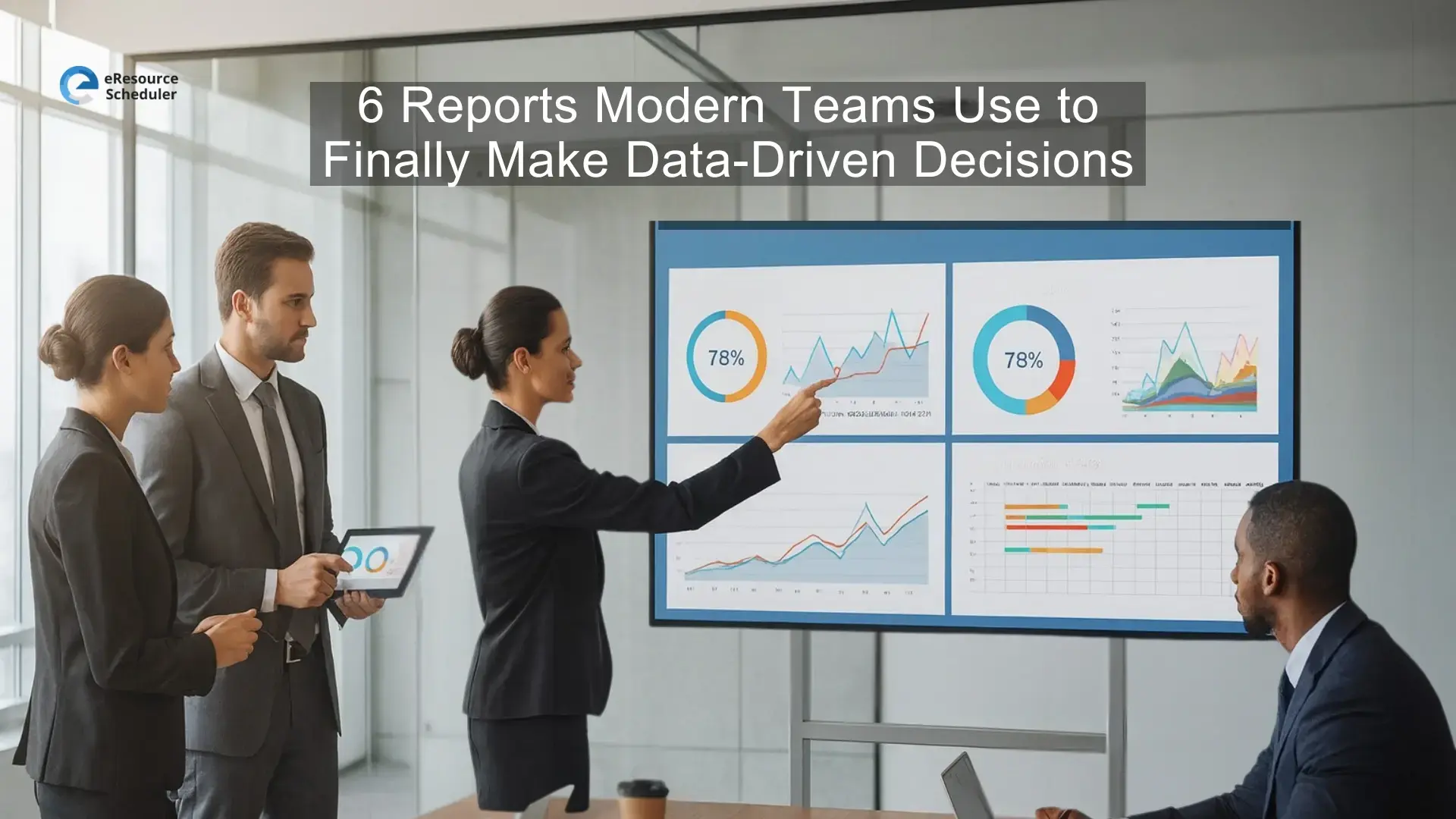
Good resource reports do more than show data. They show reality. When managers open eResource Scheduler, they get an instant read on how their people are being used and where project time is actually going. Information appears in a structured, visual format so nothing feels scattered or unclear.
Here is what strong reporting delivers every single day.
Clear visibility into teams and workloads
Smarter planning for upcoming projects
Better alignment across the organisation
Good reporting does not just support work. It shapes it.
From Time Tracking to Profit: The Strategic Side of Reporting
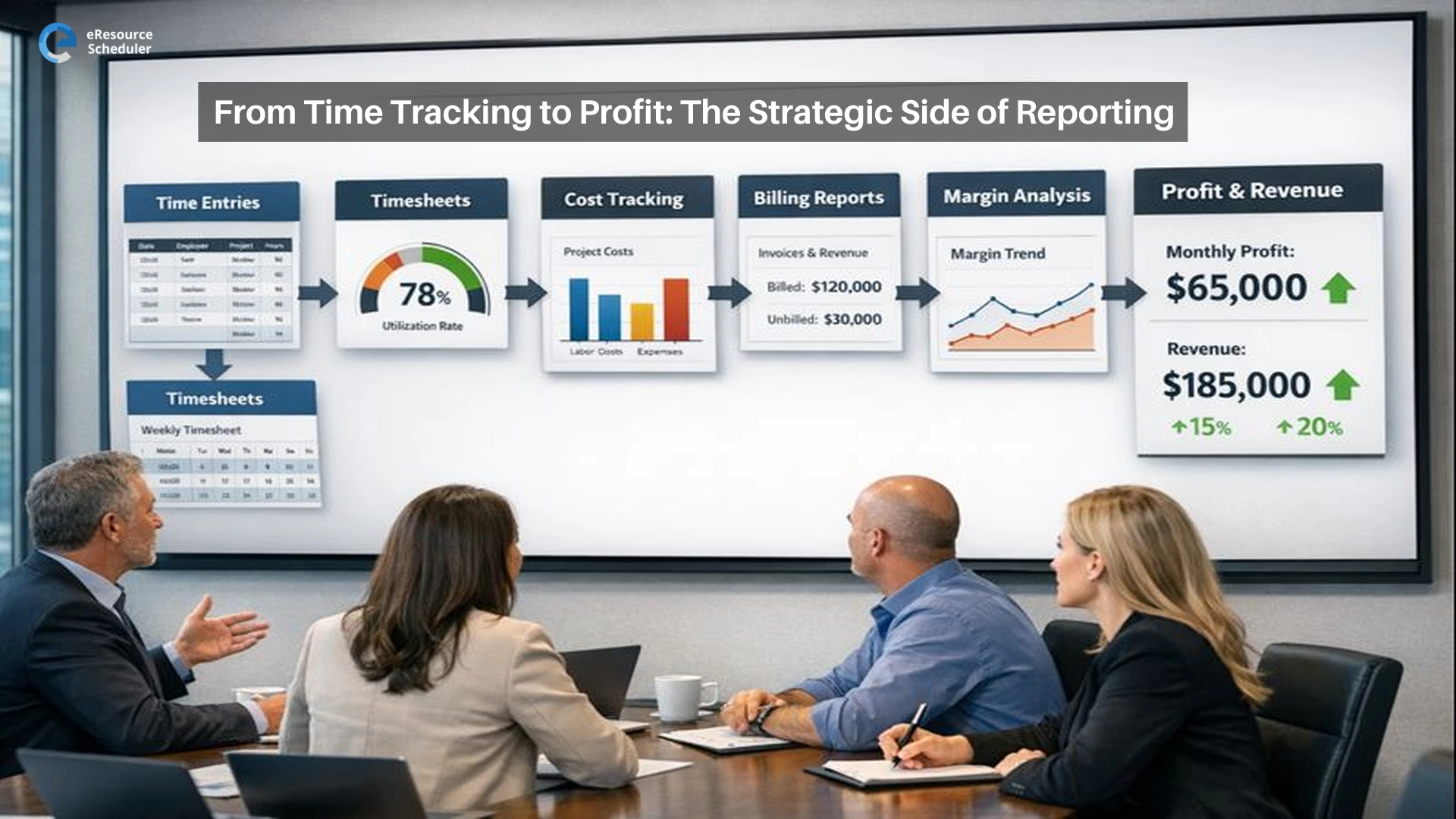
Once reporting goes beyond basic time tracking, it starts revealing the story leaders care about most. Profit. Cost. Impact. Instead of scattered data, eResource Scheduler brings financial clarity into a single space where every hour and every booking has meaning. Managers can see what was planned, what actually happened, and how that difference affects revenue and margins.
This level of reporting unlocks strategic decisions.
Teams start understanding the business impact of their work.
This is also where eResource Scheduler’s reporting becomes a leadership tool. Senior teams can drill into projects, filter specific data, review multidimensional views, and interpret graphical insights without waiting for separate updates. The picture is always current and ready for decision making.
When reports consistently reflect reality, profitability becomes more predictable and resource allocation becomes more intentional.
Reporting is not a side task. It is the engine that keeps your people, projects and profit aligned. When information is accurate, teams stop reacting late and start acting early. Workloads stay fair. Projects stay predictable. Leaders make decisions with clarity instead of assumptions.
This is the power of reporting that reflects what is actually happening inside your organisation. eResource Scheduler brings utilisation, availability, actuals, costs and progress into one picture that everyone can trust. Clarity becomes the standard and guesswork fades out.
If you want to see what this looks like with your own work, take the 14 days free trial and load it with your real projects and people. You get full access and no commitment. Explore the reports, check your utilisation, compare your planned versus actuals and watch how the gaps reveal themselves fast. And if you want a walkthrough, our team is here to help whenever you need it.
The sooner you try it, the sooner the numbers start making sense.
1. What is a resource management report?
A resource management report shows how people, hours and project work are being used. It includes information about utilisation, availability, planned work, actual work and project progress. The goal is to help managers understand how effectively resources are being used.
2. What is the best tool for reporting?
The best reporting tool is the one that gives complete visibility in one place. This means seeing utilisation, availability, actuals, costs and project progress without switching between different systems. A strong tool brings clarity to planning and decision making.
3. What are the three types of resource reports?
Most organisations use three core categories of reports.
Capacity related reports that show
availability and workload.
Performance related reports that compare planned work with actual
work.
Financial related reports that track cost, revenue and profitability.
4. Why do resource reports become inaccurate?
Reports become inaccurate when data lives in different tools or when updates are not made consistently. If bookings, timesheets or project details are incomplete, the final report will not reflect the real situation. One unified system keeps reporting accurate.
5. What makes a resource report effective?
A good report is easy to read, complete and updated in real time. It shows who is available, who is overloaded, what is on track, what is slipping and how work affects cost and timelines. When information is clear, decisions become straightforward.

Plan Smarter. Schedule Faster. For Free.
Join thousands already using eResource Scheduler to align teams, time, and tasks seamlessly.
 ALL FEATURES INCLUDED