If you run a small business in 2026, your days probably swing between client work, emails, follow ups, and a hundred tiny admin jobs that never make it to the calendar. At some point, hiring a virtual assistant stops feeling optional and starts feeling like the only way to protect your time. Many owners also realize that once they bring in a mix of employees, freelancers, and virtual assistants, they need resource management software to see everyone’s work in one clear view instead of living in scattered sheets.
A good virtual assistant is basically your off screen co pilot. They handle routine work, protect your focus time, and keep important tasks moving so you can spend more of your week on strategy, revenue, and real decision making.
Most small businesses do not start with a virtual assistant on day one. They reach for one after a few very familiar pain points show up again and again.
It usually sounds like this
At that point, the real problem is not effort. It is attention. Your brain is stuck on tasks that someone else could handle perfectly well.
Common reasons small businesses start looking for a virtual assistant include
In the United States, the rise of remote and hybrid work from 2024 to 2026 has made it normal to build flexible teams. You are no longer limited to who lives near your office. You can hire a virtual assistant for a few hours a week, test what works, then scale up if it pays off.
A good virtual assistant turns constant small interruptions into scheduled, handled tasks. That is usually when a small business starts to feel like an organized operation instead of one person holding everything together by willpower.
A virtual assistant is a remote professional who supports you and your team from wherever they are, usually using email, chat, and online tools. Instead of sitting in your office, they plug into your workflows from their own location and work on an agreed set of tasks.
Most virtual assistants handle things like inbox support, calendar management, travel plans, basic research, document prep, simple reporting, and light customer or client support. Others are more specialized, for example in marketing, operations, bookkeeping, or ecommerce support.
The main idea is simple. You get reliable help with repeatable work, without adding a full time salary, desk, or local hiring process.
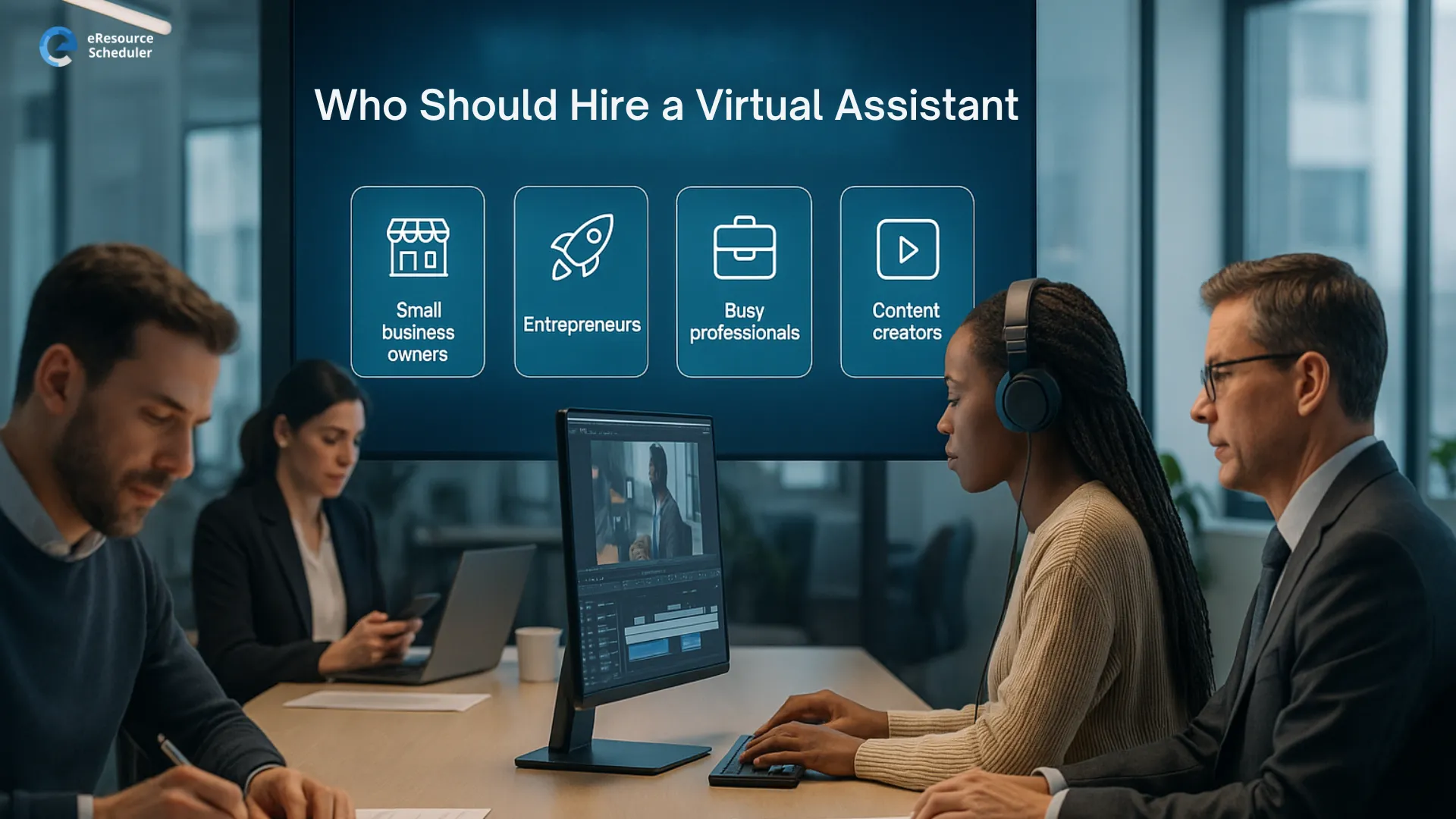
Not every small business needs a virtual assistant from the start. The right time is when your brain feels full even before lunch and important work keeps slipping to tomorrow.
A virtual assistant is a smart move if
This is common for solo founders, small agency owners, and project managers who carry all the follow ups in their head. Bringing in a virtual assistant for a set number of hours each week lets you move repeatable work off your plate without committing to a full time hire.
Once you have a mix of employees, freelancers, and virtual assistants across different projects, simple to do lists stop working. That is when tools such as resource planning software help because they show who is doing what, for which client, and when, all in one place.

There is no single perfect place to hire a virtual assistant. Each platform has its own style, pricing, and support model. The smartest move is to match the platform with how you work and how much control you want over hiring. Here are seven well known virtual assistant platforms small business owners often explore in 2026.
Zirtual focuses on dedicated virtual assistants for busy professionals and small teams. You get matched with a trained assistant who helps with inbox, calendar, research, travel, light operations, and personal admin. It suits owners who want consistency and a long term working relationship rather than a different person for every task.
Fancy Hands is built around quick tasks and flexible support. You submit requests and a pool of assistants picks them up, which works well for short research jobs, scheduling, calling vendors, or basic follow ups. It is a simple entry point if you want to test virtual assistant services without committing to a fixed number of hours.
Insidea positions itself as a partner for remote talent, connecting you with assistants who can support sales, marketing, operations, and customer success. It fits small businesses that want more than pure admin support and are open to building a longer relationship with a trained remote professional who understands their industry and tools.
VA Staffer offers a team based model where you can access administrative support, lead generation help, ecommerce assistance, and more. Instead of relying on one person for everything, you can tap into a group with different skills. This can be useful when your tasks range from data entry and list building to content updates and basic tech support.
Upwork is a large freelance marketplace where you can post a job, review proposals, and choose virtual assistants based on skills, ratings, and budget. You have full control over who you hire, how many hours they work, and what systems they use. It is ideal if you like to test different people before settling on a long term assistant. Ready to enhance your resourcefulness skills and excel in your career
Freelancer works in a similar way, letting you post projects or ongoing roles and then compare bids from virtual assistants around the world. It can be a good match if you have a clear scope of work and want to keep costs flexible, especially for project based tasks such as research, data cleanup, or document production.
Fiverr is built around clearly defined services or gigs. Many virtual assistants offer fixed price packages for inbox cleanup, calendar setup, template creation, social media support, and more. It works well when you want to buy a specific outcome rather than manage hours, and you can start with a small order to test fit and communication style.
Hiring a virtual assistant is not about looking fancy. It is about buying back the hours you keep losing to email, scheduling, follow ups, and admin that never really ends. In 2026, small business owners, agency leads, and project managers can tap into global talent for a few focused hours a week instead of jumping straight to a full time hire.
The smartest way forward is to start small. Pick one or two platforms from this list, write down the tasks you are willing to hand over, and test a virtual assistant for a month. Watch what happens to your week when you are not the only person chasing invoices, updating documents, and replying to every simple question.
As your mix of employees, freelancers, and virtual assistants grows, the real game is not just hiring help. It is keeping all that work visible and manageable so deadlines stop slipping quietly in the background. That is where the right planning and tracking tool quietly pays for itself.
Start your 14 day free trial of eResource Scheduler and see your projects, team, and virtual assistant hours finally line up on one clear screen.
1. What is the average cost of a virtual assistant?
The cost of a virtual assistant in 2026 usually depends on where they are based and what they do. Many US based virtual assistants charge roughly fifteen to forty five dollars per hour for general admin and specialist support. Offshore virtual assistants in countries such as the Philippines or India can start from around four to ten dollars per hour for similar tasks.
2. How much does a virtual assistant charge per hour?
Most virtual assistants set an hourly rate or a monthly package. General admin VAs sit at the lower end of the range, while those who handle marketing, operations, or technical support charge more. You will often see entry and mid level support on fixed hourly plans, and experienced VAs offering premium rates for deeper, ongoing work.
3. Is it worth hiring a virtual assistant for a small business?
It is usually worth it when your time is more valuable than the cost of the help. If you can free up a few hours each week to sell, deliver, or improve your service, the extra revenue often covers the VA’s cost and then some. If your plate is not full yet, you may be better off waiting until the workload is steady.
4. How do I hire a virtual assistant from another country?
You can hire virtual assistants from countries like India or the Philippines through platforms such as Upwork, Freelancer, Fiverr, and dedicated VA agencies. The basic flow is to post a clear role, screen profiles, run a short paid test task, and then start with a trial period before you commit to ongoing work. Always agree on tools, working hours, and communication rules upfront.
5. What tasks should I give my virtual assistant first?
Start with simple, repeatable tasks that drain your time but do not need your judgment. Good examples are inbox sorting, calendar support, basic research, file organization, and preparing drafts of documents or reports. Once trust is in place, you can slowly move them closer to clients facing work and more complex responsibilities.



Plan Smarter. Schedule Faster. For Free.
Join thousands already using eResource Scheduler to align teams, time, and tasks seamlessly.
 ALL FEATURES INCLUDED