Learn more

Resource allocation is not about filling calendars. It’s about making smarter choices. U.S. teams are juggling more projects, tighter timelines, and hybrid work models, which makes understanding the 5 ways to allocate resources non negotiable.
Most planning issues don’t start with bad intent. They start when allocated resources are committed without checking capacity or skills. Once that happens, delays, burnout, and constant reshuffling follow. This is why resource allocation software has become a practical necessity rather than a nice add on.
In this guide, we break down how resource allocation works in project management today and the real world methods organizations use to allocate resources without running teams into the ground.
For project managers, resource allocation is a leadership skill, not a backend task. When allocated resources are planned poorly, everything else starts wobbling.
Here’s why it matters:
Ignore it, and problems show up fast. This is exactly why issues like overallocating resources backfires continue to surface across U.S. teams that rely on assumptions instead of visibility.
The resource allocation process in U.S. organizations follows a predictable pattern, even though the tools and maturity levels may differ. In 2026, most teams no longer allocate resources in isolation. They treat it as a connected, repeatable workflow.
At a high level, the process includes:
This process exists to answer one question clearly: do we have the right people available at the right time to take this on?
Where teams often struggle is assuming availability instead of validating it. That’s why capacity planning is a critical step within the resource allocation process. Without it, allocations are based on optimism, not data, which leads to delays and overcommitment.
When done consistently, this process helps teams keep allocated resources balanced, visible, and aligned with business priorities
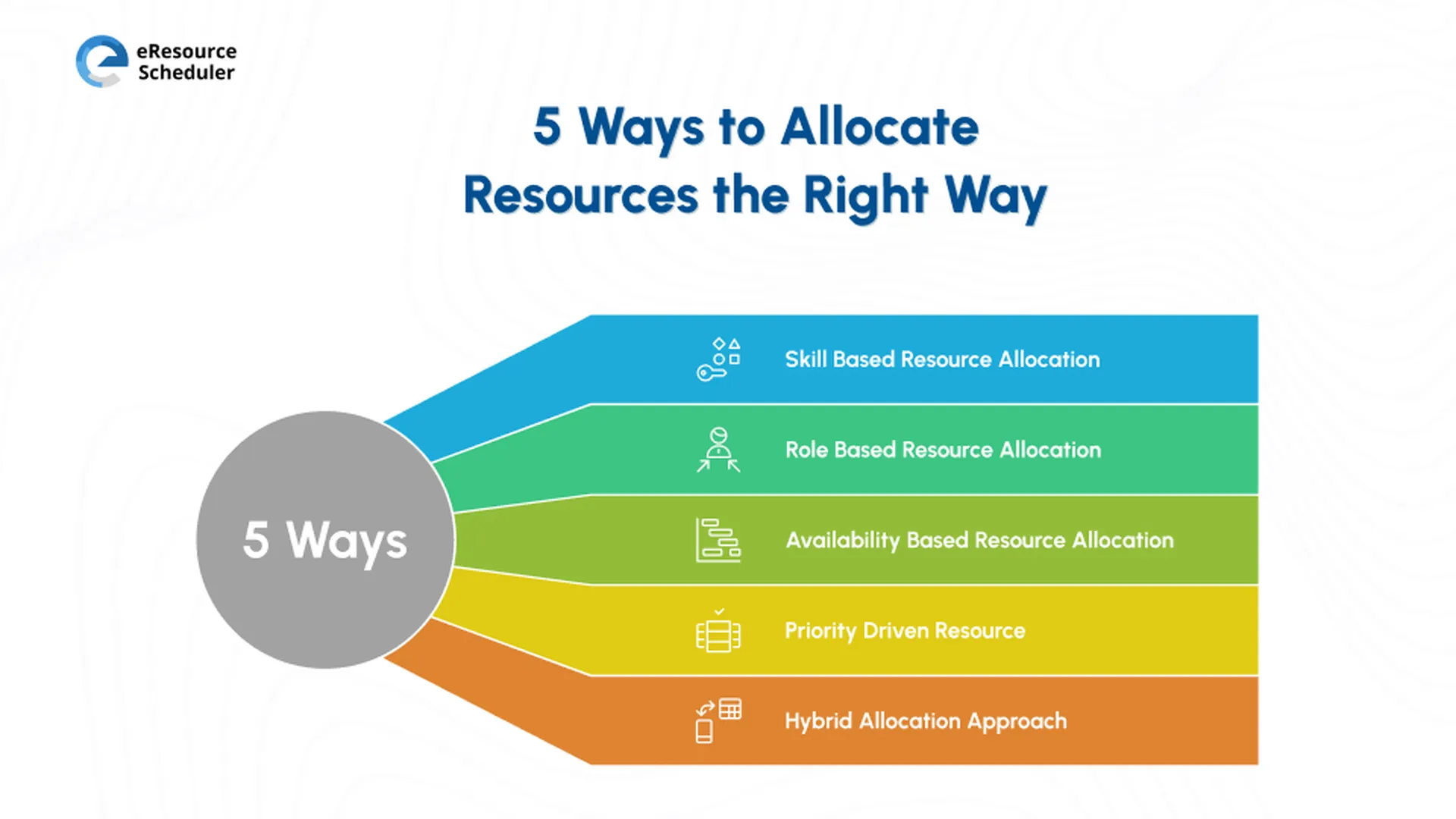
There’s no one-size-fits-all answer when it comes to allocating work. U.S. organizations rely on different resource allocation methods depending on project complexity, team structure, and how predictable the work is. Below are the 5 ways to allocate resources that commonly show up in real project environments today.
Resources are assigned based on expertise rather than job titles. This approach works best when quality and outcomes matter more than speed, especially for specialized or high-impact work.
Work is allocated according to predefined roles and responsibilities. This method brings structure and clarity, making it easier to manage repeatable workflows across teams.
Assignments depend on who is free and when. It’s fast and practical, but risky if availability is checked without considering skill fit or workload balance.
Resources are allocated based on business importance. Critical projects move first, while lower-priority work is delayed to protect timelines and delivery focus.
Most teams in 2026 don’t rely on a single method. They combine skills, availability, and priorities to stay flexible without losing control. This hybrid model is one of the most practical resource allocation methods used today.
Teams often underestimate how these approaches affect delivery until problems surface, which is when the importance of resource allocation in projects becomes impossible to ignore.

Most resource allocation strategies don’t fail because they are poorly thought out. They fail because real work refuses to stay predictable.
In many U.S. organizations, allocation decisions are made with the best intent at the start of a project. Capacity looks fine. Timelines seem realistic. Then priorities shift, new requests show up, and suddenly allocated resources are stretched across work that was never part of the original plan.
Another common issue is that allocation is treated as a one-time decision. Once people are assigned, those decisions are rarely revisited, even when workloads change. Over time, small imbalances build up, delivery slows down, and teams feel busy without making visible progress.
The gap is not a strategy. It's a follow-through. Resource allocation only works when teams continuously adjust decisions based on how work actually evolves, not how it was expected to behave on day one.
In 2026, the biggest mistake teams make when choosing a resource allocation method is treating it like a theoretical exercise. Allocation rarely fails because teams pick the “wrong” framework. It fails because the method doesn’t survive real-world change.
The right approach usually becomes obvious when teams look at how work actually moves, not how it is supposed to.
High-performing U.S. teams consistently assess a few core realities before committing to a method:
Is demand predictable, or does it spike without warning?
Are resources interchangeable, or highly specialized?
How many initiatives compete for the same people at the same time?
How often do plans change after work is already underway?
How easily can teams pause, shift, or rebalance work?
These factors matter far more than whether a method sounds like a best practice.
Context matters just as much. Allocation approaches that work in controlled environments often break down in fast-moving ones. This is especially visible in resource planning for IT teams, where dependencies shift quickly, urgent work appears mid-cycle, and static allocations create bottlenecks almost immediately.
The goal isn’t perfection. It’s resilience.
Choosing the right resource allocation method means selecting one that absorbs change, exposes constraints early, and allows decisions to be corrected before they turn into delivery risks.

Effective resource allocation in 2026 is less about control and more about clarity. Teams that understand capacity can plan with confidence. Project managers who see workloads clearly can make decisions without pushing people toward burnout or missed commitments.
Resource allocation tools like eResource Scheduler support this shift quietly, helping teams align projects, people, and capacity without adding unnecessary complexity to existing workflows.
If improving delivery predictability, utilization, and allocation decisions is a priority, it is worth seeing how the right platform fits into your planning process. Get a personalized eResource Scheduler demo to see how structured resource allocation works in real project environments.
1. What is resource allocation in project management?
Resource allocation in project management is the process of assigning available people, time, and skills to project work based on capacity and priorities to ensure projects are delivered effectively.
2. Why is resource allocation important for project managers?
Resource allocation helps project managers balance workloads, set realistic timelines, and avoid overcommitting teams, which improves delivery predictability and team sustainability.
3. What are the most common resource allocation methods?
The most common resource allocation methods include skill-based allocation, role-based allocation, availability-based allocation, priority-driven allocation, and hybrid approaches that combine multiple factors.
4. How do teams allocate resources in hybrid or remote work environments?
Teams allocate resources in hybrid or remote environments by tracking availability, reviewing capacity regularly, and adjusting assignments as priorities and workloads change.
5. What happens when resources are overallocated?
When resources are overallocated, teams experience delays, reduced quality, and burnout, often leading to missed deadlines and frequent replanning.

Plan Smarter. Schedule Faster. For Free.
Join thousands already using eResource Scheduler to align teams, time, and tasks seamlessly.
 ALL FEATURES INCLUDED