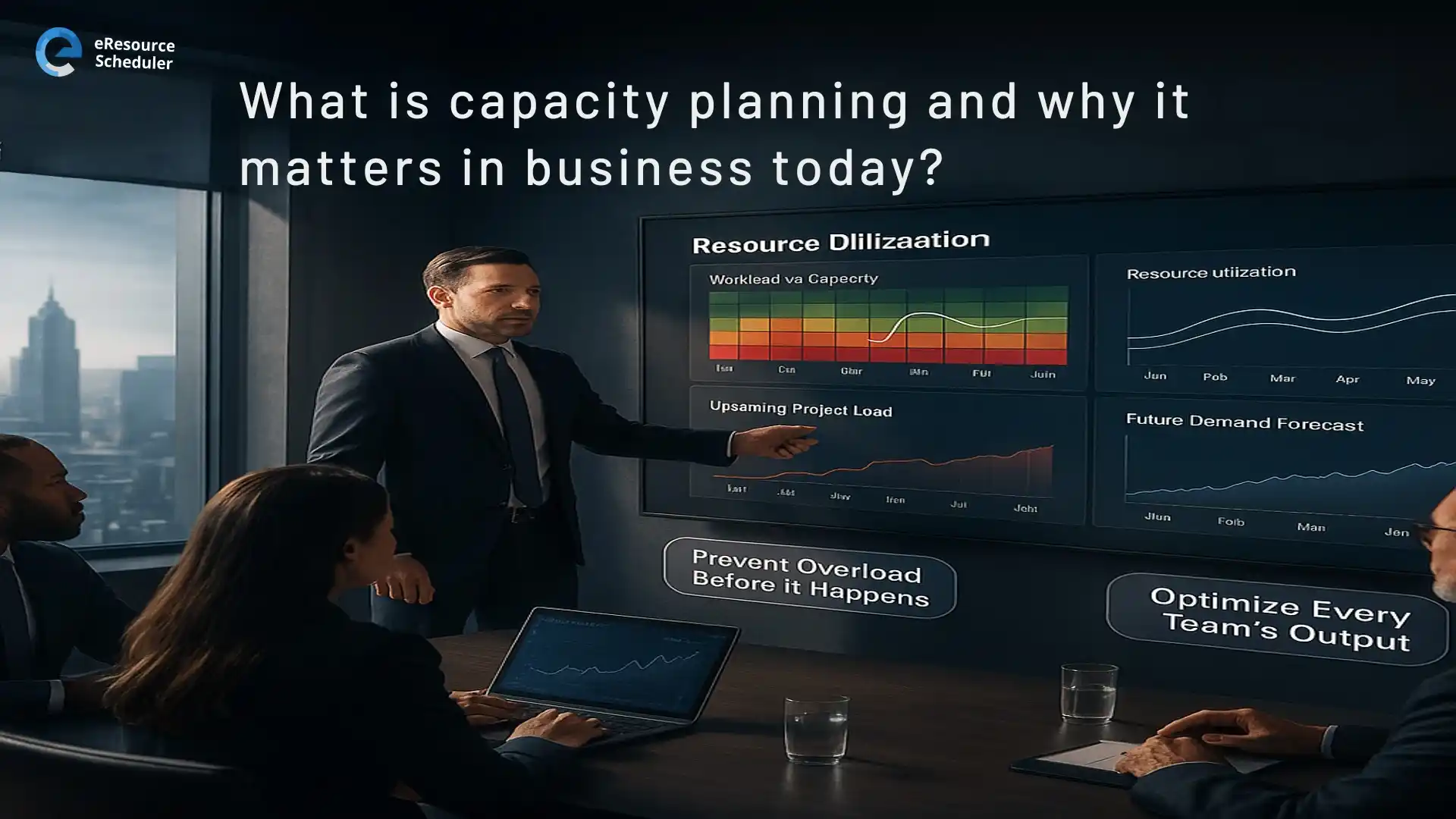
Capacity planning sounds like one of those corporate phrases people pretend to understand. In reality, it is surprisingly simple. It is the ongoing process of checking whether your team has enough time, skills, and bandwidth to handle the work coming their way. And here is the twist. In 2026, companies cannot afford to guess this anymore. They need clarity backed by real numbers, not vibes.
Strong planning does more than protect deadlines. It protects people. It stops teams from drowning in unplanned work and it prevents managers from relying on late night heroics. Most businesses now use resource scheduling software to keep this process predictable instead of reactive.
Capacity planning is the act of matching what your team can realistically handle with what the business expects them to deliver. It is a simple idea but an essential one, especially when workloads shift quickly and deadlines keep tightening.
When those two sides match, projects move forward smoothly. When they do not, work starts piling up, teams get stressed, and quality begins to drop.
A clear capacity plan helps managers see whether upcoming tasks fit into the team’s current bandwidth. It highlights workload gaps, future bottlenecks, and areas where additional support might be needed.
Done consistently, it reduces last minute rush, improves planning accuracy, and helps everyone stay aligned on what is realistic. In a fast moving workplace, that clarity is the difference between steady progress and constant firefighting.
Workloads in 2026 move fast. Teams shift between priorities, hybrid schedules stretch timelines, and customers expect quick responses even when internal processes are still catching up. Capacity planning gives businesses a way to stay steady in the middle of all this movement.
Companies that skip structured planning often end up dealing with more unplanned work than they realize. A 2025 Forrester report found that teams without a capacity model spent nearly forty percent of their time reacting to unexpected tasks. That is a major loss of productivity and energy.
Capacity planning changes this by offering a clear view of who is overloaded, who is available, and where delays might appear. It helps leaders spot risks before they turn into real issues.
Teams benefit too. When people know what is coming, they can focus better and work with less stress. Predictable workloads create a healthier environment and a stronger sense of ownership across projects.
In a competitive landscape, the businesses that plan ahead will always move faster and deliver better. Capacity planning becomes the foundation that keeps work organized even when everything else feels unpredictable.
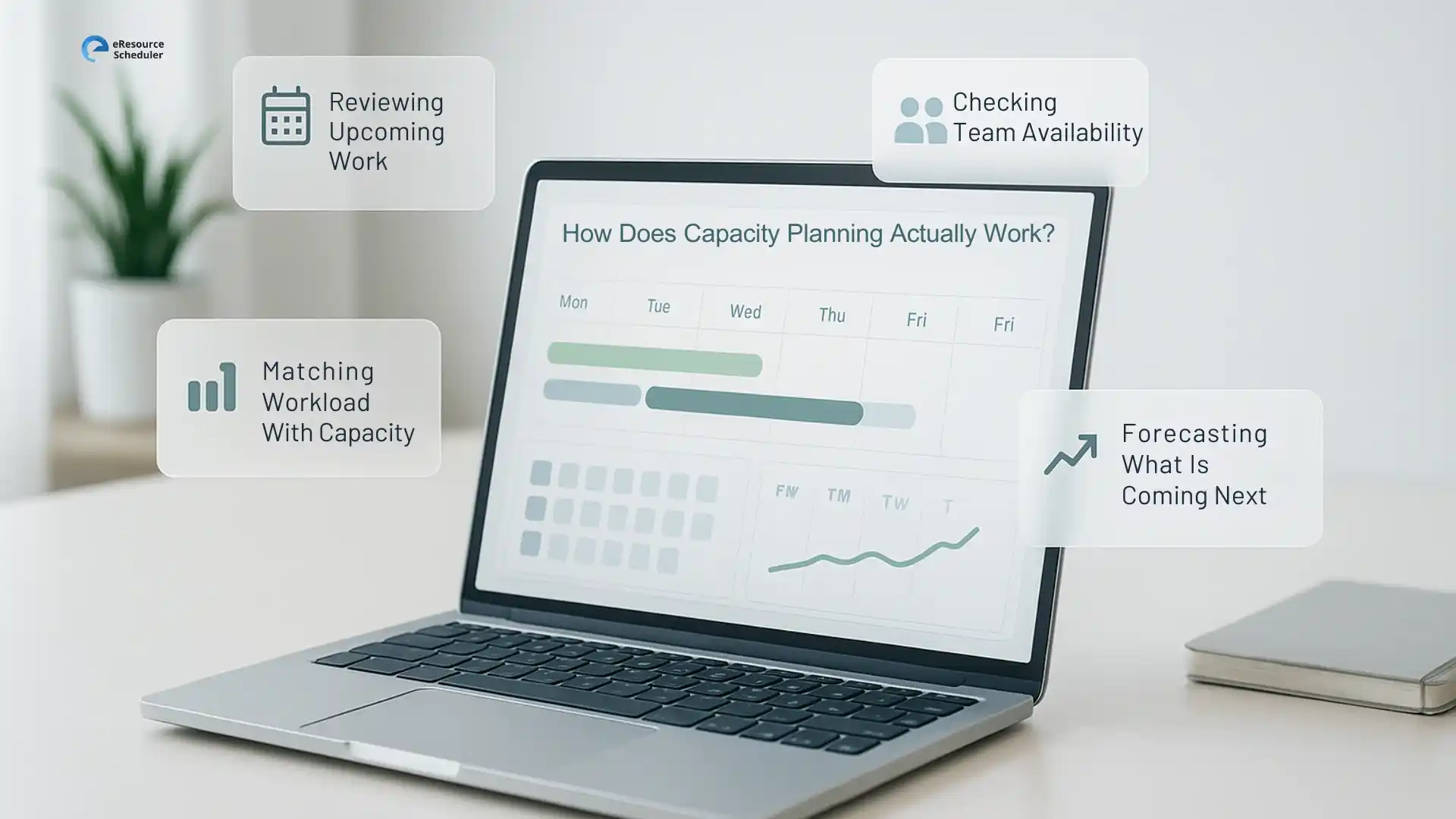
Capacity planning works by comparing the work a business needs to deliver with the actual time and skills available on the team. The goal is simple. Make sure the workload fits before it becomes a problem.
The process starts by looking at what is scheduled for the next few days, weeks, or months. This includes tasks, deadlines, and any new work entering the pipeline.
Next, managers review each person’s availability. They look at existing commitments, skill sets, planned leaves, and the actual hours people can contribute without stretching themselves thin.
Once both sides are clear, they match the workload to the team’s capacity. This step highlights overload, free time, or areas where additional help might be needed.
Forecasting helps teams prepare for busy periods or upcoming projects. By looking ahead, managers can adjust schedules, shift responsibilities, and avoid last minute chaos.
When these steps happen consistently, capacity planning becomes a calm, predictable process instead of a reactive scramble. It gives teams clarity and helps the business deliver work on time without burning people out.
Skipping capacity planning might not feel risky at first, but the impact shows up quickly. Work becomes unpredictable. Teams slip into stress mode. And delivery quality starts to fall.
Here is what usually happens when businesses avoid it:
Ignoring capacity planning slowly creates a workplace built on reactive decisions instead of confident planning.
Capacity planning gives teams a level of clarity that most workplaces only claim to have. When people know what is coming and what they are actually responsible for, work stops feeling like a surprise quiz every morning.
Tasks go to the right people, timelines stay realistic, and managers avoid the classic last minute panic mode. The team ends up performing better simply because no one is wasting energy trying to guess what they should do next.
Effective capacity planning in 2026 is straightforward. Teams know what is on their plate, managers understand everyone’s real workload limits, and decisions are guided by actual data instead of optimistic assumptions. It starts with visibility.
It starts with visibility. Clear schedules show what is coming next, who has available time, and where the pressure points might be. From there, managers adjust workloads, shift responsibilities, or bring in support before things escalate.
It is not about creating rigid plans. It is about creating realistic ones. In a hybrid and fast moving environment, the best planning models stay flexible enough to adapt when priorities change. When teams get this level of clarity, work feels smoother, deadlines stay manageable, and people can focus on doing the job instead of navigating constant surprises.
Capacity planning will never make work perfectly calm, but it does make it a lot more manageable. When teams know what is coming, when workloads are realistic, and when leaders stop relying on hope as a strategy, everything starts to feel less chaotic. Work stops piling up out of nowhere and people finally get the space to do their jobs without sprinting through every week.
Of course, surprises will still happen. Deadlines will shift. Priorities will change. That is just how modern teams operate. The goal is not to eliminate every bit of chaos but to stay steady through it. With clearer visibility and smarter planning, even busy seasons stop feeling like an emergency waiting to happen.
If you are ready to stop guessing and start planning with actual clarity, book a demo of eResource Scheduler and see how it keeps teams balanced, calm, and slightly less dramatic.
1. What are the key benefits of capacity planning for teams?
Capacity planning helps teams stay organized by showing how much work they can handle without feeling overloaded. It improves focus, sets clear priorities, and reduces last minute pressure. With a realistic view of workload and availability, teams can complete tasks with better accuracy and less stress.
2. How does capacity planning prevent missed deadlines?
Capacity planning prevents missed deadlines by matching upcoming tasks with actual team capacity. It highlights gaps early so managers can adjust workloads or timelines before problems appear. This helps projects move at a steady pace instead of falling behind due to unexpected workload spikes.
3. Why is understanding team availability important in capacity planning?
Understanding team availability is important because it helps managers assign work that fits the team’s actual limits. When availability is clear, planning becomes more accurate and balanced. It reduces overload, avoids rushed decisions, and builds more predictable project timelines.
4. How can businesses use capacity planning to avoid burnout?
Businesses can avoid burnout by comparing incoming work with each person’s real capacity. This makes it easier to spot overload early and adjust responsibilities. When work is distributed fairly, people have enough time to complete tasks without constant stress or exhaustion.
5. What are common signs that a business needs to improve its capacity planning?
Common signs include uneven workloads, frequent deadline changes, rising stress, and teams constantly rushing to catch up. These issues show that work is not being matched to available capacity. Better planning makes day to day operations smoother and more predictable.

Plan Smarter. Schedule Faster.
Join thousands already using eResource Scheduler to align teams, time, and tasks seamlessly.