Learn more

Here's the thing about healthcare today: it's not just about having the best doctors or the fanciest equipment anymore.
It's about making sure the right people, tools, and beds are in the right place at the right time. Sounds simple, right? Yet hospitals across the U.S. are still scrambling to figure this out.
When healthcare facilities nail resource optimization, patient outcomes improve, costs drop, and staff actually get to go home on time. And honestly, who doesn't want that?
Resource capacity planning software like eResource Scheduler gives hospitals the visibility they need to stop playing guessing games with staffing and start making moves backed by real data. Because in healthcare, winging it isn't an option.
Resource optimization in healthcare means getting the most out of what you've got without burning people out or leaving equipment collecting dust. It's about matching supply with demand in real time across staff, beds, operating rooms, medical equipment, and even appointment slots.
Think of it as Tetris, but the blocks are nurses, CT scanners, and ICU beds, and the stakes are actual human lives. You're constantly juggling who's available, what's being used, and where the next emergency might pop up.
In modern healthcare, this isn't just about efficiency anymore. It's about survival. Hospitals are dealing with staffing shortages, rising costs, and patient volumes that swing wildly depending on the season or latest health crisis. The facilities that figure out resource optimization? They're the ones keeping their doors open and their teams intact.
Here's the uncomfortable truth: most hospitals are still running on systems built for a world that doesn't exist anymore. Paper schedules, scattered spreadsheets, and that one person who somehow remembers everything until they go on vacation.
The problem isn't lack of effort. Healthcare teams work harder than almost anyone. The problem is visibility. When you can't see who's available three days from now, or which OR is actually free tomorrow morning, you're constantly reacting instead of planning.
Add in last minute callouts, emergency admissions that spike unpredictably, and equipment that breaks at the worst possible time, and you've got a scheduling nightmare that would make any operations manager want to quit. But in healthcare, quitting isn't an option when patients are counting on you.
Staff shortages make everything worse. When you're already running lean, one sick call can domino into overtime costs, burnt out nurses, and longer wait times for patients. It's a vicious cycle that traditional resource management approaches just can't handle anymore.
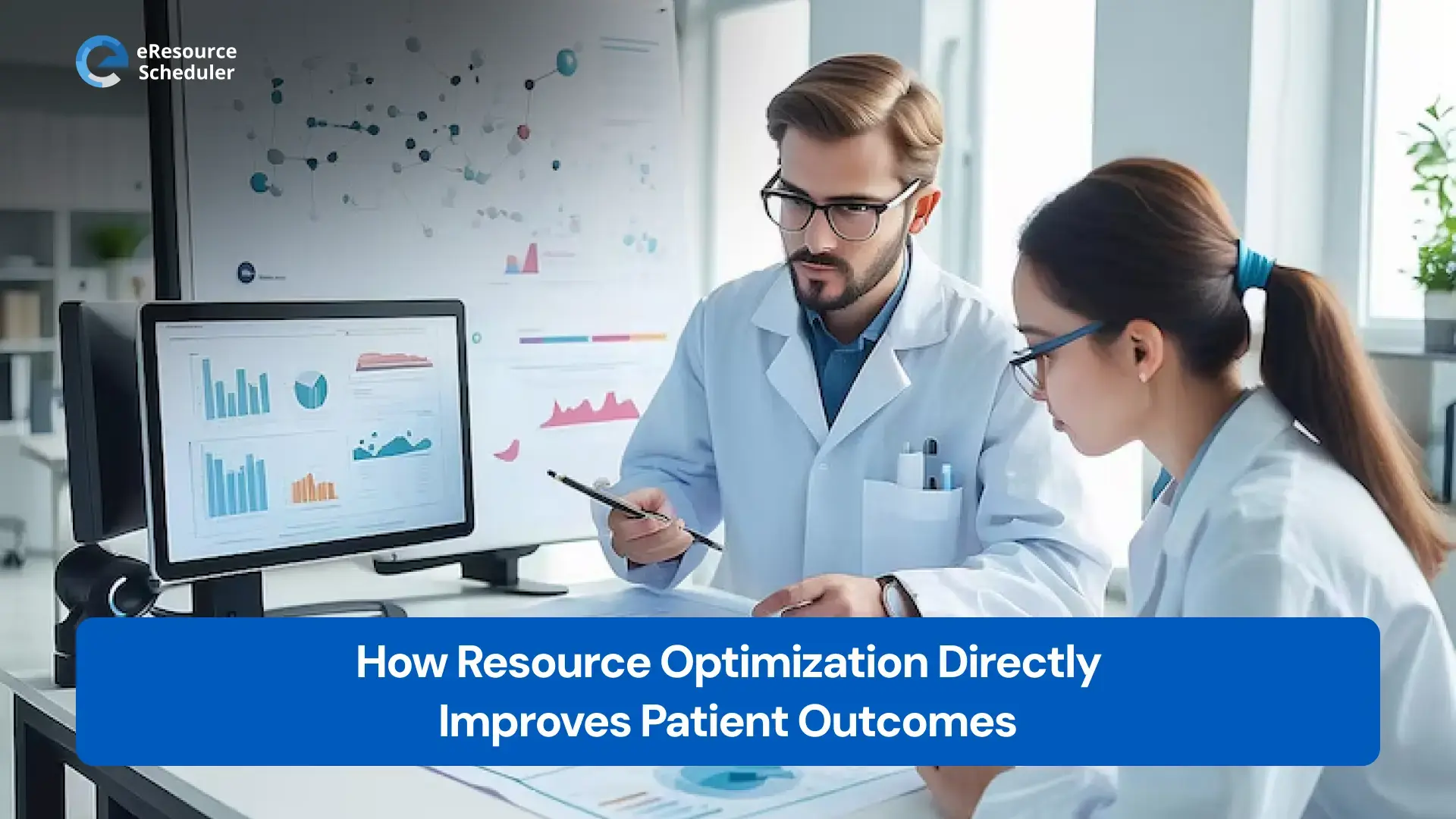
When resources are managed well, the impact shows up where it matters most: in patient care. Better outcomes aren't just about having more staff or fancier equipment. They're about using what you have intelligently.
Tired doctors make mistakes. Burnt out nurses miss details. It's not a character flaw, it's biology.
When healthcare workers are stretched too thin, patient safety takes a hit. Effective workforce management ensures clinicians have the bandwidth to actually focus on patients instead of juggling five emergencies at once.
What happens when shifts are properly balanced:
Resource optimization isn't just about filling slots on a schedule. It's about making sure the humans doing the work have what they need to do it well.
A cardiac patient waiting an extra two hours for an ECG because the machine is tied up somewhere else? That's not just inconvenient. That's dangerous.
Resource allocation software like eResource Scheduler helps hospitals track equipment in real time, so critical tools are where they need to be when they need to be there.
No more calling around to five different departments trying to locate a wheelchair or portable X ray machine. When equipment utilization is optimized, diagnostic delays drop, treatment starts faster, and patient outcomes improve.

Healthcare budgets are tight, and getting tighter. But slashing resources blindly just creates new problems. The real savings come from eliminating waste, not cutting corners.
Timesheet software gives hospitals visibility into where labor hours are actually going. Are staff spending half their shift hunting down supplies? Waiting for equipment? Stuck in redundant handoff meetings? When you can see the time drains, you can fix them.
When you can see the time drains, you can fix them. Smart scheduling prevents the overtime trap. When shifts are optimized, hospitals avoid the constant scramble that leads to expensive last minute coverage and burnt out staff working double shifts.
Cost savings from better resource optimization:
Everyone in the healthcare ecosystem wins when resources are optimized properly, but the impact hits different groups in different ways.
Patients get faster care, shorter wait times, and better outcomes. Staff get predictable schedules, manageable workloads, and the tools they need when they need them. Hospital leadership gets better financial performance without compromising quality.
The hospitals winning in today’s fast-paced environment aren't the ones spending the most. They're the ones spending smart, using resource planning to deploy resources where they'll have the biggest impact.
Resource optimization isn't some luxury reserved for massive hospital systems with unlimited IT budgets. It's a necessity for any healthcare facility that wants to survive and thrive in today’s fast-paced healthcare.
The facilities getting it right are the ones treating resource management as seriously as they treat patient care. Because at the end of the day, the two are inseparable. Better resources lead to better outcomes, period.
Stop running on outdated systems and gut feelings. Start using data to make smarter decisions about staffing, equipment, and scheduling.
Ready to see what optimized resource management looks like in action? Try eResource Scheduler free and bring visibility to your healthcare operations.
1. What is resource optimization in healthcare?
Resource optimization in healthcare is the process of maximizing the efficiency and effectiveness of staff, equipment, beds, and other assets to improve patient care while controlling costs. It involves smart scheduling, real time tracking, and data driven decision making to ensure resources are in the right place at the right time.
2. How does resource optimization improve patient outcomes?
When resources are optimized, patients experience shorter wait times, faster access to equipment and specialists, and care from well rested medical staff. Proper nurse to patient ratios and balanced workloads directly correlate with lower mortality rates and fewer complications.
3. What are the biggest challenges hospitals face with resource management?
The main challenges include staff shortages, unpredictable patient volumes, lack of real time visibility into resource availability, outdated scheduling systems, and inefficient equipment tracking. These issues lead to overtime costs, burnt out staff, and delays in patient care.
4. Can small healthcare facilities benefit from resource optimization?
Absolutely. Small clinics and regional hospitals often feel resource constraints more acutely than larger systems. Resource optimization helps them do more with less by eliminating waste, preventing scheduling conflicts, and improving staff utilization without adding headcount.
5. What tools help healthcare facilities optimize resources?
Modern resource management software provides real time visibility into staff schedules, equipment availability, and bed capacity. These platforms integrate timesheet tracking, capacity planning, and reporting to help hospitals make data driven decisions and respond quickly to changing demands.



Plan Smarter. Schedule Faster. For Free.
Join thousands already using eResource Scheduler to align teams, time, and tasks seamlessly.
 ALL FEATURES INCLUDED