Learn more
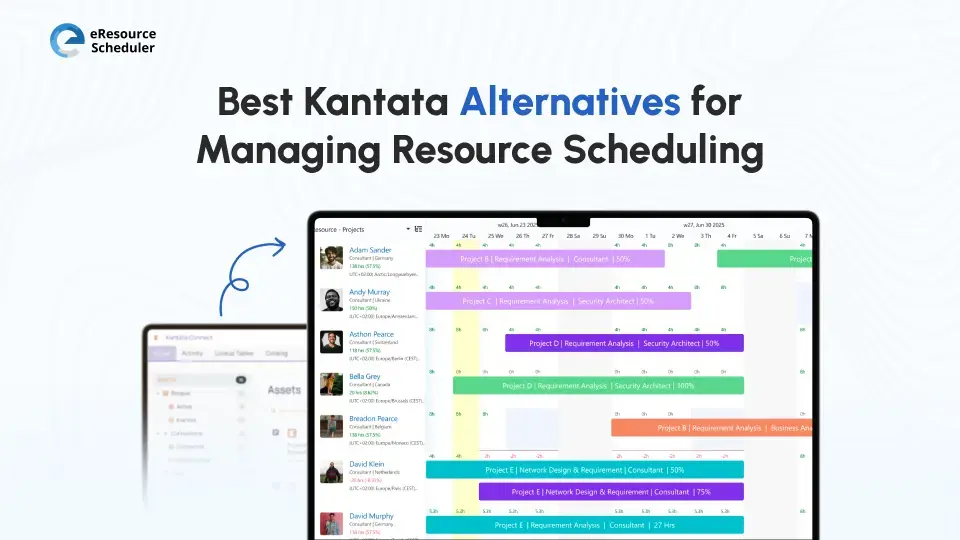
Managing people, skills, and time has become more nuanced. It no longer functions on Albus Dumbledore’s ideology. Teams no longer operate in bunkers. Resource decisions now impact delivery speed, employee well-being, and client satisfaction.
Many organizations are actively looking for Kantata alternatives that align as smoothly as butter with how modern teams actually work.
Whether operations scale, multiple client projects are juggled, or utilization is improved without burning people out, choosing the right resource management software can make or break execution.
As organizations mature, their expectations from planning tools change. What was once working well for basic visibility may start to feel restrictive when teams scale, projects overlap, and delivery timelines scrunch.
Managers and leaders are dealing with:
For many teams, this has uncovered gaps in how traditional systems deal with real-world complexity. Tracking time is no longer sufficient. Leaders want to foresee risks, rebalance workloads early, and understand capacity before commitments are made.
A strong alternative isn’t about having more features. It’s about supporting decisions that managers make every day.
Effective Kantata competitors tend to focus on:
For leaders responsible for delivery and utilization, the advantage lies in clarity. Knowing who is available, who is overextended, and where bottlenecks might appear is far more essential than ticking off tasks on a timeline.
Below are six platforms frequently shortlisted by teams looking for a top Kantata alternative. Each serves a different type of organization, so the right choice depends on how your teams plan, collaborate, and grow.
Among all Kantata alternatives, eResource Scheduler is often chosen by organizations that want a clear, resource-centric view of scheduling. Instead of layering resource visibility on top of projects, it places people, skills, and capacity at the vortex of every decision.
Managers using eResource Scheduler often value how it untangles complex planning scenarios without oversimplifying reality.
Where eResource Scheduler stands out:
Many teams appreciate that eResource Scheduler integrates smoothly with existing project and time-tracking tools and avoids disruption during adoption. It is also industry-agnostic, making it adaptable.

Often evaluated by teams that value transparency and collaboration alongside planning, it combines project visibility with resource insights, making it easier for managers to understand how work and people intersect.
Key strengths include:
Works well for organizations that want planning and collaboration to live in the same space, especially when exploring alternatives to Kantata that feel less rigid.
A firm that is frequently shortlisted by professional service organizations, where client commitments drive resource decisions. It focuses heavily on aligning sales, delivery, and resourcing.
Notable capabilities:
For leaders managing billable teams, it offers a perspective that links utilization with revenue outcomes, making it a practical Kantata competitor in service-driven environments.
It is often mentioned when larger organizations explore Kantata alternatives. It’s known for scalability and cross-functional workflow management.
What teams often value:
Tends to suit organizations with established processes and the ability to manage more complex configurations, particularly when multiple departments need visibility into shared resources.
Takes a lighter approach and is best viewed as a complementary option rather than a full replacement for advanced planning tools.
Its strengths include:
It can be useful for teams that primarily need time visibility and are pairing it with other systems, but it may feel limited for leaders seeking deeper forecasting or capacity planning.
Appeals to organizations looking to consolidate multiple business functions into a single platform. It blends project, financials, and resource planning into one environment.
Key highlights:
Works well for teams that want broader business visibility, especially when evaluating Kantata alternatives that go beyond scheduling alone.
The right choice depends on how your organization operates day to day. When comparing the best Kantata alternatives, managers should consider:
Teams often find clarity by testing tools against real scenarios, such as reallocating resources mid-project or forecasting capacity for upcoming work.
Pro tip:
Teams that squeeze the highest merit from resource planning tools don’t just study
schedules. They also review capacity, utilization, and timesheet data during weekly planning. Platforms like
eResource Scheduler pave the way by displaying planned work vs actual efforts, helping managers spot risks early.
All without adding extra reporting work.
The ecosystem of Kantata alternatives is richer and more diverse than ever. From resource-first platforms to all-in-one business systems, organizations have more choice and more responsibility to pick what truly fits their operating style.
The most effective teams aren’t chasing tools with long feature lists. They’re choosing solutions that support how people actually work, plan, and adapt under pressure.
Start with your process, understand your resource challenges, and then select technology that strengthens decision-making rather than complicating it.
Book a demo with eResource Scheduler to see how a flexible planning approach can support your team’s next phase of growth.
1. What are the main reasons teams look for Kantata alternatives?
Teams often explore Kantata alternatives when growing project complexity demands stronger forecasting and deeper utilization insights. As teams scale, leaders also look for more flexibility in planning resources across multiple projects without relying on workarounds or manual adjustments.
2. Which Kantata alternative is best for resource-focused planning?
Organizations that prioritize capacity and utilization typically prefer solutions like eResource Scheduler. These platforms are designed around resource-centric planning, helping managers make informed decisions based on availability, skills, and future demand rather than just task timelines.
3. Are Kantata's competitors suitable for distributed teams?
Yes. Many modern Kantata competitors are built to support distributed and hybrid teams. They offer centralized visibility into workloads, capacity, and schedules, making it easier to manage resources across locations and time zones.
4. When should a company consider switching from Kantata?
A company should consider switching when planning becomes reactive, and teams frequently adjust schedules at the last minute. If leaders lack confidence in forecasts or struggle to balance workloads effectively, evaluating other options can help restore control and predictability.
5. How can teams evaluate alternatives effectively before committing?
Teams can evaluate alternatives most effectively by testing real planning scenarios during a trial period. Activities like reallocating resources, forecasting future demand, or managing overlapping projects often reveal whether a tool truly fits daily workflows.

Plan Smarter. Schedule Faster. For Free.
Join thousands already using eResource Scheduler to align teams, time, and tasks seamlessly.
 ALL FEATURES INCLUDED